Skip to content
  • Hjem
  • Seneste
  • Etiketter
  • Populære
  • Verden
  • Bruger
  • Grupper
Temaer
  • Light
  • Brite
  • Cerulean
  • Cosmo
  • Flatly
  • Journal
  • Litera
  • Lumen
  • Lux
  • Materia
  • Minty
  • Morph
  • Pulse
  • Sandstone
  • Simplex
  • Sketchy
  • Spacelab
  • United
  • Yeti
  • Zephyr
  • Dark
  • Cyborg
  • Darkly
  • Quartz
  • Slate
  • Solar
  • Superhero
  • Vapor

  • Default (No Skin)
  • No Skin
Kollaps
FARVEL BIG TECH
  1. Forside
  2. Ikke-kategoriseret
  3. A crescent Earth as seen from the Artemis II Orion Integrity spacecraft, now over 46,000 km away.
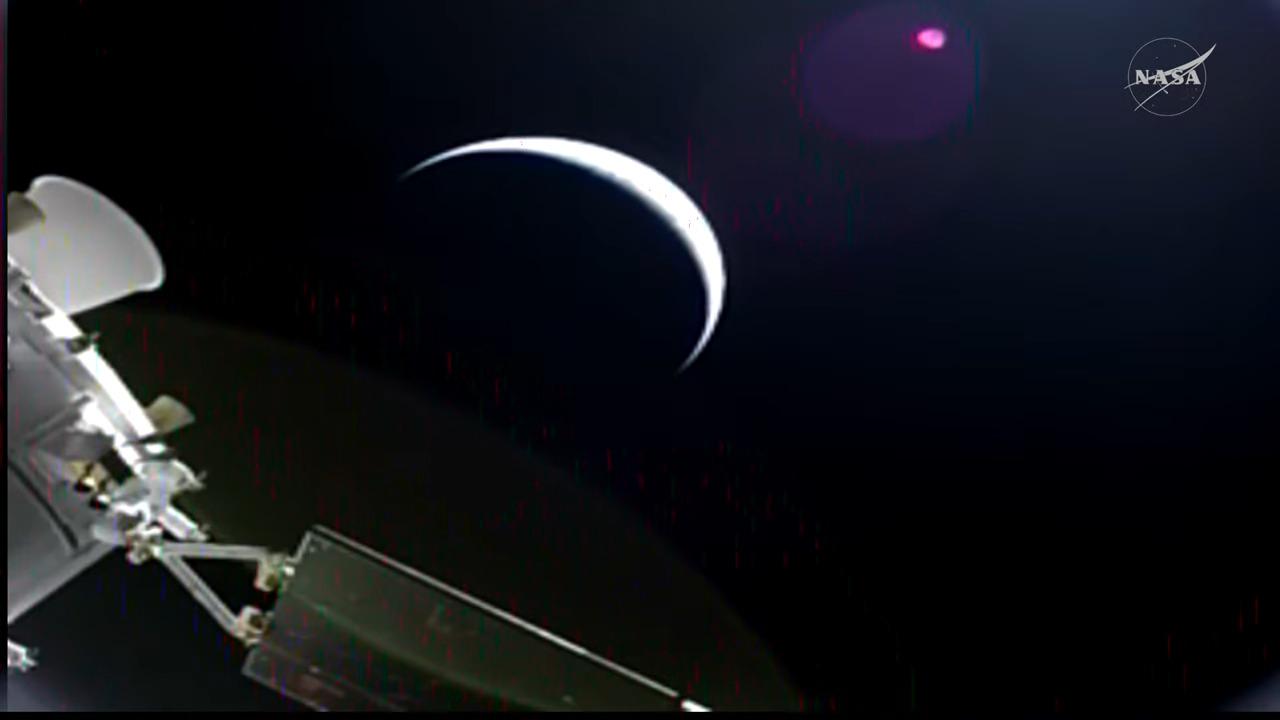
A crescent Earth as seen from the Artemis II Orion Integrity spacecraft, now over 46,000 km away.

Planlagt Fastgjort Låst Flyttet Ikke-kategoriseret
55 Indlæg 22 Posters 0 Visninger
  • Ældste til nyeste
  • Nyeste til ældste
  • Most Votes
Svar
  • Svar som emne
Login for at svare
Denne tråd er blevet slettet. Kun brugere med emne behandlings privilegier kan se den.
  • akasci@fosstodon.orgA akasci@fosstodon.org

    One might consider it foolhardy for Artemis II Orion to come screaming down at 11 km/s to 191 km altitude, cross the paths of the LEO constellations and debris around 500 km, perform the TLI to adjust its speed and trajectory and race away, without colliding with anything.

    But we can be assured that all that is taken care of and LEO satellites will maneuver to get out of the way as needed.
    😱🤞
    https://satellitetracker3d.com/track?norad-id=27426
    30/n

    daniel_pagenstecher@mastodon.socialD This user is from outside of this forum
    daniel_pagenstecher@mastodon.socialD This user is from outside of this forum
    daniel_pagenstecher@mastodon.social
    wrote sidst redigeret af
    #38

    @AkaSci TBH I don't like this kind of visualization because it suggests that the debris has the size of a city like Rio de Janeiro... AFAIK the majority is extremely small or small (nonetheless it is still dangerous because of it's kinetic energy). But such a visualization is IMHO a bit misleading.

    1 Reply Last reply
    0
    • akasci@fosstodon.orgA akasci@fosstodon.org

      Artemis II has a total of 28 camera systems, many for internal and external inspection and navigation, 4 located on each of Orion’s 4 solar arrays.

      The fixed engineering cameras are primarily meant for in-flight inspection of the spacecraft. But they also opportunistically capture images of Earth and the moon in the background.

      The astronauts carry two handheld Nikon D5 digital SLR 20.8 MP cameras for hi-res images and videos.

      https://talkoftitusville.com/2025/12/24/what-cameras-will-the-artemis-ii-astronauts-have-aboard/
      https://ntrs.nasa.gov/api/citations/20230017638/downloads/1325_Melendrez_Orion%20Imaging%20Capabilities.pdf
      26/n

      wcbdata@vis.socialW This user is from outside of this forum
      wcbdata@vis.socialW This user is from outside of this forum
      wcbdata@vis.social
      wrote sidst redigeret af
      #39

      @AkaSci I didn't think anyone was creating diagrams like this any more... What a beautiful thing!

      1 Reply Last reply
      0
      • akasci@fosstodon.orgA This user is from outside of this forum
        akasci@fosstodon.orgA This user is from outside of this forum
        akasci@fosstodon.org
        wrote sidst redigeret af
        #40

        @DavidPenington
        118 x 70134 km before this perigee raise burn around 8 a.m. April 2.

        -2 x 70385 km before the burn around 11:20 p.m. EDT April 1.

        1 Reply Last reply
        0
        • akasci@fosstodon.orgA akasci@fosstodon.org

          Immersive 360° view video of the launch of the Artemis II mission.

          https://www.youtube.com/watch?v=9LFBFRH51Jo
          34/n

          akasci@fosstodon.orgA This user is from outside of this forum
          akasci@fosstodon.orgA This user is from outside of this forum
          akasci@fosstodon.org
          wrote sidst redigeret af
          #41

          The 20-minute event last night where Artemis II astronauts spoke from space, answered questions and eloquently described their experience so far and the importance of this historic mission.

          Inspiring!
          Go #Artemis2

          https://www.youtube.com/watch?v=myscgUlbua4
          35/n

          akasci@fosstodon.orgA 1 Reply Last reply
          0
          • akasci@fosstodon.orgA akasci@fosstodon.org

            The 20-minute event last night where Artemis II astronauts spoke from space, answered questions and eloquently described their experience so far and the importance of this historic mission.

            Inspiring!
            Go #Artemis2

            https://www.youtube.com/watch?v=myscgUlbua4
            35/n

            akasci@fosstodon.orgA This user is from outside of this forum
            akasci@fosstodon.orgA This user is from outside of this forum
            akasci@fosstodon.org
            wrote sidst redigeret af
            #42

            A magnificent view of a serene blue Earth taken yesterday by NASA astronaut and Artemis II commander Reid Wiseman from one of the Orion spacecraft's four main windows while approaching Earth 5 hours before the translunar injection. The Sun is to the right in the image.

            Camera: NIKON D5 (DSLR, 20.8 MP)
            LensInfo: 35mm f/2
            ISO 250
            ExposureTime: 1/250 s
            CreateDate: 2026:04:02 18:53:12 UTC
            Distance: 51,800 km

            Image and EXIF data at https://images.nasa.gov/details/art002e000191
            36/n

            zenheathen@beige.partyZ akasci@fosstodon.orgA 2 Replies Last reply
            0
            • akasci@fosstodon.orgA akasci@fosstodon.org

              A magnificent view of a serene blue Earth taken yesterday by NASA astronaut and Artemis II commander Reid Wiseman from one of the Orion spacecraft's four main windows while approaching Earth 5 hours before the translunar injection. The Sun is to the right in the image.

              Camera: NIKON D5 (DSLR, 20.8 MP)
              LensInfo: 35mm f/2
              ISO 250
              ExposureTime: 1/250 s
              CreateDate: 2026:04:02 18:53:12 UTC
              Distance: 51,800 km

              Image and EXIF data at https://images.nasa.gov/details/art002e000191
              36/n

              zenheathen@beige.partyZ This user is from outside of this forum
              zenheathen@beige.partyZ This user is from outside of this forum
              zenheathen@beige.party
              wrote sidst redigeret af
              #43

              @AkaSci These photos being seen today from Mission Commander Wiseman's camera will be from the time when Specialist Hansen's conversation with CapCom was basically, "yeah, we'll get to that soon, but right now we can't pry Reid off the windows".

              Those very human moments and emotions are my favourite parts of the mission so far.

              1 Reply Last reply
              0
              • akasci@fosstodon.orgA akasci@fosstodon.org

                A magnificent view of a serene blue Earth taken yesterday by NASA astronaut and Artemis II commander Reid Wiseman from one of the Orion spacecraft's four main windows while approaching Earth 5 hours before the translunar injection. The Sun is to the right in the image.

                Camera: NIKON D5 (DSLR, 20.8 MP)
                LensInfo: 35mm f/2
                ISO 250
                ExposureTime: 1/250 s
                CreateDate: 2026:04:02 18:53:12 UTC
                Distance: 51,800 km

                Image and EXIF data at https://images.nasa.gov/details/art002e000191
                36/n

                akasci@fosstodon.orgA This user is from outside of this forum
                akasci@fosstodon.orgA This user is from outside of this forum
                akasci@fosstodon.org
                wrote sidst redigeret af
                #44

                The Blue Marble imaged by Artemis II Commander Reid Wiseman ~30 minutes after translunar injection yesterday, as Orion started its sprint to the moon.

                The image shows 2 auroras (top right and bottom left) and zodiacal light (top left). This is the night side of Earth lit by moonlight.

                Camera: NIKON D5 (DSLR, 20.8 MP), 14-24mm f/2.8
                FocalLength: 22.0 mm
                ISO 51200
                ExposureTime: 1/4 s
                CreateDate: 2026:04:03 00:27:39 UTC
                Distance: 10,150 km

                Image and EXIF data at https://images.nasa.gov/details/art002e000192
                37/n

                akasci@fosstodon.orgA ujay68@mastodon.worldU martin_pigeon@mamot.frM mattcraig@mastodon.socialM 4 Replies Last reply
                0
                • akasci@fosstodon.orgA akasci@fosstodon.org

                  The Blue Marble imaged by Artemis II Commander Reid Wiseman ~30 minutes after translunar injection yesterday, as Orion started its sprint to the moon.

                  The image shows 2 auroras (top right and bottom left) and zodiacal light (top left). This is the night side of Earth lit by moonlight.

                  Camera: NIKON D5 (DSLR, 20.8 MP), 14-24mm f/2.8
                  FocalLength: 22.0 mm
                  ISO 51200
                  ExposureTime: 1/4 s
                  CreateDate: 2026:04:03 00:27:39 UTC
                  Distance: 10,150 km

                  Image and EXIF data at https://images.nasa.gov/details/art002e000192
                  37/n

                  akasci@fosstodon.orgA This user is from outside of this forum
                  akasci@fosstodon.orgA This user is from outside of this forum
                  akasci@fosstodon.org
                  wrote sidst redigeret af
                  #45

                  This is an image of the full night-side Earth disk taken seconds before the image in the previous post but with a shorter exposure time.

                  In this image, we can see the electric lights of human activity. In the lower right, sunlight illuminates the limb of the planet.

                  Camera: NIKON D5 (DSLR, 20.8 MP)
                  Lens: 14-24mm f/2.8
                  FocalLength: 22.0 mm
                  ISO 51200
                  ExposureTime: 1/15 s
                  CreateDate: 2026:04:03 00:27:20 UTC
                  Distance: 10,050 km

                  Image and EXIF data at https://images.nasa.gov/details/art002e000193
                  38/n

                  akasci@fosstodon.orgA 1 Reply Last reply
                  0
                  • akasci@fosstodon.orgA akasci@fosstodon.org

                    The Blue Marble imaged by Artemis II Commander Reid Wiseman ~30 minutes after translunar injection yesterday, as Orion started its sprint to the moon.

                    The image shows 2 auroras (top right and bottom left) and zodiacal light (top left). This is the night side of Earth lit by moonlight.

                    Camera: NIKON D5 (DSLR, 20.8 MP), 14-24mm f/2.8
                    FocalLength: 22.0 mm
                    ISO 51200
                    ExposureTime: 1/4 s
                    CreateDate: 2026:04:03 00:27:39 UTC
                    Distance: 10,150 km

                    Image and EXIF data at https://images.nasa.gov/details/art002e000192
                    37/n

                    ujay68@mastodon.worldU This user is from outside of this forum
                    ujay68@mastodon.worldU This user is from outside of this forum
                    ujay68@mastodon.world
                    wrote sidst redigeret af
                    #46

                    @AkaSci That almost nothing of an atmosphere that protects us from so much … When was the last time a human took a similar foto?

                    natanox@chaos.socialN 1 Reply Last reply
                    0
                    • ujay68@mastodon.worldU ujay68@mastodon.world

                      @AkaSci That almost nothing of an atmosphere that protects us from so much … When was the last time a human took a similar foto?

                      natanox@chaos.socialN This user is from outside of this forum
                      natanox@chaos.socialN This user is from outside of this forum
                      natanox@chaos.social
                      wrote sidst redigeret af
                      #47

                      @ujay68 @AkaSci Human? Probably decades ago, with way worse quality.

                      1 Reply Last reply
                      0
                      • akasci@fosstodon.orgA akasci@fosstodon.org

                        The Blue Marble imaged by Artemis II Commander Reid Wiseman ~30 minutes after translunar injection yesterday, as Orion started its sprint to the moon.

                        The image shows 2 auroras (top right and bottom left) and zodiacal light (top left). This is the night side of Earth lit by moonlight.

                        Camera: NIKON D5 (DSLR, 20.8 MP), 14-24mm f/2.8
                        FocalLength: 22.0 mm
                        ISO 51200
                        ExposureTime: 1/4 s
                        CreateDate: 2026:04:03 00:27:39 UTC
                        Distance: 10,150 km

                        Image and EXIF data at https://images.nasa.gov/details/art002e000192
                        37/n

                        martin_pigeon@mamot.frM This user is from outside of this forum
                        martin_pigeon@mamot.frM This user is from outside of this forum
                        martin_pigeon@mamot.fr
                        wrote sidst redigeret af
                        #48

                        @AkaSci gorgeous! Thanks

                        1 Reply Last reply
                        0
                        • akasci@fosstodon.orgA akasci@fosstodon.org

                          The Blue Marble imaged by Artemis II Commander Reid Wiseman ~30 minutes after translunar injection yesterday, as Orion started its sprint to the moon.

                          The image shows 2 auroras (top right and bottom left) and zodiacal light (top left). This is the night side of Earth lit by moonlight.

                          Camera: NIKON D5 (DSLR, 20.8 MP), 14-24mm f/2.8
                          FocalLength: 22.0 mm
                          ISO 51200
                          ExposureTime: 1/4 s
                          CreateDate: 2026:04:03 00:27:39 UTC
                          Distance: 10,150 km

                          Image and EXIF data at https://images.nasa.gov/details/art002e000192
                          37/n

                          mattcraig@mastodon.socialM This user is from outside of this forum
                          mattcraig@mastodon.socialM This user is from outside of this forum
                          mattcraig@mastodon.social
                          wrote sidst redigeret af
                          #49

                          @AkaSci Amazing. Looks fake. Spectacular picture.

                          1 Reply Last reply
                          0
                          • akasci@fosstodon.orgA akasci@fosstodon.org

                            This is an image of the full night-side Earth disk taken seconds before the image in the previous post but with a shorter exposure time.

                            In this image, we can see the electric lights of human activity. In the lower right, sunlight illuminates the limb of the planet.

                            Camera: NIKON D5 (DSLR, 20.8 MP)
                            Lens: 14-24mm f/2.8
                            FocalLength: 22.0 mm
                            ISO 51200
                            ExposureTime: 1/15 s
                            CreateDate: 2026:04:03 00:27:20 UTC
                            Distance: 10,050 km

                            Image and EXIF data at https://images.nasa.gov/details/art002e000193
                            38/n

                            akasci@fosstodon.orgA This user is from outside of this forum
                            akasci@fosstodon.orgA This user is from outside of this forum
                            akasci@fosstodon.org
                            wrote sidst redigeret af
                            #50

                            The Artemis II Orion spacecraft is now just over half way through on its journey to the vicinity of the moon.

                            It will take 3 more days to arrive near the moon as its velocity decreases over time, currently at 5,218 km/h.

                            Go #Integrity

                            https://eyes.nasa.gov/apps/solar-system/#/sc_artemis_2
                            39/n

                            franciswashere@mastodon.socialF mattcraig@mastodon.socialM akasci@fosstodon.orgA 3 Replies Last reply
                            0
                            • akasci@fosstodon.orgA akasci@fosstodon.org

                              The Artemis II Orion spacecraft is now just over half way through on its journey to the vicinity of the moon.

                              It will take 3 more days to arrive near the moon as its velocity decreases over time, currently at 5,218 km/h.

                              Go #Integrity

                              https://eyes.nasa.gov/apps/solar-system/#/sc_artemis_2
                              39/n

                              franciswashere@mastodon.socialF This user is from outside of this forum
                              franciswashere@mastodon.socialF This user is from outside of this forum
                              franciswashere@mastodon.social
                              wrote sidst redigeret af
                              #51

                              #Artemis_2 #Orion #TheMoon #Integrity

                              1 Reply Last reply
                              0
                              • akasci@fosstodon.orgA akasci@fosstodon.org

                                The Artemis II Orion spacecraft is now just over half way through on its journey to the vicinity of the moon.

                                It will take 3 more days to arrive near the moon as its velocity decreases over time, currently at 5,218 km/h.

                                Go #Integrity

                                https://eyes.nasa.gov/apps/solar-system/#/sc_artemis_2
                                39/n

                                mattcraig@mastodon.socialM This user is from outside of this forum
                                mattcraig@mastodon.socialM This user is from outside of this forum
                                mattcraig@mastodon.social
                                wrote sidst redigeret af
                                #52

                                @AkaSci thank you for all the information. Appreciated

                                1 Reply Last reply
                                0
                                • akasci@fosstodon.orgA akasci@fosstodon.org

                                  The Artemis II Orion spacecraft is now just over half way through on its journey to the vicinity of the moon.

                                  It will take 3 more days to arrive near the moon as its velocity decreases over time, currently at 5,218 km/h.

                                  Go #Integrity

                                  https://eyes.nasa.gov/apps/solar-system/#/sc_artemis_2
                                  39/n

                                  akasci@fosstodon.orgA This user is from outside of this forum
                                  akasci@fosstodon.orgA This user is from outside of this forum
                                  akasci@fosstodon.org
                                  wrote sidst redigeret af
                                  #53

                                  A possible view from the Artemis II Orion spacecraft at 22:35 UTC April 6 of a crescent Earth setting over the limb of a crescent Moon, as visualized using the NASA Eyes on the Solar System tool. In this image, Orion has traveled past the moon and is looking over its far side.

                                  https://eyes.nasa.gov/apps/solar-system/#/sc_artemis_2?rate=0&time=2026-04-06T22:35:00.000+00:00
                                  40/n

                                  akasci@fosstodon.orgA 1 Reply Last reply
                                  0
                                  • akasci@fosstodon.orgA akasci@fosstodon.org

                                    A possible view from the Artemis II Orion spacecraft at 22:35 UTC April 6 of a crescent Earth setting over the limb of a crescent Moon, as visualized using the NASA Eyes on the Solar System tool. In this image, Orion has traveled past the moon and is looking over its far side.

                                    https://eyes.nasa.gov/apps/solar-system/#/sc_artemis_2?rate=0&time=2026-04-06T22:35:00.000+00:00
                                    40/n

                                    akasci@fosstodon.orgA This user is from outside of this forum
                                    akasci@fosstodon.orgA This user is from outside of this forum
                                    akasci@fosstodon.org
                                    wrote sidst redigeret af
                                    #54

                                    The view from the Artemis II Orion spacecraft 45 minutes later at 23:20 UTC April 6 of a crescent Earth rising over the dark lunar surface, as visualized using the NASA Eyes on the Solar System tool. In this image, Orion has traveled past the moon and is looking over its far side.

                                    https://eyes.nasa.gov/apps/solar-system/#/sc_artemis_2?rate=0&time=2026-04-06T23:20:00.000+00:00&surfaceMapTiling=true&lighting=flood
                                    41/n

                                    akasci@fosstodon.orgA 1 Reply Last reply
                                    0
                                    • akasci@fosstodon.orgA akasci@fosstodon.org

                                      The view from the Artemis II Orion spacecraft 45 minutes later at 23:20 UTC April 6 of a crescent Earth rising over the dark lunar surface, as visualized using the NASA Eyes on the Solar System tool. In this image, Orion has traveled past the moon and is looking over its far side.

                                      https://eyes.nasa.gov/apps/solar-system/#/sc_artemis_2?rate=0&time=2026-04-06T23:20:00.000+00:00&surfaceMapTiling=true&lighting=flood
                                      41/n

                                      akasci@fosstodon.orgA This user is from outside of this forum
                                      akasci@fosstodon.orgA This user is from outside of this forum
                                      akasci@fosstodon.org
                                      wrote sidst redigeret af
                                      #55

                                      A closeup of the aurora australis over the Antarctic in the Blue Marble image highlights the thin fragile atmosphere that sustains all life on Earth. Note that South is up.

                                      These images, the first such images taken by humans in over 54 years, remind us of the beauty and the fragility our planet, and of our shared responsibility to care of it and of each other.
                                      🧑‍🤝‍🧑 🌍
                                      https://
                                      images.nasa.gov/details/art002e000192
                                      42/n

                                      1 Reply Last reply
                                      1
                                      0
                                      • jwcph@helvede.netJ jwcph@helvede.net shared this topic

                                      Svar
                                      • Svar som emne
                                      Login for at svare
                                      • Ældste til nyeste
                                      • Nyeste til ældste
                                      • Most Votes


                                      • Log ind

                                      • Har du ikke en konto? Tilmeld

                                      • Login or register to search.
                                      Powered by NodeBB Contributors
                                      Graciously hosted by data.coop
                                      • First post
                                        Last post
                                      0
                                      • Hjem
                                      • Seneste
                                      • Etiketter
                                      • Populære
                                      • Verden
                                      • Bruger
                                      • Grupper