I'm kind of obsessed with this old puzzle.
-
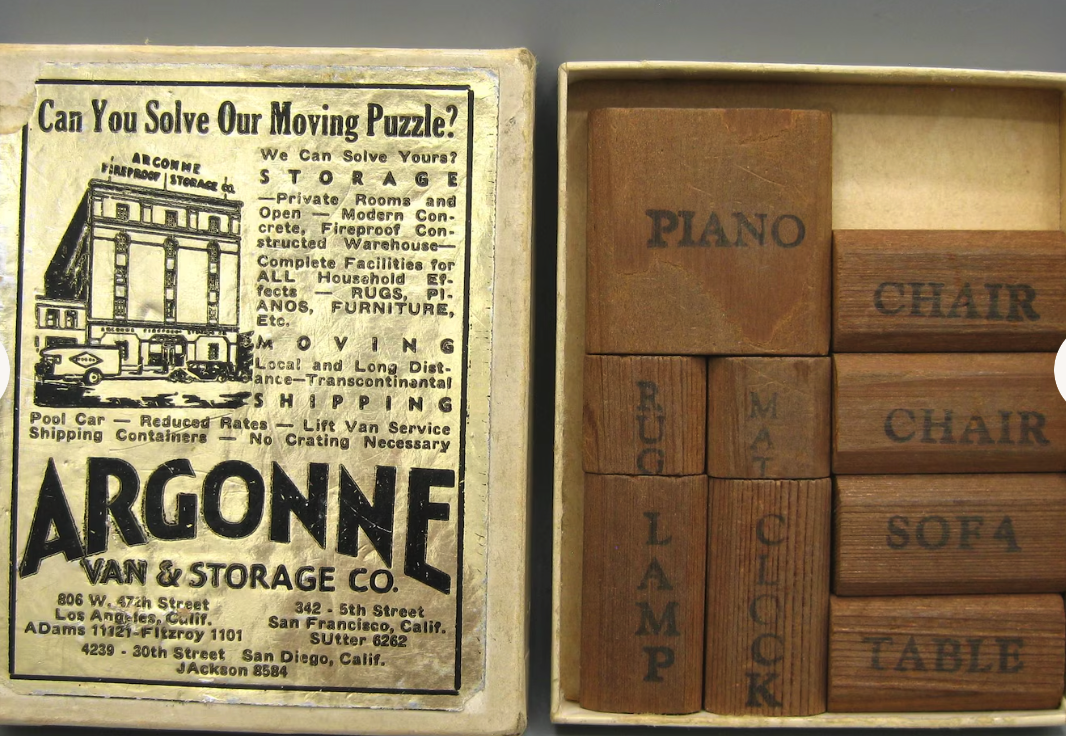
I'm kind of obsessed with this old puzzle. You need to move the piano to the lower LEFT corner by sliding the pieces.
Curious if anyone has done any math things with such tile puzzles?
It's easy to move it to the lower right, and possible but kind of hard to get it to the left.
I guess what I want to know is "why is it so hard?"
One of the simple Windows games I used to play a lot, "Klotski", was basically this.
Pretty sure I can solve it, but I'm getting lost trying to do it in my head.

-
" It's funny, you solve lots of them but it gets so instinctive that explaining the theory becomes impossible."
Exactly! I have a theory and way to solve these and I know how to do it but don't you dare ask me to explain it.
-
I'm kind of obsessed with this old puzzle. You need to move the piano to the lower LEFT corner by sliding the pieces.
Curious if anyone has done any math things with such tile puzzles?
It's easy to move it to the lower right, and possible but kind of hard to get it to the left.
I guess what I want to know is "why is it so hard?"
(EDIT: I was wrong at step 6, table is too low to move lamp and clock right. I apologize for doubting myrmepropagandist's estimation of the difficulty. It was an insult, I was wrong.)
I'm confused. At a guess:
1. top chair and lower chair up 1
2. rug and mat right 2
3. piano down 1
4. top chair left 1 (on top of piano)
5. bottom chair, rug, mat, sofa, and table up 1.
6. lamp and clock right 2
7. piano down -
(EDIT: I was wrong at step 6, table is too low to move lamp and clock right. I apologize for doubting myrmepropagandist's estimation of the difficulty. It was an insult, I was wrong.)
I'm confused. At a guess:
1. top chair and lower chair up 1
2. rug and mat right 2
3. piano down 1
4. top chair left 1 (on top of piano)
5. bottom chair, rug, mat, sofa, and table up 1.
6. lamp and clock right 2
7. piano downWell that's a start, but you need to move the piano right to get it to go back left later since it has to go around the vertical ones.
-
I'm kind of obsessed with this old puzzle. You need to move the piano to the lower LEFT corner by sliding the pieces.
Curious if anyone has done any math things with such tile puzzles?
It's easy to move it to the lower right, and possible but kind of hard to get it to the left.
I guess what I want to know is "why is it so hard?"
@futurebird@sauropods.win you're going to want to give this video a watch https://www.youtube.com/watch?v=YGLNyHd2w10 -
" It's funny, you solve lots of them but it gets so instinctive that explaining the theory becomes impossible."
Exactly! I have a theory and way to solve these and I know how to do it but don't you dare ask me to explain it.
@futurebird @FediThing @TerryHancock
My fingers know some passwords that my brain no longer does.
-
@futurebird@sauropods.win you're going to want to give this video a watch https://www.youtube.com/watch?v=YGLNyHd2w10
It's always graph theory isn't it?
-
Well that's a start, but you need to move the piano right to get it to go back left later since it has to go around the vertical ones.
Oh, I see my error, thanks.
-
I'm kind of obsessed with this old puzzle. You need to move the piano to the lower LEFT corner by sliding the pieces.
Curious if anyone has done any math things with such tile puzzles?
It's easy to move it to the lower right, and possible but kind of hard to get it to the left.
I guess what I want to know is "why is it so hard?"
They have you test in 2-d...
A truck gets packed in 3-d -- at least items that can stack.That lends new difficulty.
But each level is just another 2-d solve.
-
I'm kind of obsessed with this old puzzle. You need to move the piano to the lower LEFT corner by sliding the pieces.
Curious if anyone has done any math things with such tile puzzles?
It's easy to move it to the lower right, and possible but kind of hard to get it to the left.
I guess what I want to know is "why is it so hard?"
@futurebird that is a superb marketing gimmick, wow. I guess the issue is that you can't easily get the littlest blocks in the middle to get round to the far side of the big one
-
I'm kind of obsessed with this old puzzle. You need to move the piano to the lower LEFT corner by sliding the pieces.
Curious if anyone has done any math things with such tile puzzles?
It's easy to move it to the lower right, and possible but kind of hard to get it to the left.
I guess what I want to know is "why is it so hard?"
Erinnert mich doch sehr an das Sofa, das Douglas Adams nicht mehr das Treppenhaus bewegen konnt. Ich habe vergessen, in welchem Buch das war. Aber ich denke das muss in einem seiner Bücher über Dirk Gentley gewesen sein.
-
I'm kind of obsessed with this old puzzle. You need to move the piano to the lower LEFT corner by sliding the pieces.
Curious if anyone has done any math things with such tile puzzles?
It's easy to move it to the lower right, and possible but kind of hard to get it to the left.
I guess what I want to know is "why is it so hard?"
@futurebird looks like a variation on the "klotski" puzzle, so there probably is some math on that
-
I'm kind of obsessed with this old puzzle. You need to move the piano to the lower LEFT corner by sliding the pieces.
Curious if anyone has done any math things with such tile puzzles?
It's easy to move it to the lower right, and possible but kind of hard to get it to the left.
I guess what I want to know is "why is it so hard?"
@futurebird did you ever play klotski on Windows 3.1
-
I'm kind of obsessed with this old puzzle. You need to move the piano to the lower LEFT corner by sliding the pieces.
Curious if anyone has done any math things with such tile puzzles?
It's easy to move it to the lower right, and possible but kind of hard to get it to the left.
I guess what I want to know is "why is it so hard?"
@futurebird@sauropods.win I guess the reason it's hard is because the single square pieces are distracting. A totally consistent graph muncher algorithm would find the solution eventually, but a human working quickly on intuition is going to be subject to misdirection and red herrings and bad intuitions due to the way we think quickly.
I think it's interesting from a psychology and cognition standpoint, beyond just the surface level "fast thinking mistakes" thing, there's something really interesting going on with how cognitions blend unconscious intuition and conscious reasoning
-
@futurebird The real puzzle is how a van & storage company became a national lab.
@futurebird (Now that I think of it, that’s not that far removed from the background of Aperture Science…)
-
I'm kind of obsessed with this old puzzle. You need to move the piano to the lower LEFT corner by sliding the pieces.
Curious if anyone has done any math things with such tile puzzles?
It's easy to move it to the lower right, and possible but kind of hard to get it to the left.
I guess what I want to know is "why is it so hard?"
@futurebird is this photo taken from the top down, or is it meant to be played in a vertical orientation keeping gravity in mind?
-
I'm kind of obsessed with this old puzzle. You need to move the piano to the lower LEFT corner by sliding the pieces.
Curious if anyone has done any math things with such tile puzzles?
It's easy to move it to the lower right, and possible but kind of hard to get it to the left.
I guess what I want to know is "why is it so hard?"
@futurebird Nice piece of ephemera, obviously an advertising give-away for the moving company.
Here's the history of this puzzle:
-
I'm kind of obsessed with this old puzzle. You need to move the piano to the lower LEFT corner by sliding the pieces.
Curious if anyone has done any math things with such tile puzzles?
It's easy to move it to the lower right, and possible but kind of hard to get it to the left.
I guess what I want to know is "why is it so hard?"
@futurebird I don't do math, but am pretty good with visual problem solving. I've made a replica on paper and am trying it now. Like you, I was able to get it to the lower right corner easily, but am currently stumped. Some instinct tells me that getting the lamp and clock on opposite sides of the field would help, but I don't yet see how to do that (or how exactly it would help).
-
I'm kind of obsessed with this old puzzle. You need to move the piano to the lower LEFT corner by sliding the pieces.
Curious if anyone has done any math things with such tile puzzles?
It's easy to move it to the lower right, and possible but kind of hard to get it to the left.
I guess what I want to know is "why is it so hard?"
@futurebird A lot of work has been done on Klotski type games. The reason one possible outcome seems harder than another is because the possible paths in the moves graph to get to that outcome are more hidden with more branch points that foreclose them (like a system of roads that it's easier to get lost on). Here's a neat visualization of how these games work.
https://www.youtube.com/watch?v=YGLNyHd2w10
https://inv.nadeko.net/watch?v=YGLNyHd2w10 (no google proxy link) -
I'm kind of obsessed with this old puzzle. You need to move the piano to the lower LEFT corner by sliding the pieces.
Curious if anyone has done any math things with such tile puzzles?
It's easy to move it to the lower right, and possible but kind of hard to get it to the left.
I guess what I want to know is "why is it so hard?"
I have an old game I've copied from phone to phone called "Unblock Me" which is basically this.
You get into a groove eventually and it just happens.
The Wikipedia article doesn't really explain how or why. https://en.wikipedia.org/wiki/Sliding_puzzle