This post did not contain any content.
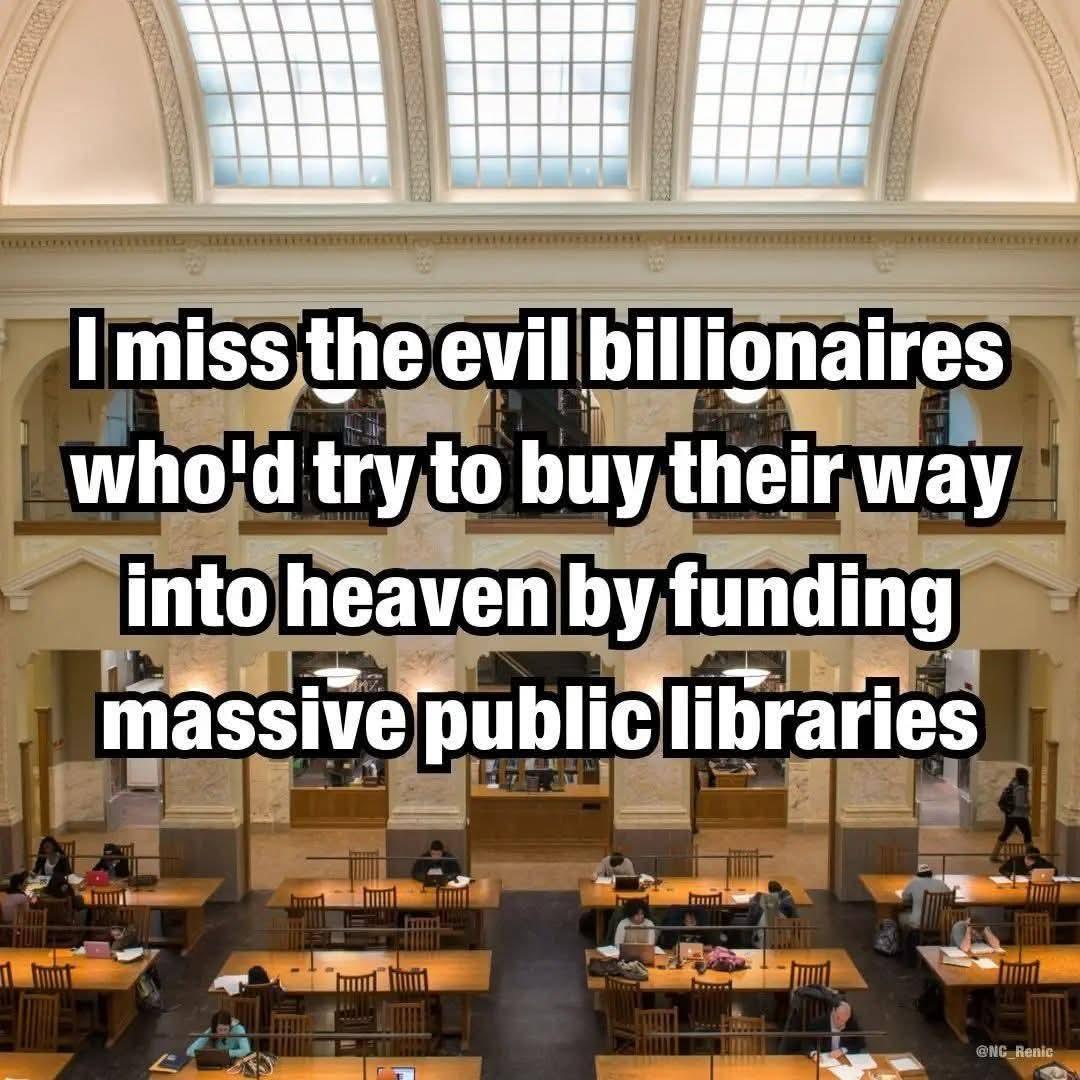
-
This post did not contain any content.
-
This post did not contain any content.
-
This post did not contain any content.
@MostlyHarmless Well thanks to "Longtermism" they try to buy their way into heaven by funding AI companies.
-
This post did not contain any content.
@MostlyHarmless The guilt of past robber barons gave us some really nice public buildings.
-
This post did not contain any content.
@MostlyHarmless Paul Allen's shit all fell apart after he died, this sorta stuff is not sustainable or reliable
-
This post did not contain any content.
I don't miss the evil billionaires who tried to buy their way into respectability by funding art museums, cancer centers, and business schools. It didn't stop their doing evil; it just made it easier to do.
-
This post did not contain any content.
@MostlyHarmless they may not fund libraries, but they still avoid taxes through philanthropy. yet another reason why "tax the rich" is a nonsense slogan.
-
This post did not contain any content.
-
This post did not contain any content.
@MostlyHarmless good ol' Carnegie
-
This post did not contain any content.
@MostlyHarmless
That was before they figured out that all their friends would be in hell. -
This post did not contain any content.
@MostlyHarmless@thecanadian.social
Down side of religiosity dying? -
This post did not contain any content.
The Carnegie libraries were a way to influence the public, just like modern oligarchs buying newspapers and social media. The question is how heavy handed is the curation.
"once Carnegie establishes the value of the public library within the context of the ‘labor question’, he proceeds to describe the types of collections and the kinds of reading workers should engage in"
from page 244 of The Political Economy of Andrew Carnegie's Library Philanthropy. -
 J jwcph@helvede.net shared this topic