Skip to content
  • Hjem
  • Seneste
  • Etiketter
  • Populære
  • Verden
  • Bruger
  • Grupper
Temaer
  • Light
  • Brite
  • Cerulean
  • Cosmo
  • Flatly
  • Journal
  • Litera
  • Lumen
  • Lux
  • Materia
  • Minty
  • Morph
  • Pulse
  • Sandstone
  • Simplex
  • Sketchy
  • Spacelab
  • United
  • Yeti
  • Zephyr
  • Dark
  • Cyborg
  • Darkly
  • Quartz
  • Slate
  • Solar
  • Superhero
  • Vapor

  • Default (No Skin)
  • No Skin
Kollaps
FARVEL BIG TECH
  1. Forside
  2. Ikke-kategoriseret
  3. A crescent Earth as seen from the Artemis II Orion Integrity spacecraft, now over 46,000 km away.
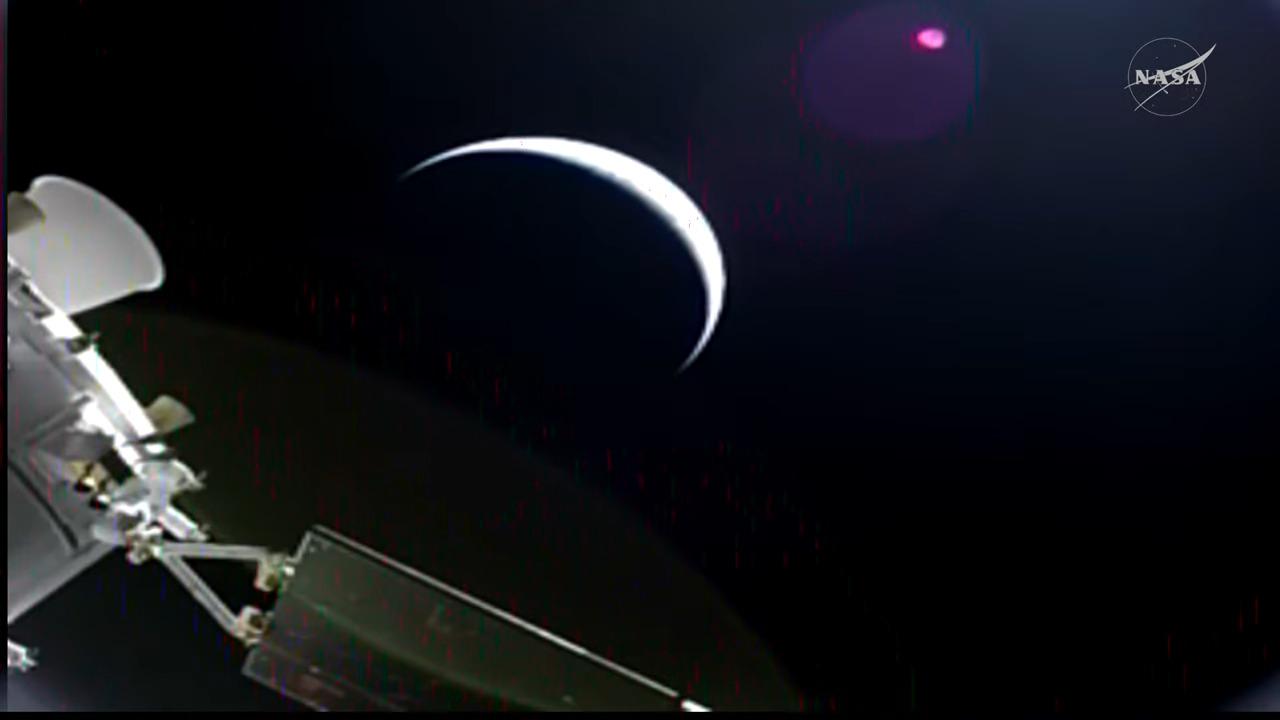
A crescent Earth as seen from the Artemis II Orion Integrity spacecraft, now over 46,000 km away.

Planlagt Fastgjort Låst Flyttet Ikke-kategoriseret
55 Indlæg 22 Posters 0 Visninger
  • Ældste til nyeste
  • Nyeste til ældste
  • Most Votes
Svar
  • Svar som emne
Login for at svare
Denne tråd er blevet slettet. Kun brugere med emne behandlings privilegier kan se den.
  • akasci@fosstodon.orgA akasci@fosstodon.org

    The serene view of the Pale Blue Crescent from the Artemis II Orion Integrity spacecraft this morning, now located 70,920 km away in its elliptical orbit, high above the Pacific Ocean, west of Peru, as the astronauts grab some sleep after a hectic day yesterday.

    https://www.youtube.com/watch?v=m3kR2KK8TEs
    23/n

    photovince@mastodon.socialP This user is from outside of this forum
    photovince@mastodon.socialP This user is from outside of this forum
    photovince@mastodon.social
    wrote sidst redigeret af
    #5

    @AkaSci This means they’re out of the elliptical earth orbit and into lunar trajectory?

    akasci@fosstodon.orgA 1 Reply Last reply
    0
    • akasci@fosstodon.orgA akasci@fosstodon.org

      The serene view of the Pale Blue Crescent from the Artemis II Orion Integrity spacecraft this morning, now located 70,920 km away in its elliptical orbit, high above the Pacific Ocean, west of Peru, as the astronauts grab some sleep after a hectic day yesterday.

      https://www.youtube.com/watch?v=m3kR2KK8TEs
      23/n

      akasci@fosstodon.orgA This user is from outside of this forum
      akasci@fosstodon.orgA This user is from outside of this forum
      akasci@fosstodon.org
      wrote sidst redigeret af
      #6

      Integrity, the Artemis II Orion Integrity spacecraft, is located 71,245 km away, almost 2x the alt. of GSO, in a highly elliptical orbit, above the Pacific Ocean, west of Peru.

      After reaching Apogee, it will turn around and execute a Perigee Raising Burn at around 8:15 a.m. EDT (12:15 UTC) and head back towards Earth.

      12 hours later, at Perigee, it will execute the Translunar Injection Burn and shoot for the Moon.

      https://www.n2yo.com/?s=99999&live=1
      https://eyes.nasa.gov/apps/solar-system/#/sc_artemis_2
      https://www.nasa.gov/artemis-ii-press-kit/
      24/n

      photo55@mastodon.socialP P akasci@fosstodon.orgA 3 Replies Last reply
      0
      • photovince@mastodon.socialP photovince@mastodon.social

        @AkaSci This means they’re out of the elliptical earth orbit and into lunar trajectory?

        akasci@fosstodon.orgA This user is from outside of this forum
        akasci@fosstodon.orgA This user is from outside of this forum
        akasci@fosstodon.org
        wrote sidst redigeret af
        #7

        @photovince
        No, not yet; take a look at new toot #24.

        photovince@mastodon.socialP 1 Reply Last reply
        0
        • akasci@fosstodon.orgA akasci@fosstodon.org

          @photovince
          No, not yet; take a look at new toot #24.

          photovince@mastodon.socialP This user is from outside of this forum
          photovince@mastodon.socialP This user is from outside of this forum
          photovince@mastodon.social
          wrote sidst redigeret af
          #8

          @AkaSci Thanks - just noticed. They are taking the scenic route for sure!

          akasci@fosstodon.orgA 1 Reply Last reply
          0
          • photovince@mastodon.socialP photovince@mastodon.social

            @AkaSci Thanks - just noticed. They are taking the scenic route for sure!

            akasci@fosstodon.orgA This user is from outside of this forum
            akasci@fosstodon.orgA This user is from outside of this forum
            akasci@fosstodon.org
            wrote sidst redigeret af
            #9

            RE: https://f.cz/@xChaos/116333479114503737

            @photovince
            There is some energy optimization related reason for this orbit and trajectory. Also, unlike uncrewed missions, this spacecraft needs to head for the moon within a day or two after launch.

            See post by @xChaos for some more info -

            photovince@mastodon.socialP 1 Reply Last reply
            0
            • akasci@fosstodon.orgA akasci@fosstodon.org

              RE: https://f.cz/@xChaos/116333479114503737

              @photovince
              There is some energy optimization related reason for this orbit and trajectory. Also, unlike uncrewed missions, this spacecraft needs to head for the moon within a day or two after launch.

              See post by @xChaos for some more info -

              photovince@mastodon.socialP This user is from outside of this forum
              photovince@mastodon.socialP This user is from outside of this forum
              photovince@mastodon.social
              wrote sidst redigeret af
              #10

              @AkaSci @xChaos Thanks! I remember reading about (reasons behind) complex trajectories a while ago, but that included the lunar gateway so n/a for now

              1 Reply Last reply
              0
              • akasci@fosstodon.orgA akasci@fosstodon.org

                The serene view of the Pale Blue Crescent from the Artemis II Orion Integrity spacecraft this morning, now located 70,920 km away in its elliptical orbit, high above the Pacific Ocean, west of Peru, as the astronauts grab some sleep after a hectic day yesterday.

                https://www.youtube.com/watch?v=m3kR2KK8TEs
                23/n

                claudiom@bsd.networkC This user is from outside of this forum
                claudiom@bsd.networkC This user is from outside of this forum
                claudiom@bsd.network
                wrote sidst redigeret af
                #11

                @AkaSci Saw that this morning and it was a very serene view. ​

                1 Reply Last reply
                0
                • akasci@fosstodon.orgA akasci@fosstodon.org

                  Integrity, the Artemis II Orion Integrity spacecraft, is located 71,245 km away, almost 2x the alt. of GSO, in a highly elliptical orbit, above the Pacific Ocean, west of Peru.

                  After reaching Apogee, it will turn around and execute a Perigee Raising Burn at around 8:15 a.m. EDT (12:15 UTC) and head back towards Earth.

                  12 hours later, at Perigee, it will execute the Translunar Injection Burn and shoot for the Moon.

                  https://www.n2yo.com/?s=99999&live=1
                  https://eyes.nasa.gov/apps/solar-system/#/sc_artemis_2
                  https://www.nasa.gov/artemis-ii-press-kit/
                  24/n

                  photo55@mastodon.socialP This user is from outside of this forum
                  photo55@mastodon.socialP This user is from outside of this forum
                  photo55@mastodon.social
                  wrote sidst redigeret af
                  #12

                  @AkaSci
                  #OberthManeuver

                  1 Reply Last reply
                  0
                  • akasci@fosstodon.orgA akasci@fosstodon.org

                    Integrity, the Artemis II Orion Integrity spacecraft, is located 71,245 km away, almost 2x the alt. of GSO, in a highly elliptical orbit, above the Pacific Ocean, west of Peru.

                    After reaching Apogee, it will turn around and execute a Perigee Raising Burn at around 8:15 a.m. EDT (12:15 UTC) and head back towards Earth.

                    12 hours later, at Perigee, it will execute the Translunar Injection Burn and shoot for the Moon.

                    https://www.n2yo.com/?s=99999&live=1
                    https://eyes.nasa.gov/apps/solar-system/#/sc_artemis_2
                    https://www.nasa.gov/artemis-ii-press-kit/
                    24/n

                    P This user is from outside of this forum
                    P This user is from outside of this forum
                    phosphenes@glasgow.social
                    wrote sidst redigeret af
                    #13

                    @AkaSci

                    It amazes me what a big deal this is and how little people are noticing because of all the other terrible distractions.

                    1 Reply Last reply
                    0
                    • akasci@fosstodon.orgA akasci@fosstodon.org

                      Integrity, the Artemis II Orion Integrity spacecraft, is located 71,245 km away, almost 2x the alt. of GSO, in a highly elliptical orbit, above the Pacific Ocean, west of Peru.

                      After reaching Apogee, it will turn around and execute a Perigee Raising Burn at around 8:15 a.m. EDT (12:15 UTC) and head back towards Earth.

                      12 hours later, at Perigee, it will execute the Translunar Injection Burn and shoot for the Moon.

                      https://www.n2yo.com/?s=99999&live=1
                      https://eyes.nasa.gov/apps/solar-system/#/sc_artemis_2
                      https://www.nasa.gov/artemis-ii-press-kit/
                      24/n

                      akasci@fosstodon.orgA This user is from outside of this forum
                      akasci@fosstodon.orgA This user is from outside of this forum
                      akasci@fosstodon.org
                      wrote sidst redigeret af
                      #14

                      Artemis II astronauts woke up this morning at 7:06 a.m. EDT with the song “Sleepyhead” by Young and Sick.

                      They then completed the perigee raise burn by igniting the Orion service module’s main engine for 43 seconds, which modified the trajectory to a 191x70133 km elliptical orbit. Perigee in another 12 hours or so.

                      The crew members will rest for another 4.5 hours before they are again awakened to start their first full day in space.

                      https://www.youtube.com/watch?v=hIW-w-P2nOc
                      https://www.nasa.gov/blogs/missions/2026/04/02/artemis-ii-flight-update-perigee-raise-burn-complete/
                      25/n

                      akasci@fosstodon.orgA 1 Reply Last reply
                      0
                      • akasci@fosstodon.orgA akasci@fosstodon.org

                        Artemis II astronauts woke up this morning at 7:06 a.m. EDT with the song “Sleepyhead” by Young and Sick.

                        They then completed the perigee raise burn by igniting the Orion service module’s main engine for 43 seconds, which modified the trajectory to a 191x70133 km elliptical orbit. Perigee in another 12 hours or so.

                        The crew members will rest for another 4.5 hours before they are again awakened to start their first full day in space.

                        https://www.youtube.com/watch?v=hIW-w-P2nOc
                        https://www.nasa.gov/blogs/missions/2026/04/02/artemis-ii-flight-update-perigee-raise-burn-complete/
                        25/n

                        akasci@fosstodon.orgA This user is from outside of this forum
                        akasci@fosstodon.orgA This user is from outside of this forum
                        akasci@fosstodon.org
                        wrote sidst redigeret af
                        #15

                        Artemis II has a total of 28 camera systems, many for internal and external inspection and navigation, 4 located on each of Orion’s 4 solar arrays.

                        The fixed engineering cameras are primarily meant for in-flight inspection of the spacecraft. But they also opportunistically capture images of Earth and the moon in the background.

                        The astronauts carry two handheld Nikon D5 digital SLR 20.8 MP cameras for hi-res images and videos.

                        https://talkoftitusville.com/2025/12/24/what-cameras-will-the-artemis-ii-astronauts-have-aboard/
                        https://ntrs.nasa.gov/api/citations/20230017638/downloads/1325_Melendrez_Orion%20Imaging%20Capabilities.pdf
                        26/n

                        ottaross@mastodon.socialO akasci@fosstodon.orgA michaelgemar@cosocial.caM wcbdata@vis.socialW 4 Replies Last reply
                        0
                        • akasci@fosstodon.orgA akasci@fosstodon.org

                          Artemis II has a total of 28 camera systems, many for internal and external inspection and navigation, 4 located on each of Orion’s 4 solar arrays.

                          The fixed engineering cameras are primarily meant for in-flight inspection of the spacecraft. But they also opportunistically capture images of Earth and the moon in the background.

                          The astronauts carry two handheld Nikon D5 digital SLR 20.8 MP cameras for hi-res images and videos.

                          https://talkoftitusville.com/2025/12/24/what-cameras-will-the-artemis-ii-astronauts-have-aboard/
                          https://ntrs.nasa.gov/api/citations/20230017638/downloads/1325_Melendrez_Orion%20Imaging%20Capabilities.pdf
                          26/n

                          ottaross@mastodon.socialO This user is from outside of this forum
                          ottaross@mastodon.socialO This user is from outside of this forum
                          ottaross@mastodon.social
                          wrote sidst redigeret af
                          #16

                          @AkaSci Nice graphic! I haven't found anywhere that is continuously streaming imagery from any of those.

                          Any links/ideas?

                          Edit: Oh there is a feed at:
                          https://www.nasa.gov/live/

                          akasci@fosstodon.orgA 1 Reply Last reply
                          0
                          • ottaross@mastodon.socialO ottaross@mastodon.social

                            @AkaSci Nice graphic! I haven't found anywhere that is continuously streaming imagery from any of those.

                            Any links/ideas?

                            Edit: Oh there is a feed at:
                            https://www.nasa.gov/live/

                            akasci@fosstodon.orgA This user is from outside of this forum
                            akasci@fosstodon.orgA This user is from outside of this forum
                            akasci@fosstodon.org
                            wrote sidst redigeret af
                            #17

                            @ottaross
                            This NASA YouTube site has continuous coverage of the Artemis II mission. Tends to show video from one of the solar array cameras, but breaks up occasionally.
                            https://www.youtube.com/watch?v=6RwfNBtepa4

                            ottaross@mastodon.socialO 1 Reply Last reply
                            0
                            • akasci@fosstodon.orgA akasci@fosstodon.org

                              @ottaross
                              This NASA YouTube site has continuous coverage of the Artemis II mission. Tends to show video from one of the solar array cameras, but breaks up occasionally.
                              https://www.youtube.com/watch?v=6RwfNBtepa4

                              ottaross@mastodon.socialO This user is from outside of this forum
                              ottaross@mastodon.socialO This user is from outside of this forum
                              ottaross@mastodon.social
                              wrote sidst redigeret af
                              #18

                              @AkaSci I think I've just nabbed the same feed from NASA.gov/live.

                              Yeah I see what you mean about the break-ups. Nice to ride along though!

                              1 Reply Last reply
                              0
                              • akasci@fosstodon.orgA akasci@fosstodon.org

                                Artemis II has a total of 28 camera systems, many for internal and external inspection and navigation, 4 located on each of Orion’s 4 solar arrays.

                                The fixed engineering cameras are primarily meant for in-flight inspection of the spacecraft. But they also opportunistically capture images of Earth and the moon in the background.

                                The astronauts carry two handheld Nikon D5 digital SLR 20.8 MP cameras for hi-res images and videos.

                                https://talkoftitusville.com/2025/12/24/what-cameras-will-the-artemis-ii-astronauts-have-aboard/
                                https://ntrs.nasa.gov/api/citations/20230017638/downloads/1325_Melendrez_Orion%20Imaging%20Capabilities.pdf
                                26/n

                                akasci@fosstodon.orgA This user is from outside of this forum
                                akasci@fosstodon.orgA This user is from outside of this forum
                                akasci@fosstodon.org
                                wrote sidst redigeret af
                                #19

                                Check out this dashboard for real-time status and telemetry from Artemis II.

                                https://artemis.cdnspace.ca/

                                h/t @cdnspace
                                https://fosstodon.org/@cdnspace@mstdn.ca/116336006900298832
                                27/n

                                zenheathen@beige.partyZ akasci@fosstodon.orgA 2 Replies Last reply
                                0
                                • akasci@fosstodon.orgA akasci@fosstodon.org

                                  Check out this dashboard for real-time status and telemetry from Artemis II.

                                  https://artemis.cdnspace.ca/

                                  h/t @cdnspace
                                  https://fosstodon.org/@cdnspace@mstdn.ca/116336006900298832
                                  27/n

                                  zenheathen@beige.partyZ This user is from outside of this forum
                                  zenheathen@beige.partyZ This user is from outside of this forum
                                  zenheathen@beige.party
                                  wrote sidst redigeret af
                                  #20

                                  @AkaSci @cdnspace This is the best tracker site for the mission I've seen anywhere. Good job, CSA!

                                  1 Reply Last reply
                                  0
                                  • akasci@fosstodon.orgA akasci@fosstodon.org

                                    Artemis II has a total of 28 camera systems, many for internal and external inspection and navigation, 4 located on each of Orion’s 4 solar arrays.

                                    The fixed engineering cameras are primarily meant for in-flight inspection of the spacecraft. But they also opportunistically capture images of Earth and the moon in the background.

                                    The astronauts carry two handheld Nikon D5 digital SLR 20.8 MP cameras for hi-res images and videos.

                                    https://talkoftitusville.com/2025/12/24/what-cameras-will-the-artemis-ii-astronauts-have-aboard/
                                    https://ntrs.nasa.gov/api/citations/20230017638/downloads/1325_Melendrez_Orion%20Imaging%20Capabilities.pdf
                                    26/n

                                    michaelgemar@cosocial.caM This user is from outside of this forum
                                    michaelgemar@cosocial.caM This user is from outside of this forum
                                    michaelgemar@cosocial.ca
                                    wrote sidst redigeret af
                                    #21

                                    @AkaSci I don’t understand how NASA can spend billions on their flagship mission and not have better camera feeds. Why not put a Starlink on Orion? This is their biggest PR event, and we were stuck mainly with renders during launch.

                                    akasci@fosstodon.orgA 2 Replies Last reply
                                    0
                                    • michaelgemar@cosocial.caM michaelgemar@cosocial.ca

                                      @AkaSci I don’t understand how NASA can spend billions on their flagship mission and not have better camera feeds. Why not put a Starlink on Orion? This is their biggest PR event, and we were stuck mainly with renders during launch.

                                      akasci@fosstodon.orgA This user is from outside of this forum
                                      akasci@fosstodon.orgA This user is from outside of this forum
                                      akasci@fosstodon.org
                                      wrote sidst redigeret af
                                      #22

                                      @michaelgemar
                                      Starlink? Starlink satellites look down at earth, not up or sideways at other spacecraft.

                                      Currently, Orion is at ~70,000 km altitude.

                                      NASA has continuous telemetry and video from Artemis II using DSN; they just aren't webcasting it, as one would expect.

                                      https://eyes.nasa.gov/apps/dsn-now/dsn.html

                                      michaelgemar@cosocial.caM 1 Reply Last reply
                                      0
                                      • akasci@fosstodon.orgA akasci@fosstodon.org

                                        @michaelgemar
                                        Starlink? Starlink satellites look down at earth, not up or sideways at other spacecraft.

                                        Currently, Orion is at ~70,000 km altitude.

                                        NASA has continuous telemetry and video from Artemis II using DSN; they just aren't webcasting it, as one would expect.

                                        https://eyes.nasa.gov/apps/dsn-now/dsn.html

                                        michaelgemar@cosocial.caM This user is from outside of this forum
                                        michaelgemar@cosocial.caM This user is from outside of this forum
                                        michaelgemar@cosocial.ca
                                        wrote sidst redigeret af
                                        #23

                                        @AkaSci Fair point. They would have certainly helped at launch, but aren’t much use now.

                                        1 Reply Last reply
                                        0
                                        • michaelgemar@cosocial.caM michaelgemar@cosocial.ca

                                          @AkaSci I don’t understand how NASA can spend billions on their flagship mission and not have better camera feeds. Why not put a Starlink on Orion? This is their biggest PR event, and we were stuck mainly with renders during launch.

                                          akasci@fosstodon.orgA This user is from outside of this forum
                                          akasci@fosstodon.orgA This user is from outside of this forum
                                          akasci@fosstodon.org
                                          wrote sidst redigeret af
                                          #24

                                          @michaelgemar
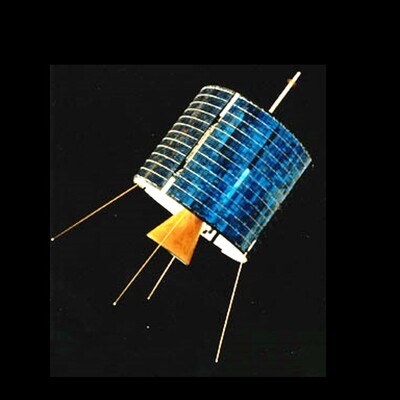
                                          Artemis II is also carrying an Optical Communication System, which will use lasers to communicate with earth, at very high data rates.

                                          I have not read much about, yet. That should bring us some high-res video from the vicinity of the moon.

                                          https://www.nasa.gov/goddard/esc/o2o/

                                          1 Reply Last reply
                                          0
                                          Svar
                                          • Svar som emne
                                          Login for at svare
                                          • Ældste til nyeste
                                          • Nyeste til ældste
                                          • Most Votes


                                          • Log ind

                                          • Har du ikke en konto? Tilmeld

                                          • Login or register to search.
                                          Powered by NodeBB Contributors
                                          Graciously hosted by data.coop
                                          • First post
                                            Last post
                                          0
                                          • Hjem
                                          • Seneste
                                          • Etiketter
                                          • Populære
                                          • Verden
                                          • Bruger
                                          • Grupper