Skip to content
  • Hjem
  • Seneste
  • Etiketter
  • Populære
  • Verden
  • Bruger
  • Grupper
Temaer
  • Light
  • Brite
  • Cerulean
  • Cosmo
  • Flatly
  • Journal
  • Litera
  • Lumen
  • Lux
  • Materia
  • Minty
  • Morph
  • Pulse
  • Sandstone
  • Simplex
  • Sketchy
  • Spacelab
  • United
  • Yeti
  • Zephyr
  • Dark
  • Cyborg
  • Darkly
  • Quartz
  • Slate
  • Solar
  • Superhero
  • Vapor

  • Default (No Skin)
  • No Skin
Kollaps
FARVEL BIG TECH
  1. Forside
  2. Ikke-kategoriseret
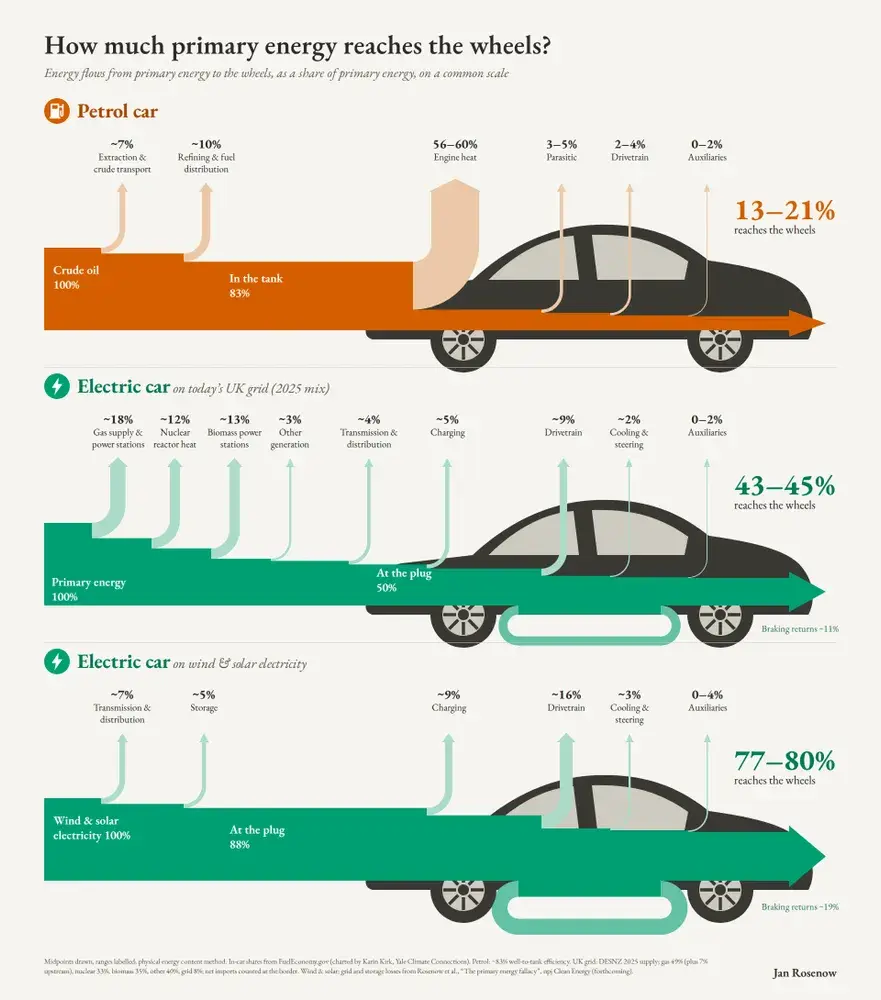
  3. This analysis is fascinating: it breaks down how when you fill up a petrol car most of the energy never moves it.
This analysis is fascinating: it breaks down how when you fill up a petrol car most of the energy never moves it.

Planlagt Fastgjort Låst Flyttet Ikke-kategoriseret
energyclimate
59 Indlæg 40 Posters 0 Visninger
  • Ældste til nyeste
  • Nyeste til ældste
  • Most Votes
Svar
  • Svar som emne
Login for at svare
Denne tråd er blevet slettet. Kun brugere med emne behandlings privilegier kan se den.
  • natasha_jay@tech.lgbtN natasha_jay@tech.lgbt

    @Nikkileah
    Kind of "in your face" isn't it?

    nikkileah@mendeddrum.orgN This user is from outside of this forum
    nikkileah@mendeddrum.orgN This user is from outside of this forum
    nikkileah@mendeddrum.org
    wrote sidst redigeret af
    #8

    @Natasha_Jay nahh. Just straightforward & easy to understand.
    The best kind

    1 Reply Last reply
    0
    • timwardcam@c.imT timwardcam@c.im

      @Natasha_Jay Then do the same for moving a *person* rather than a *car*, and include an e-bike comparison.

      A This user is from outside of this forum
      A This user is from outside of this forum
      awalter@mastodon.bawue.social
      wrote sidst redigeret af
      #9

      @TimWardCam @Natasha_Jay and add a tram and a train

      philcowans@universeodon.comP 1 Reply Last reply
      0
      • natasha_jay@tech.lgbtN natasha_jay@tech.lgbt

        This analysis is fascinating: it breaks down how when you fill up a petrol car most of the energy never moves it.

        Petrol car: 13–21% of the crude oil's energy reaches wheels.

        Electric car on today's UK grid: 43–45%.

        Electric car on wind+solar: 77–80%.

        via Jan Rosenow, Professor of Energy & Climate Policy at University of Oxford

        #energy #climate

        mjr@masto.bikeM This user is from outside of this forum
        mjr@masto.bikeM This user is from outside of this forum
        mjr@masto.bike
        wrote sidst redigeret af
        #10

        @Natasha_Jay the dodges there are that it doesn't show a hybrid on petrol and that none of the cars seem to have passenger cabin heating, but it's essentially true.

        Now if only there were more battery cars that weren't spyware-on-wheels...

        mscheffel@techhub.socialM david@social.piconet.workD 2 Replies Last reply
        0
        • A awalter@mastodon.bawue.social

          @TimWardCam @Natasha_Jay and add a tram and a train

          philcowans@universeodon.comP This user is from outside of this forum
          philcowans@universeodon.comP This user is from outside of this forum
          philcowans@universeodon.com
          wrote sidst redigeret af
          #11

          @awalter @TimWardCam @Natasha_Jay - this applies to every application of electrification and renewable energy, e.g. I believe heat pumps are 300-400% efficient. Fossil energy is just massively wasteful. Definitely something to remember when you see a pessimistic statistic about renewable energy as a percentage of total primary energy consumption - we don't need to get anywhere near to 100% of the "before" level.

          1 Reply Last reply
          0
          • natasha_jay@tech.lgbtN natasha_jay@tech.lgbt

            This analysis is fascinating: it breaks down how when you fill up a petrol car most of the energy never moves it.

            Petrol car: 13–21% of the crude oil's energy reaches wheels.

            Electric car on today's UK grid: 43–45%.

            Electric car on wind+solar: 77–80%.

            via Jan Rosenow, Professor of Energy & Climate Policy at University of Oxford

            #energy #climate

            evilk@universeodon.comE This user is from outside of this forum
            evilk@universeodon.comE This user is from outside of this forum
            evilk@universeodon.com
            wrote sidst redigeret af
            #12

            @Natasha_Jay
            That’s a nice graphic.

            1 Reply Last reply
            0
            • natasha_jay@tech.lgbtN natasha_jay@tech.lgbt

              This analysis is fascinating: it breaks down how when you fill up a petrol car most of the energy never moves it.

              Petrol car: 13–21% of the crude oil's energy reaches wheels.

              Electric car on today's UK grid: 43–45%.

              Electric car on wind+solar: 77–80%.

              via Jan Rosenow, Professor of Energy & Climate Policy at University of Oxford

              #energy #climate

              benjaminklein@mastodon.nuB This user is from outside of this forum
              benjaminklein@mastodon.nuB This user is from outside of this forum
              benjaminklein@mastodon.nu
              wrote sidst redigeret af
              #13

              @Natasha_Jay I wish they would include in this analysis how much energy solves the problems of moving a person from A->B. Even electric cars have to move 1-2 tons of metal and rubber along with the person, where as a bicycle can do it with around 10kg. Even if a car was 100% efficient it is still wasting 95% of it's energy moving itself around. Where with a bicycle it's closer to 5%. On this the easiest way to improve your efficiency is to car pool or cycle.

              1 Reply Last reply
              0
              • natasha_jay@tech.lgbtN natasha_jay@tech.lgbt

                This analysis is fascinating: it breaks down how when you fill up a petrol car most of the energy never moves it.

                Petrol car: 13–21% of the crude oil's energy reaches wheels.

                Electric car on today's UK grid: 43–45%.

                Electric car on wind+solar: 77–80%.

                via Jan Rosenow, Professor of Energy & Climate Policy at University of Oxford

                #energy #climate

                jeff@bluenoser.meJ This user is from outside of this forum
                jeff@bluenoser.meJ This user is from outside of this forum
                jeff@bluenoser.me
                wrote sidst redigeret af
                #14

                @Natasha_Jay I had that exact conversation last week around "coal powered e-bikes". The fact is that electrification of all the things is way better than burning at home. Burn in big fire to boil big kettle to get big electrcity, not small fire to boil little kettle to get tea. Use electricity to get tea.

                1 Reply Last reply
                0
                • natasha_jay@tech.lgbtN natasha_jay@tech.lgbt

                  This analysis is fascinating: it breaks down how when you fill up a petrol car most of the energy never moves it.

                  Petrol car: 13–21% of the crude oil's energy reaches wheels.

                  Electric car on today's UK grid: 43–45%.

                  Electric car on wind+solar: 77–80%.

                  via Jan Rosenow, Professor of Energy & Climate Policy at University of Oxford

                  #energy #climate

                  yugthebug@mastodon.socialY This user is from outside of this forum
                  yugthebug@mastodon.socialY This user is from outside of this forum
                  yugthebug@mastodon.social
                  wrote sidst redigeret af
                  #15

                  @Natasha_Jay
                  I am kinda wondering why the drivetrain is 16 percent loss vs 9 percent loss when they are both electric though??

                  jesstheunstill@infosec.exchangeJ 1 Reply Last reply
                  0
                  • natasha_jay@tech.lgbtN natasha_jay@tech.lgbt

                    This analysis is fascinating: it breaks down how when you fill up a petrol car most of the energy never moves it.

                    Petrol car: 13–21% of the crude oil's energy reaches wheels.

                    Electric car on today's UK grid: 43–45%.

                    Electric car on wind+solar: 77–80%.

                    via Jan Rosenow, Professor of Energy & Climate Policy at University of Oxford

                    #energy #climate

                    patchyouup@mastodon.socialP This user is from outside of this forum
                    patchyouup@mastodon.socialP This user is from outside of this forum
                    patchyouup@mastodon.social
                    wrote sidst redigeret af
                    #16

                    @Natasha_Jay From the graphic, for the electric car currently vs on wind and solar it has: charging 5% vs 9%; drivetrain 9% vs 16%; cooling & steering 2% vs 3%; auxiliaries 0-2% vs 0-4%; and braking returns (-)11% vs (-)19%.

                    Why are there any differences at the level of the vehicle when that is not the thing that has changed? I get the grid-level differences, but the vehicle-level differences are odd to say the least.

                    1 Reply Last reply
                    0
                    • mikerspencer@mastodon.scotM This user is from outside of this forum
                      mikerspencer@mastodon.scotM This user is from outside of this forum
                      mikerspencer@mastodon.scot
                      wrote sidst redigeret af
                      #17

                      @MichaelPorter @yugthebug @Natasha_Jay so the common scale in the subtitle is wheels moving? Definitely a bit of a mind-twister! Possibly because the flow implies remaining.

                      michaelporter@ottawa.placeM 1 Reply Last reply
                      0
                      • mikerspencer@mastodon.scotM mikerspencer@mastodon.scot

                        @MichaelPorter @yugthebug @Natasha_Jay so the common scale in the subtitle is wheels moving? Definitely a bit of a mind-twister! Possibly because the flow implies remaining.

                        michaelporter@ottawa.placeM This user is from outside of this forum
                        michaelporter@ottawa.placeM This user is from outside of this forum
                        michaelporter@ottawa.place
                        wrote sidst redigeret af
                        #18

                        @mikerspencer @yugthebug @Natasha_Jay Nor sure what you mean by “common scale in the subtitle.”

                        All of the numbers at the top of each diagram represent percentage losses from the original 100%. Let's say we start with 100 kWh.

                        Drivetrain losses are the same for both electric vehicles, 20% of whatever's left.

                        For the “UK grid" car, that's 20% of 45 kWh, or 9 kWh (9% of the original 100 kWh).
                        For the “wind & solar" car, it's 20% of 79 kWh, or 16 kWh (16% or the original 100 kWh).

                        mikerspencer@mastodon.scotM 1 Reply Last reply
                        0
                        • natasha_jay@tech.lgbtN natasha_jay@tech.lgbt

                          This analysis is fascinating: it breaks down how when you fill up a petrol car most of the energy never moves it.

                          Petrol car: 13–21% of the crude oil's energy reaches wheels.

                          Electric car on today's UK grid: 43–45%.

                          Electric car on wind+solar: 77–80%.

                          via Jan Rosenow, Professor of Energy & Climate Policy at University of Oxford

                          #energy #climate

                          ghostonthehalfshell@masto.aiG This user is from outside of this forum
                          ghostonthehalfshell@masto.aiG This user is from outside of this forum
                          ghostonthehalfshell@masto.ai
                          wrote sidst redigeret af
                          #19

                          @Natasha_Jay

                          Of the total energy a barrel of oil, a fraction can be converted into gasoline. Other fractions are converted into diesel and bunker fuel and lubricants and other industrial inputs etc

                          You can’t say 100% of oil going into a car. You have to start with the fraction of a barrel that that’s convertible into the fuel used in cars.

                          Even more fascinating is why a two legged meat puppet drags with them 1000 pounds of toxic waste to buy their milk.

                          1 Reply Last reply
                          0
                          • yugthebug@mastodon.socialY yugthebug@mastodon.social

                            @Natasha_Jay
                            I am kinda wondering why the drivetrain is 16 percent loss vs 9 percent loss when they are both electric though??

                            jesstheunstill@infosec.exchangeJ This user is from outside of this forum
                            jesstheunstill@infosec.exchangeJ This user is from outside of this forum
                            jesstheunstill@infosec.exchange
                            wrote sidst redigeret af
                            #20

                            @yugthebug @Natasha_Jay A lot of power is lost in the gearbox vs electric cars that are (usually) direct drive.

                            1 Reply Last reply
                            0
                            • natasha_jay@tech.lgbtN natasha_jay@tech.lgbt

                              This analysis is fascinating: it breaks down how when you fill up a petrol car most of the energy never moves it.

                              Petrol car: 13–21% of the crude oil's energy reaches wheels.

                              Electric car on today's UK grid: 43–45%.

                              Electric car on wind+solar: 77–80%.

                              via Jan Rosenow, Professor of Energy & Climate Policy at University of Oxford

                              #energy #climate

                              jesstheunstill@infosec.exchangeJ This user is from outside of this forum
                              jesstheunstill@infosec.exchangeJ This user is from outside of this forum
                              jesstheunstill@infosec.exchange
                              wrote sidst redigeret af
                              #21

                              @Natasha_Jay Also, oil is INCREDIBLY useful for making plastics, fertilizer, chemicals, synthetics, lubricants, and all sorts of other shit that's difficult to replace from natural sources. And then we just go and burn the shit...

                              dianea@lgbtqia.spaceD 1 Reply Last reply
                              0
                              • natasha_jay@tech.lgbtN natasha_jay@tech.lgbt

                                This analysis is fascinating: it breaks down how when you fill up a petrol car most of the energy never moves it.

                                Petrol car: 13–21% of the crude oil's energy reaches wheels.

                                Electric car on today's UK grid: 43–45%.

                                Electric car on wind+solar: 77–80%.

                                via Jan Rosenow, Professor of Energy & Climate Policy at University of Oxford

                                #energy #climate

                                2qx@mastodon.social2 This user is from outside of this forum
                                2qx@mastodon.social2 This user is from outside of this forum
                                2qx@mastodon.social
                                wrote sidst redigeret af
                                #22

                                @Natasha_Jay

                                Seems like should focus on developing chargers that allow DC-DC charging directly from on-site solar panels.

                                1 Reply Last reply
                                0
                                • natasha_jay@tech.lgbtN natasha_jay@tech.lgbt

                                  This analysis is fascinating: it breaks down how when you fill up a petrol car most of the energy never moves it.

                                  Petrol car: 13–21% of the crude oil's energy reaches wheels.

                                  Electric car on today's UK grid: 43–45%.

                                  Electric car on wind+solar: 77–80%.

                                  via Jan Rosenow, Professor of Energy & Climate Policy at University of Oxford

                                  #energy #climate

                                  E This user is from outside of this forum
                                  E This user is from outside of this forum
                                  edgetriggering@mastodon.social
                                  wrote sidst redigeret af
                                  #23

                                  @Natasha_Jay Middle graphic is incorrect. You would not have losses for Gas supply & power station + Nuclear reactor heat + Biomass power + Other generation. You would only have one of them at a time!

                                  1 Reply Last reply
                                  0
                                  • natasha_jay@tech.lgbtN natasha_jay@tech.lgbt

                                    This analysis is fascinating: it breaks down how when you fill up a petrol car most of the energy never moves it.

                                    Petrol car: 13–21% of the crude oil's energy reaches wheels.

                                    Electric car on today's UK grid: 43–45%.

                                    Electric car on wind+solar: 77–80%.

                                    via Jan Rosenow, Professor of Energy & Climate Policy at University of Oxford

                                    #energy #climate

                                    dianshuo@mstdn.ioD This user is from outside of this forum
                                    dianshuo@mstdn.ioD This user is from outside of this forum
                                    dianshuo@mstdn.io
                                    wrote sidst redigeret af
                                    #24

                                    @Natasha_Jay I call nonsense. The car isn’t determined by power source so why is a (for eg) Tesla powered by solar going to be getting more power to the wheels than “standard”electricity? Also why is transmission more expensive in one than the other? Is there some underlying assumption that solar is a home generated source? In which case it’s unlikely to fully power the car unless you have a very large array for a house.

                                    number6@fosstodon.orgN 1 Reply Last reply
                                    0
                                    • natasha_jay@tech.lgbtN natasha_jay@tech.lgbt

                                      This analysis is fascinating: it breaks down how when you fill up a petrol car most of the energy never moves it.

                                      Petrol car: 13–21% of the crude oil's energy reaches wheels.

                                      Electric car on today's UK grid: 43–45%.

                                      Electric car on wind+solar: 77–80%.

                                      via Jan Rosenow, Professor of Energy & Climate Policy at University of Oxford

                                      #energy #climate

                                      bredroll@mas.toB This user is from outside of this forum
                                      bredroll@mas.toB This user is from outside of this forum
                                      bredroll@mas.to
                                      wrote sidst redigeret af
                                      #25

                                      @Natasha_Jay I've heard this described before as "the primary energy fallacy"

                                      1 Reply Last reply
                                      0
                                      • michaelporter@ottawa.placeM michaelporter@ottawa.place

                                        @mikerspencer @yugthebug @Natasha_Jay Nor sure what you mean by “common scale in the subtitle.”

                                        All of the numbers at the top of each diagram represent percentage losses from the original 100%. Let's say we start with 100 kWh.

                                        Drivetrain losses are the same for both electric vehicles, 20% of whatever's left.

                                        For the “UK grid" car, that's 20% of 45 kWh, or 9 kWh (9% of the original 100 kWh).
                                        For the “wind & solar" car, it's 20% of 79 kWh, or 16 kWh (16% or the original 100 kWh).

                                        mikerspencer@mastodon.scotM This user is from outside of this forum
                                        mikerspencer@mastodon.scotM This user is from outside of this forum
                                        mikerspencer@mastodon.scot
                                        wrote sidst redigeret af
                                        #26

                                        @MichaelPorter
                                        The subtitle reads "energy flows... on a common scale."

                                        I understand the maths and you're explaining it well - thanks! But the figure is still a little confusing that one scenario gets 11% braking returns and the other 19%. Might just have been better to leave that bit off.

                                        @yugthebug @Natasha_Jay

                                        michaelporter@ottawa.placeM 1 Reply Last reply
                                        0
                                        • natasha_jay@tech.lgbtN natasha_jay@tech.lgbt

                                          This analysis is fascinating: it breaks down how when you fill up a petrol car most of the energy never moves it.

                                          Petrol car: 13–21% of the crude oil's energy reaches wheels.

                                          Electric car on today's UK grid: 43–45%.

                                          Electric car on wind+solar: 77–80%.

                                          via Jan Rosenow, Professor of Energy & Climate Policy at University of Oxford

                                          #energy #climate

                                          whitecattamer@mastodon.onlineW This user is from outside of this forum
                                          whitecattamer@mastodon.onlineW This user is from outside of this forum
                                          whitecattamer@mastodon.online
                                          wrote sidst redigeret af
                                          #27

                                          @Natasha_Jay I think this would work a little better if it included the amount of energy. I get what it’s trying to say, that electric vehicles on an electrified grid are the most efficient of the three options here, but I think people could get thrown off by seeing different percentages between the two electric vehicles. Percentages can be tough, but everyone understands loss, and you can compare the total energy expenditure versus kinetic movement at the end.

                                          1 Reply Last reply
                                          0
                                          Svar
                                          • Svar som emne
                                          Login for at svare
                                          • Ældste til nyeste
                                          • Nyeste til ældste
                                          • Most Votes


                                          • Log ind

                                          • Login or register to search.
                                          Powered by NodeBB Contributors
                                          Graciously hosted by data.coop
                                          • First post
                                            Last post
                                          0
                                          • Hjem
                                          • Seneste
                                          • Etiketter
                                          • Populære
                                          • Verden
                                          • Bruger
                                          • Grupper