When renewables flood the grid with more electricity than is needed at that moment, we don’t say „How wonderful!
-
@jwildeboer @openrisk yes and no. Ending Scarcity is not in the interest of big companies in that area. And the Technologie is allready there - batteries work (even commercially), H2 electrolysis not yet, seasonal cycles not yet. For short term stabilizing even flywheels work.
@Reinald @jwildeboer @openrisk large scale desalination that cycles up during peak hours. If that’s not enough we take that water and use solar powered pumps to take it to the polar caps. We can always use up energy if we don’t care who profits.
-
@shsbxheb @passwordsarehard4 @Reinald @jwildeboer The main reason socialism failed is that it wasn't designed to work with actual human beings, their greed and other bad qualities.
So far, I have seen no system that would work well with real people. But hey, I'm open to new ideas. Please, give me a link to your proposed solution!@ptesarik @shsbxheb @passwordsarehard4 @jwildeboer the main reason the major "socialism" experiments (USSR and associated states) didn't work out is - they have been a disguised capitalism. Individual to sociopathic greed is to be dealt with in every economic system, since it contributes to failure no matter what.
But being capitalism-critical is enough to make you enemy of the state these days, so alternative system design is rare to find. But it does exist.
-
@ptesarik @shsbxheb @passwordsarehard4 @jwildeboer the main reason the major "socialism" experiments (USSR and associated states) didn't work out is - they have been a disguised capitalism. Individual to sociopathic greed is to be dealt with in every economic system, since it contributes to failure no matter what.
But being capitalism-critical is enough to make you enemy of the state these days, so alternative system design is rare to find. But it does exist.
@Reinald As this discussion is moving far away from my original topic (excess electricity in the grid due to renewables) can I ask you all to take my handle out of this discussion? Thanks! @ptesarik @shsbxheb @passwordsarehard4
-
@ptesarik @shsbxheb @passwordsarehard4 @jwildeboer the main reason the major "socialism" experiments (USSR and associated states) didn't work out is - they have been a disguised capitalism. Individual to sociopathic greed is to be dealt with in every economic system, since it contributes to failure no matter what.
But being capitalism-critical is enough to make you enemy of the state these days, so alternative system design is rare to find. But it does exist.
@Reinald @shsbxheb @passwordsarehard4 Where? Your toots are too generic for me. Provide some resources, please!
-
@Reinald @jwildeboer @openrisk large scale desalination that cycles up during peak hours. If that’s not enough we take that water and use solar powered pumps to take it to the polar caps. We can always use up energy if we don’t care who profits.
@passwordsarehard4 @jwildeboer @openrisk local heat storage seems to be more feasible than global water pumping.
There are other concepts with temperatures up to several 100 (500? 600?) °C as well heating up sand oder ceramic rubble.
-
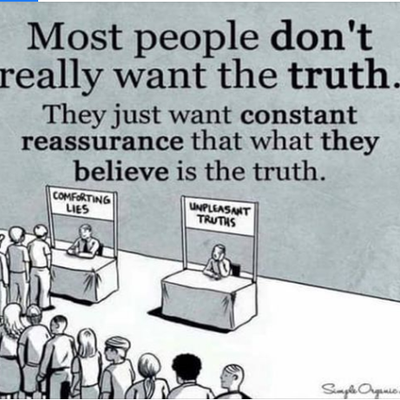
When renewables flood the grid with more electricity than is needed at that moment, we don’t say „How wonderful! Let’s find ways to store that excess electricity so we can share it back to the grid when needed.“ Instead we sing the song of fossil fuel capitalism that claims this is a BAD thing and we need to shut down the renewable plants so The Grid can keep on working based on scarcity and rent seeking. It's like we all have been brainwashed by the grid operators and the fossile fuel industry.
Multiple forms of solar energy and the tech to utilize it are now available to all around the world. Yet, because "where's the money in that", we still tear up the Earth instead.
Millions of homes sit empty while millions are homeless. Stores throw "out of date" food into the garbage.
If only there was somewhere we could mine sanity, huh?
-
@passwordsarehard4 @jwildeboer @openrisk local heat storage seems to be more feasible than global water pumping.
There are other concepts with temperatures up to several 100 (500? 600?) °C as well heating up sand oder ceramic rubble.
@Reinald given the overabundance of solar and the countless possible energy transformations there are also endless possibilities.
The problem is that there is an unspoken constraint: the "killer battery" must have the energy properties of fossil fuels so that nobody has to change behavior, none of the flawed design choices of modernity get invalidated.
This strategy may or may not work in the short/mid term, but it will definitely not work in the longer term.
-
@simo5 France demands solar panels to cover any parking site with more than 80 parking spaces. EPBD (Energy Performance of Buildings Directive) demands solar design as part of the permit process for new building. Things are changing. https://energy.ec.europa.eu/topics/energy-efficiency/energy-performance-buildings/energy-performance-buildings-directive/solar-energy-buildings_en
@jwildeboer Excellent, I hope the oil crisis will make it roll faster.
-
@Reinald given the overabundance of solar and the countless possible energy transformations there are also endless possibilities.
The problem is that there is an unspoken constraint: the "killer battery" must have the energy properties of fossil fuels so that nobody has to change behavior, none of the flawed design choices of modernity get invalidated.
This strategy may or may not work in the short/mid term, but it will definitely not work in the longer term.
@openrisk @passwordsarehard4 @jwildeboer as long as we don't have excess energy production, efficiency is still an issue. Once we have continuus energy surplus, we might start CCS or do other things that are terribly inefficient, like synthesizing carbon based fuels.
-
When renewables flood the grid with more electricity than is needed at that moment, we don’t say „How wonderful! Let’s find ways to store that excess electricity so we can share it back to the grid when needed.“ Instead we sing the song of fossil fuel capitalism that claims this is a BAD thing and we need to shut down the renewable plants so The Grid can keep on working based on scarcity and rent seeking. It's like we all have been brainwashed by the grid operators and the fossile fuel industry.
@jwildeboer I’m in the utility waiting queue for permission to install a battery at our house

-
@jwildeboer @ammdias @eoinho V2G I am not sure about. The prices we are seeing at this point in the UK make V2G about the same price as just buying another 32kWh battery pack. That battery doesn't go to work, or leave you thinking "I can't put the laundry on as the battery is going shopping in a bit"
There's always a battle between "we can use expensive object better with clever devices" and "make expensive object cheap".
The latter IMHO is winning on batteries, like it did on SSDs
-
Meanwhile, in Australia, with the highest penetration of rooftop solar in the world:
"The installation of home batteries in Australia in the month of March accounts for around 10 per cent of global grid scale battery installations, an extraordinary number."
Then we are giving away 3 free hours of electricity in the middle of the day, to use up some of the curtailed large scale electricity and shift energy from coal powered off peak.
@The_Sun @jwildeboer @ammdias @eoinho You have a crazy good battery incentive scheme right now - probably too good so causing overinstallation and poor utilisation but definitely the right direction regardless.
UK I can't even get the sales tax off a battery unless it's installed by a "professional", which we need to fix ASAP along with the plug in solar changes.
-
@tim @jwildeboer Yes, especially to the cooling as storage! Cold storage warehouses could freeze up huge ice blocks with excess and then use those during peak demand time, too.
@KarlHeinzHasliP @tim @jwildeboer Not quite so simple alas but a lot of cold storage plant in some places does operate based on spot pricing. The challenge is getting the energy back out of the ice fast enough and efficiently. Storage is great - a 1m cube of ice is something crazy like 100kWh of cooling power.
-
@OneInterestingFact @jwildeboer @openrisk
Raw material: same issue like any other raw material humans dig from earth. Can be handled.Lithium: there are other chemical partners, Natrium gets better, and for stationary use it is allready good to go.
Seasonal storage: don't forget wind and solar go together. When we have low solar harvest, we tend to have more wind. Seasonal storage is not yet solved, but there are quite some promising approaches.
Flow batteries don't deliver yet.
@Reinald @jwildeboer @openrisk
We can extract minerals without destroying environments and exploiting people. We should. But currently we don't.
Natrium? I'm guessing that's what I know as sodium? Yes, there are promising developments there.
I'm not well informed on the chemistry - lithium requires cobalt in the anode which is also problematic.The issue as I see it is scaling storage to run industrial plant to support the global population
-
@jwildeboer @ammdias @eoinho V2G I am not sure about. The prices we are seeing at this point in the UK make V2G about the same price as just buying another 32kWh battery pack. That battery doesn't go to work, or leave you thinking "I can't put the laundry on as the battery is going shopping in a bit"
There's always a battle between "we can use expensive object better with clever devices" and "make expensive object cheap".
The latter IMHO is winning on batteries, like it did on SSDs
@etchedpixels I've seen some really good V2G solutions for big charging stations for delivery vehicles/trucks. They are mostly parked between 21:00-6:00 and they mostly arrive with still 30-60% charged. So topping them up only takes a few hours. You can feed 10-20% per vehicle into the grid in the hours before midnight and gradually move to charging between 2:00-6:00. Do that with 50-100 vehicles and it starts making a lot of sense. @ammdias @eoinho
-
@valhalla The current incentive system (at least here in the EU) is completely wrong, though. In times of excess electricity from renewables, you are forced to shut wind/solar down and the electricity companies then have to pay you for NOT generating electricity. This disincentivizes from building storage capacities that would allow for better capture and use of renewable electricity. Things are changing, though.
@jwildeboer @valhalla Interesting. The UK actually favours adding battery storage because you can profit from arbitrage on an industrial scale (and we've had people doing that with pumped storage even before batteries were a meaningful thing). The more we get negative prices the more the "store it and sell it at peak" people make.
Where it all comes undone here is a lot of our wind generation is one end, and industry the other (due to a failure of energy pricing models)
-
@etchedpixels I've seen some really good V2G solutions for big charging stations for delivery vehicles/trucks. They are mostly parked between 21:00-6:00 and they mostly arrive with still 30-60% charged. So topping them up only takes a few hours. You can feed 10-20% per vehicle into the grid in the hours before midnight and gradually move to charging between 2:00-6:00. Do that with 50-100 vehicles and it starts making a lot of sense. @ammdias @eoinho
@jwildeboer @ammdias @eoinho Ok that makes a lot more sense. For home it's looking marginal at best.
-
@jwildeboer @ammdias @eoinho Ok that makes a lot more sense. For home it's looking marginal at best.
@etchedpixels The company behind this, The Mobility House in Munich, is now also offering free charging at home with a wallbox when they are allowed to V2G your car with their system.
"if an electric car is connected and available for bidirectional charging for an average of 14 hours per day, the charging costs for a driving distance of 10,000 kilometres can practically be reduced to zero."
https://www.electrive.com/2026/04/15/the-mobility-house-to-offer-free-electricity-for-v2g-customers/ -
@Reinald @jwildeboer @openrisk
We can extract minerals without destroying environments and exploiting people. We should. But currently we don't.
Natrium? I'm guessing that's what I know as sodium? Yes, there are promising developments there.
I'm not well informed on the chemistry - lithium requires cobalt in the anode which is also problematic.The issue as I see it is scaling storage to run industrial plant to support the global population
@OneInterestingFact @jwildeboer @openrisk yes, sorry, it is sodium in english language.
Cobalt free cell cemistry is available.
Again: responsible mining is an issue. We always can do better. The Lithium mining is nevertheless WAY less damaging for nature as oil business is and has been.
Industry scale batteries are done regulary, BMW has a factory with windturbines with battery backup. California has Megawatts capacity to stabilize the network. There are loads of examples.
-
@etchedpixels I've seen some really good V2G solutions for big charging stations for delivery vehicles/trucks. They are mostly parked between 21:00-6:00 and they mostly arrive with still 30-60% charged. So topping them up only takes a few hours. You can feed 10-20% per vehicle into the grid in the hours before midnight and gradually move to charging between 2:00-6:00. Do that with 50-100 vehicles and it starts making a lot of sense. @ammdias @eoinho
@jwildeboer @etchedpixels @ammdias @eoinho yes but do those vehicle owners get paid for the additional wear and tear of their batteries?
- If not they don't!
- Even if it's just "freely charged full at the planned departure time"…
- If not they don't!