Skip to content
  • Hjem
  • Seneste
  • Etiketter
  • Populære
  • Verden
  • Bruger
  • Grupper
Temaer
  • Light
  • Brite
  • Cerulean
  • Cosmo
  • Flatly
  • Journal
  • Litera
  • Lumen
  • Lux
  • Materia
  • Minty
  • Morph
  • Pulse
  • Sandstone
  • Simplex
  • Sketchy
  • Spacelab
  • United
  • Yeti
  • Zephyr
  • Dark
  • Cyborg
  • Darkly
  • Quartz
  • Slate
  • Solar
  • Superhero
  • Vapor

  • Default (No Skin)
  • No Skin
Kollaps
FARVEL BIG TECH
  1. Forside
  2. Ikke-kategoriseret
  3. That's no moon.

That's no moon.

Planlagt Fastgjort Låst Flyttet Ikke-kategoriseret
astrodonastronomyastrophysicsspacescience
14 Indlæg 9 Posters 0 Visninger
  • Ældste til nyeste
  • Nyeste til ældste
  • Most Votes
Svar
  • Svar som emne
Login for at svare
Denne tråd er blevet slettet. Kun brugere med emne behandlings privilegier kan se den.
  • esoastronomy@mastodon.socialE esoastronomy@mastodon.social

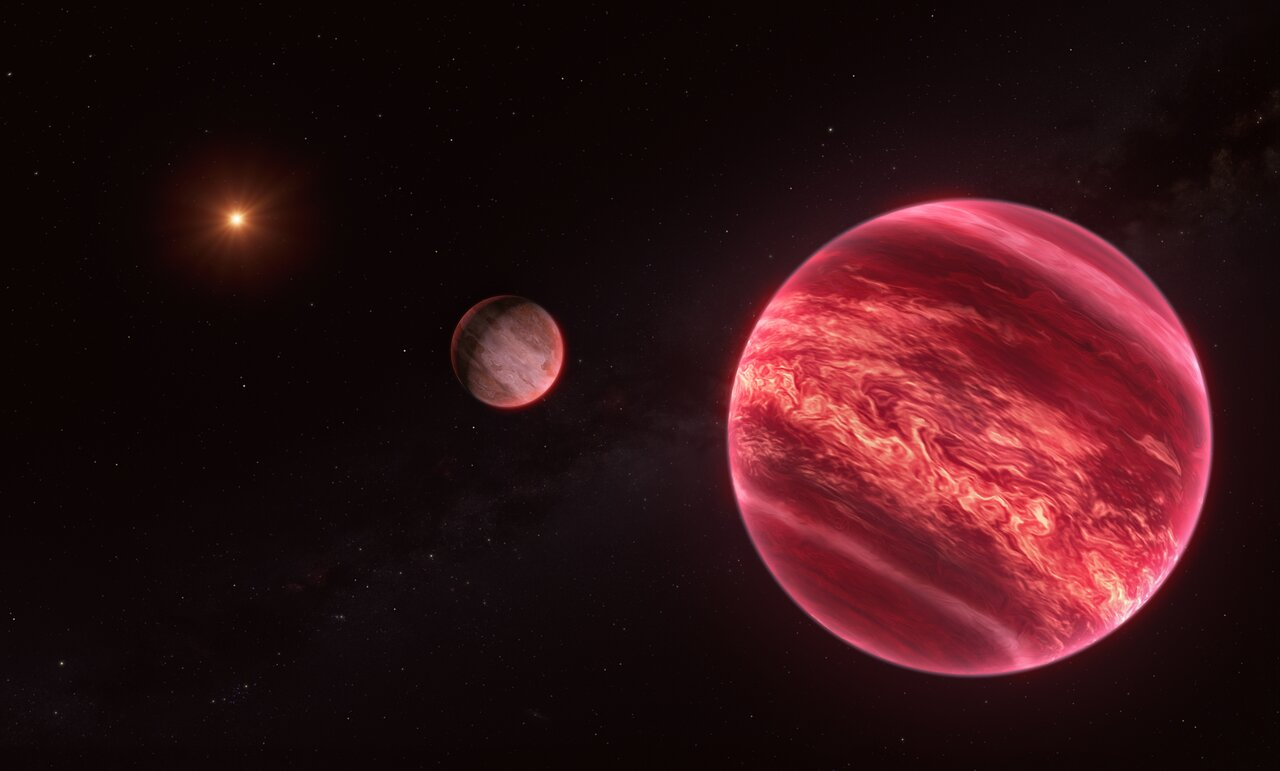
    Unlike moons in our Solar System, this object — a gaseous body at least as massive as Jupiter — does not orbit a planet.

    It circles a brown dwarf, that in turn orbits the CD-35 2722 star.

    Regardless of what to call this object, this discovery may mark an important first.

    2/4

    esoastronomy@mastodon.socialE This user is from outside of this forum
    esoastronomy@mastodon.socialE This user is from outside of this forum
    esoastronomy@mastodon.social
    wrote sidst redigeret af
    #3

    If confirmed, this could be the first ‘moon’ discovered outside our Solar System — something astronomers have been searching for years.

    This animation shows how the gravitational pull of the ‘moon’ makes the brown dwarf wobble, shifting its spectrum and so enabling the detection 👇

    3/4

    esoastronomy@mastodon.socialE 1 Reply Last reply
    0
    • esoastronomy@mastodon.socialE esoastronomy@mastodon.social

      If confirmed, this could be the first ‘moon’ discovered outside our Solar System — something astronomers have been searching for years.

      This animation shows how the gravitational pull of the ‘moon’ makes the brown dwarf wobble, shifting its spectrum and so enabling the detection 👇

      3/4

      esoastronomy@mastodon.socialE This user is from outside of this forum
      esoastronomy@mastodon.socialE This user is from outside of this forum
      esoastronomy@mastodon.social
      wrote sidst redigeret af
      #4

      Read more in our press release: https://www.eso.org/public/news/eso2610/

      Or if you prefer a video summary: https://www.youtube.com/watch?v=z9j_oUFddIY

      4/4

      1 Reply Last reply
      0
      • esoastronomy@mastodon.socialE esoastronomy@mastodon.social

        Unlike moons in our Solar System, this object — a gaseous body at least as massive as Jupiter — does not orbit a planet.

        It circles a brown dwarf, that in turn orbits the CD-35 2722 star.

        Regardless of what to call this object, this discovery may mark an important first.

        2/4

        amoroso@oldbytes.spaceA This user is from outside of this forum
        amoroso@oldbytes.spaceA This user is from outside of this forum
        amoroso@oldbytes.space
        wrote sidst redigeret af
        #5

        @esoastronomy The definition of moon feels like a wave function.

        P 1 Reply Last reply
        0
        • esoastronomy@mastodon.socialE esoastronomy@mastodon.social

          That's no moon. It's a...hang on, what should we call it? 🤔

          Our VLT has revealed evidence for a moon-like object in the CD-35 2722 system. Yet this new ‘exomoon’ detection is challenging cosmic labels!

          Illustration: ESO/M. Kornmesser

          #astrodon #astronomy #astrophysics #space #science

          1/4

          thorium@social.linux.pizzaT This user is from outside of this forum
          thorium@social.linux.pizzaT This user is from outside of this forum
          thorium@social.linux.pizza
          wrote sidst redigeret af
          #6

          @esoastronomy You nailed it. Death Star it is!

          1 Reply Last reply
          0
          • esoastronomy@mastodon.socialE esoastronomy@mastodon.social

            That's no moon. It's a...hang on, what should we call it? 🤔

            Our VLT has revealed evidence for a moon-like object in the CD-35 2722 system. Yet this new ‘exomoon’ detection is challenging cosmic labels!

            Illustration: ESO/M. Kornmesser

            #astrodon #astronomy #astrophysics #space #science

            1/4

            desoter@mastodon.unoD This user is from outside of this forum
            desoter@mastodon.unoD This user is from outside of this forum
            desoter@mastodon.uno
            wrote sidst redigeret af
            #7

            @esoastronomy exosat 😁

            1 Reply Last reply
            0
            • esoastronomy@mastodon.socialE esoastronomy@mastodon.social

              That's no moon. It's a...hang on, what should we call it? 🤔

              Our VLT has revealed evidence for a moon-like object in the CD-35 2722 system. Yet this new ‘exomoon’ detection is challenging cosmic labels!

              Illustration: ESO/M. Kornmesser

              #astrodon #astronomy #astrophysics #space #science

              1/4

              bamboombibbitybop@mastodon.socialB This user is from outside of this forum
              bamboombibbitybop@mastodon.socialB This user is from outside of this forum
              bamboombibbitybop@mastodon.social
              wrote sidst redigeret af
              #8

              @esoastronomy someone get David Kipping on the phone

              1 Reply Last reply
              0
              • amoroso@oldbytes.spaceA amoroso@oldbytes.space

                @esoastronomy The definition of moon feels like a wave function.

                P This user is from outside of this forum
                P This user is from outside of this forum
                passwordsarehard4@mastodon.social
                wrote sidst redigeret af
                #9

                @amoroso @esoastronomy . It’s a planet circling a dying star that happens to be getting pulled into another star. this feels more like a captured solar system degrading into its neighbor than a moon to me.

                amoroso@oldbytes.spaceA esoastronomy@mastodon.socialE B 3 Replies Last reply
                0
                • P passwordsarehard4@mastodon.social

                  @amoroso @esoastronomy . It’s a planet circling a dying star that happens to be getting pulled into another star. this feels more like a captured solar system degrading into its neighbor than a moon to me.

                  amoroso@oldbytes.spaceA This user is from outside of this forum
                  amoroso@oldbytes.spaceA This user is from outside of this forum
                  amoroso@oldbytes.space
                  wrote sidst redigeret af
                  #10

                  @passwordsarehard4 Agreed.

                  @esoastronomy

                  1 Reply Last reply
                  0
                  • esoastronomy@mastodon.socialE esoastronomy@mastodon.social

                    That's no moon. It's a...hang on, what should we call it? 🤔

                    Our VLT has revealed evidence for a moon-like object in the CD-35 2722 system. Yet this new ‘exomoon’ detection is challenging cosmic labels!

                    Illustration: ESO/M. Kornmesser

                    #astrodon #astronomy #astrophysics #space #science

                    1/4

                    quux@alive.barQ This user is from outside of this forum
                    quux@alive.barQ This user is from outside of this forum
                    quux@alive.bar
                    wrote sidst redigeret af
                    #11

                    @esoastronomy satellite

                    1 Reply Last reply
                    0
                    • P passwordsarehard4@mastodon.social

                      @amoroso @esoastronomy . It’s a planet circling a dying star that happens to be getting pulled into another star. this feels more like a captured solar system degrading into its neighbor than a moon to me.

                      esoastronomy@mastodon.socialE This user is from outside of this forum
                      esoastronomy@mastodon.socialE This user is from outside of this forum
                      esoastronomy@mastodon.social
                      wrote sidst redigeret af
                      #12

                      @passwordsarehard4 @amoroso Note that the intermediate object is not a dying star, it's a young brown dwarf – an object that never became a star. It's more massive than a planet but not massive enough to sustain nuclear fusion in a prolonged way.

                      1 Reply Last reply
                      0
                      • P passwordsarehard4@mastodon.social

                        @amoroso @esoastronomy . It’s a planet circling a dying star that happens to be getting pulled into another star. this feels more like a captured solar system degrading into its neighbor than a moon to me.

                        B This user is from outside of this forum
                        B This user is from outside of this forum
                        bedifferent@mastodon.social
                        wrote sidst redigeret af
                        #13

                        @passwordsarehard4 @amoroso @esoastronomy If it's pulled into another star, what's the state of that star? Sounds like a black hole or what happens when they collide?

                        1 Reply Last reply
                        0
                        • esoastronomy@mastodon.socialE esoastronomy@mastodon.social

                          That's no moon. It's a...hang on, what should we call it? 🤔

                          Our VLT has revealed evidence for a moon-like object in the CD-35 2722 system. Yet this new ‘exomoon’ detection is challenging cosmic labels!

                          Illustration: ESO/M. Kornmesser

                          #astrodon #astronomy #astrophysics #space #science

                          1/4

                          ritchey_de@mastodon.socialR This user is from outside of this forum
                          ritchey_de@mastodon.socialR This user is from outside of this forum
                          ritchey_de@mastodon.social
                          wrote sidst redigeret af
                          #14

                          @esoastronomy
                          I wonder if this „moon“ has its own moons…

                          1 Reply Last reply
                          0
                          • simonjust@mstdn.dkS simonjust@mstdn.dk shared this topic
                          Svar
                          • Svar som emne
                          Login for at svare
                          • Ældste til nyeste
                          • Nyeste til ældste
                          • Most Votes


                          • Log ind

                          • Har du ikke en konto? Tilmeld

                          • Login or register to search.
                          Powered by NodeBB Contributors
                          Graciously hosted by data.coop
                          • First post
                            Last post
                          0
                          • Hjem
                          • Seneste
                          • Etiketter
                          • Populære
                          • Verden
                          • Bruger
                          • Grupper