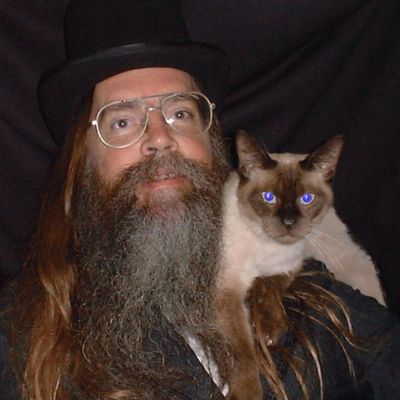
How I knew I was officially Old: I stopped being disoriented by the experience of meeting with grown-ass adults who wanted to thank me for the books of mine they'd read in their childhoods, which helped shape their lives.
-
That's where the evil part came in. We were pretty sure we could extract a list of the 100,000 most commonly searched terms from Google, and then we could use our web-crawler to capture the top 100 results for each. We could feed these to our Bayesian machine-learning tool to create statistical models of the semantic structure of these results, and then we could generate thousands of pages of word-salad for each of those keywords that matched those statistical models.
10/
Then, add interlinks to trick Google's citation analysis model. Plaster those word-salad pages with ads, and voila - free cash flow!
Of course, we didn't do it. But even as we developed this idea, the room crackled with a kind of dark, excited dread. We weren't any smarter than many other rooms full of people who were engaged in exercises just like this one. The difference was, we *loved* the web. The idea of someone deliberately poisoning it this way churned our stomachs.
11/
-
Then, add interlinks to trick Google's citation analysis model. Plaster those word-salad pages with ads, and voila - free cash flow!
Of course, we didn't do it. But even as we developed this idea, the room crackled with a kind of dark, excited dread. We weren't any smarter than many other rooms full of people who were engaged in exercises just like this one. The difference was, we *loved* the web. The idea of someone deliberately poisoning it this way churned our stomachs.
11/
The whole point of Opencola was to connect people with each other based on their shared interests. We *loved* Google and how it helped you find the people who wrote the web in ways that delighted and informed you. This kind of spam, aimed at wrecking Google's ability to help people make sense of the things we were all posting to the internet, was...*grotesque*.
12/
-
The whole point of Opencola was to connect people with each other based on their shared interests. We *loved* Google and how it helped you find the people who wrote the web in ways that delighted and informed you. This kind of spam, aimed at wrecking Google's ability to help people make sense of the things we were all posting to the internet, was...*grotesque*.
12/
I didn't know the term then, but what we were doing amounted to "red-teaming" - thinking through the ways that attackers could destroy something that we valued. Later, we tried "blue-teaming," trying to imagine how our tools might help us fight back if someone else got the same idea and went through with it.
I didn't know the term "blue-teaming" then, either. Once I learned these terms, they brought a lot of clarity to the world.
13/
-
I didn't know the term then, but what we were doing amounted to "red-teaming" - thinking through the ways that attackers could destroy something that we valued. Later, we tried "blue-teaming," trying to imagine how our tools might help us fight back if someone else got the same idea and went through with it.
I didn't know the term "blue-teaming" then, either. Once I learned these terms, they brought a lot of clarity to the world.
13/
Today, I have another term that I turn to when I am trying to rally other people who love the internet and want it to be good: "Tron-pilled." Tron "fought for the user." Lots of us technologists are Tron-pilled. Back in the early days, when it wasn't clear that there was ever going to be any money in this internet thing, being Tron-pilled was pretty much the only reason to get involved with it.
14/
-
Today, I have another term that I turn to when I am trying to rally other people who love the internet and want it to be good: "Tron-pilled." Tron "fought for the user." Lots of us technologists are Tron-pilled. Back in the early days, when it wasn't clear that there was ever going to be any money in this internet thing, being Tron-pilled was pretty much the only reason to get involved with it.
14/
Sure, there were a few monsters who fell into the early internet because it offered them a chance to torment strangers at a distance, but they were vastly outnumbered by the legion of Tron-pilled nerds who wanted to make the internet better because we wanted all our normie friends to have the same kind of good time we were having.
15/
-
Sure, there were a few monsters who fell into the early internet because it offered them a chance to torment strangers at a distance, but they were vastly outnumbered by the legion of Tron-pilled nerds who wanted to make the internet better because we wanted all our normie friends to have the same kind of good time we were having.
15/
The point of this is that there were *lots* of people back then who had the capacity to imagine the kind of gross stuff that Zuckerberg, Musk, and innumerable other scammers, hustlers and creeps got up to on the web. The thing that distinguished these monsters wasn't their genius - it was their callousness. When *we* brainstormed ways to break the internet, we felt scared and were inspired to try to save it.
16/
-
The point of this is that there were *lots* of people back then who had the capacity to imagine the kind of gross stuff that Zuckerberg, Musk, and innumerable other scammers, hustlers and creeps got up to on the web. The thing that distinguished these monsters wasn't their genius - it was their callousness. When *we* brainstormed ways to break the internet, we felt scared and were inspired to try to save it.
16/
When *they* brainstormed ways to break the internet, they created pitch-decks.
And still: the old web was good in so many ways for so long. The Tron-pilled amongst us held the line. When we build a new, good, post-American internet, we're going to need a multitude of Tron-pilled technologists, old and young, who build, maintain - and, above all, *defend* it.
eof/
-
The way it was gonna work was that you'd have a folder on your desktop and you could put things in it that you liked and the system would crawl other users' folders, and the open web, and copy things into your folder that it found that seemed related to the stuff you liked. You could refine the system's sensibilities by thumbs-up/thumbs-downing the suggestions, and it would refine its conception of your preferences over time.
5/
I still think a gaming-proof whuffie system for content could have made the internet - and society - soooo much more accountable than (gestures vaguely at the flaming, oozing wreckage) what we got instead.
-
How I knew I was officially Old: I stopped being disoriented by the experience of meeting with grown-ass adults who wanted to thank me for the books of mine they'd read in their childhoods, which helped shape their lives.
--
If you'd like an essay-formatted version of this thread to read or share, here's a link to it on pluralistic.net, my surveillance-free, ad-free, tracker-free blog:
https://pluralistic.net/2026/04/11/obvious-terrible-ideas/#bayesian-terrorism
1/
I was there, from mid nineties forward and I still learned a lot from this post.
-
How I knew I was officially Old: I stopped being disoriented by the experience of meeting with grown-ass adults who wanted to thank me for the books of mine they'd read in their childhoods, which helped shape their lives.
--
If you'd like an essay-formatted version of this thread to read or share, here's a link to it on pluralistic.net, my surveillance-free, ad-free, tracker-free blog:
https://pluralistic.net/2026/04/11/obvious-terrible-ideas/#bayesian-terrorism
1/
@pluralistic as another adult in the room, I would attribute my being in tech now a fair bit to your writings i encountered as a teenager learning about jailbreaks and DRMs and the internet in the 00s
-
The point of this is that there were *lots* of people back then who had the capacity to imagine the kind of gross stuff that Zuckerberg, Musk, and innumerable other scammers, hustlers and creeps got up to on the web. The thing that distinguished these monsters wasn't their genius - it was their callousness. When *we* brainstormed ways to break the internet, we felt scared and were inspired to try to save it.
16/
@pluralistic They’re sociopaths and much like fecal matter they tend to rise to the top. They have always been around but the casino economy is attracting them in record numbers. https://blog.miljko.org/2026/04/11/the-shameless-style-in-american.html
-
 T tokeriis@helvede.net shared this topic