So, this weekend I'm playing with Fiwix.
-
@nina_kali_nina IRC client? maybe https://rhapsody.sourceforge.net/
@mmu_man Good idea! I think I'll try to get links and something like that working sometime later this week. For now I'm fighting windows
-
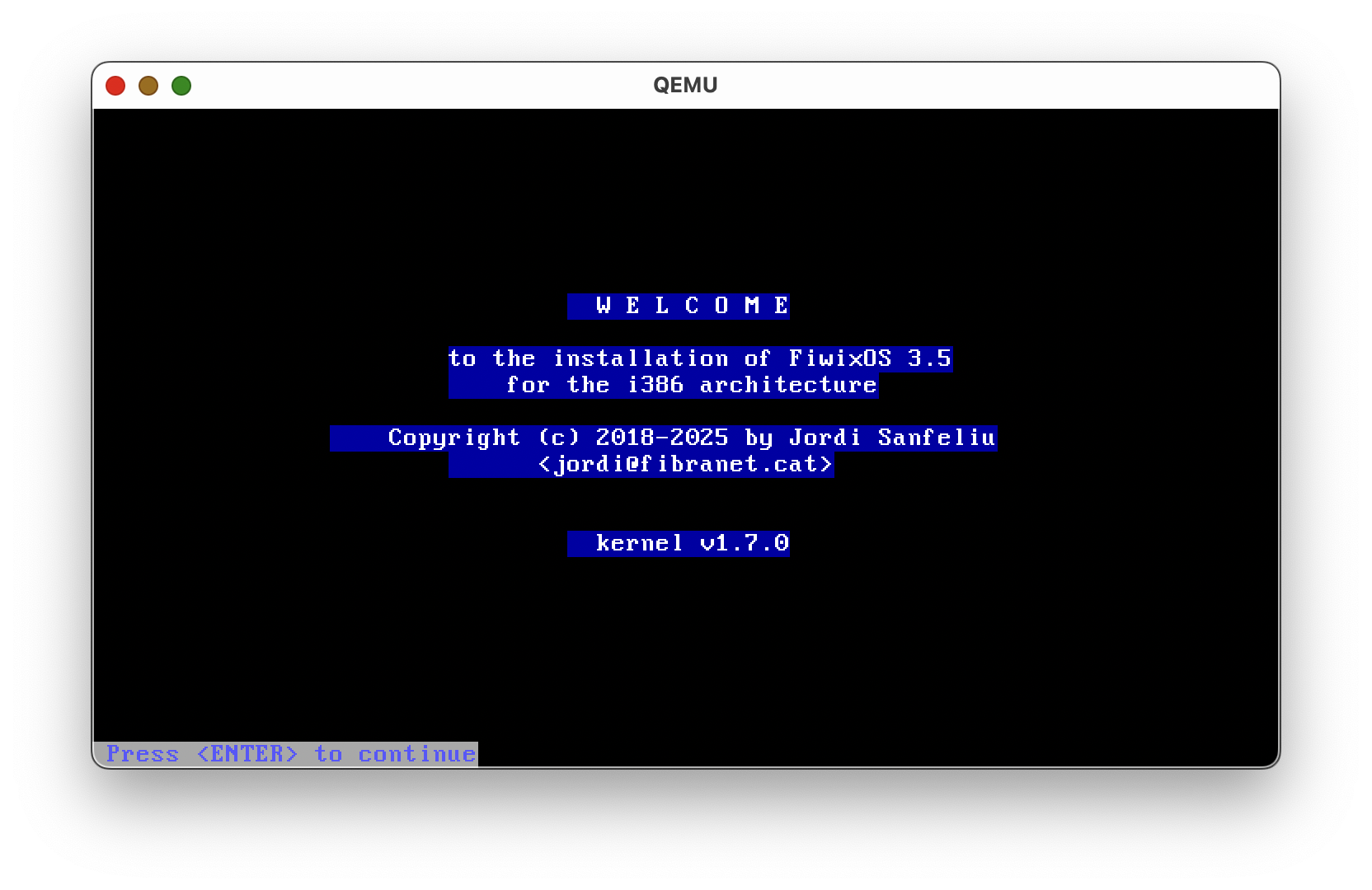
So, this weekend I'm playing with Fiwix. Fiwix (https://fiwix.org/) is a small hobbyist operating system for i386 that aims to be Linux 2.0 compatible while being small enough that a single human could understand it as a whole (it's ~30k SLOC, self-hosted, and can be built with tcc).
A couple of years ago Fiwix was used in a fun project of "let's bootstrap a Linux system with only tiny tools that can be understood by a single person": https://github.com/fosslinux/live-bootstrap/blob/master/parts.rst
My refreshed interest in it comes from multiple sources: first, there is now a TCP/IP stack (still WIP). Second, GNU/Linux is *gestures ambiguously* in a strange state, so it is interesting to see how far one could get with a completely non-BSD non-standard tiny, toy-like operating system.
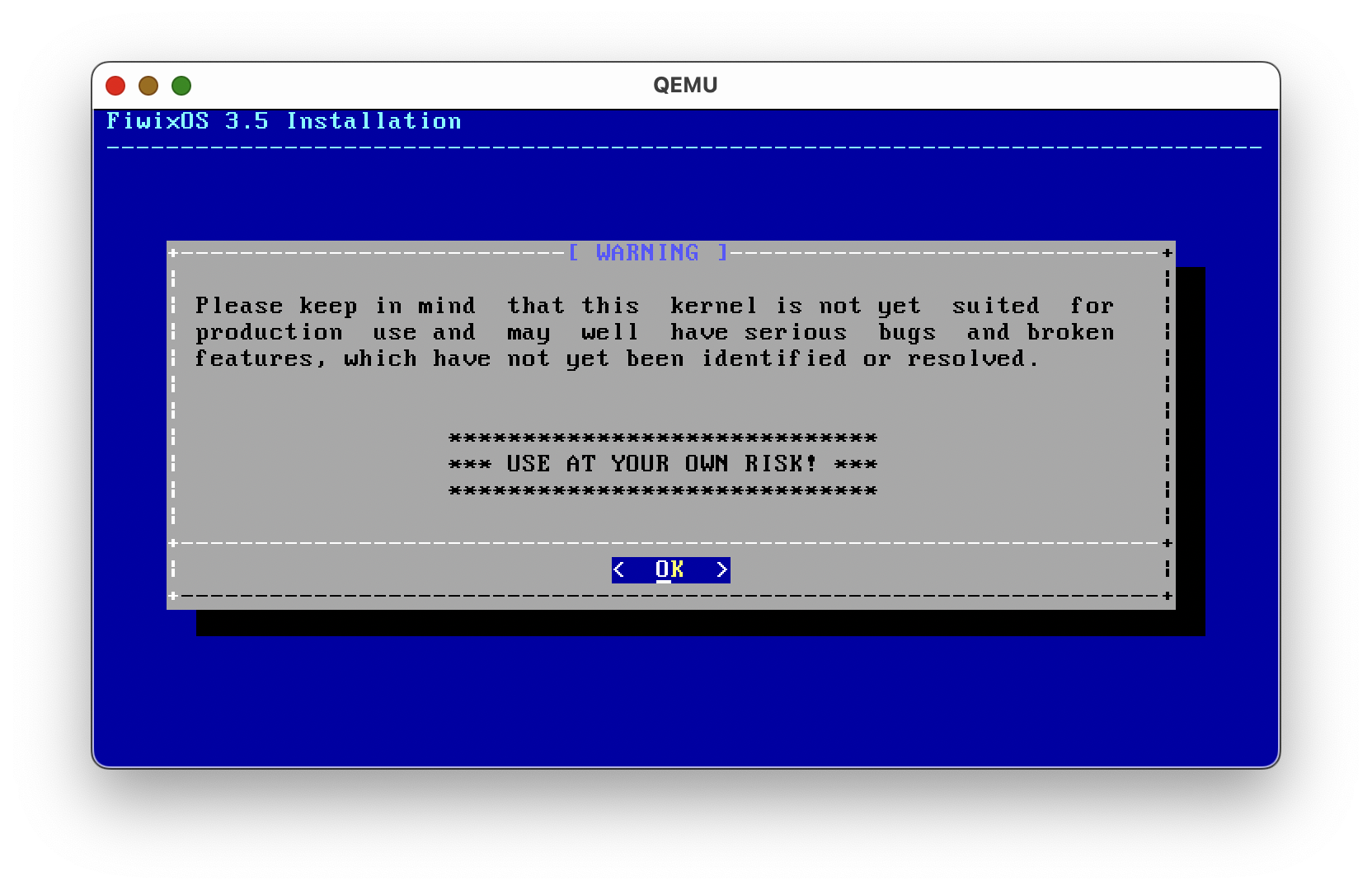
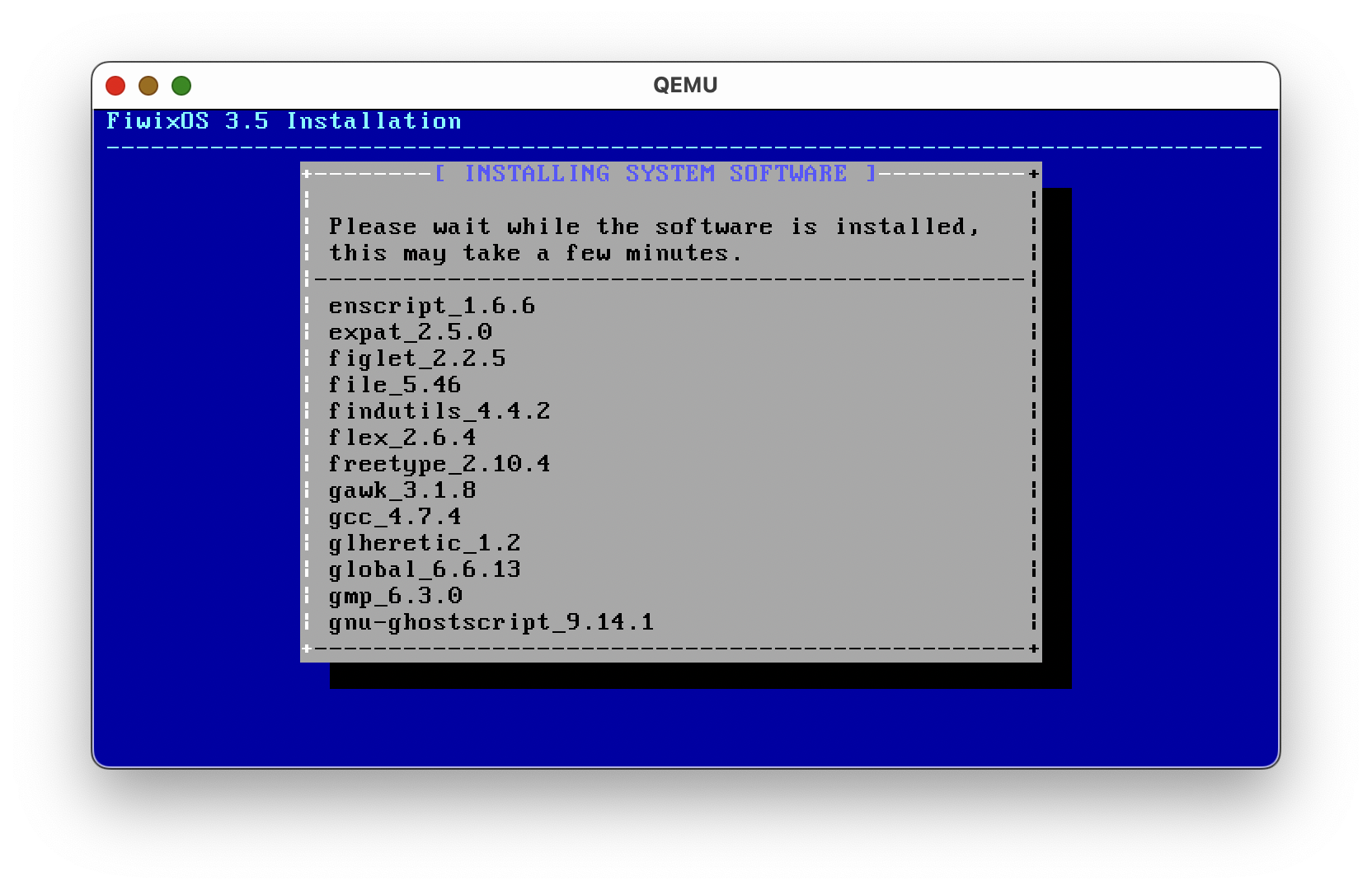
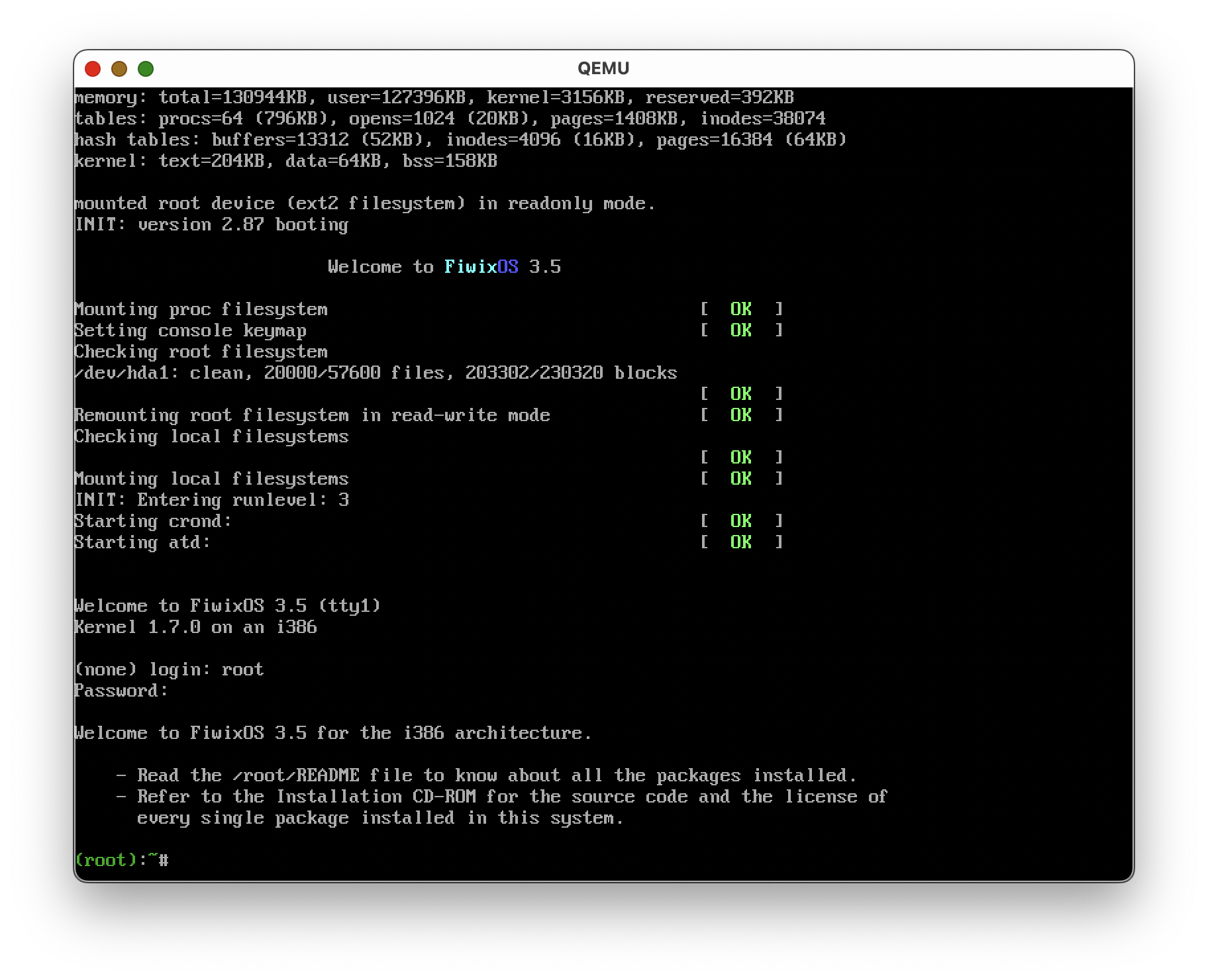
The installation is quite straightforward. "Please keep in mind this kernel is not yet suited for production. Use at your own risk!" is, in itself, a proof of reliability.
This is a beginning of a slow-going🧵
@nina_kali_nina does it support the linux framebuffer?
if so you might be able to run uxn-lfb on it!
-
@nina_kali_nina does it support the linux framebuffer?
if so you might be able to run uxn-lfb on it!
@nina_kali_nina (that said the input devices might be sufficiently divergent that they won't work properly)
-
@nina_kali_nina (that said the input devices might be sufficiently divergent that they won't work properly)
@nina_kali_nina looking at the "to do" list i think maybe it won't work, sadly:
> Improve framebuffer interface with Linux ioctl() commands.
currently uxn-lfb relies on those ioctls
-
So, this weekend I'm playing with Fiwix. Fiwix (https://fiwix.org/) is a small hobbyist operating system for i386 that aims to be Linux 2.0 compatible while being small enough that a single human could understand it as a whole (it's ~30k SLOC, self-hosted, and can be built with tcc).
A couple of years ago Fiwix was used in a fun project of "let's bootstrap a Linux system with only tiny tools that can be understood by a single person": https://github.com/fosslinux/live-bootstrap/blob/master/parts.rst
My refreshed interest in it comes from multiple sources: first, there is now a TCP/IP stack (still WIP). Second, GNU/Linux is *gestures ambiguously* in a strange state, so it is interesting to see how far one could get with a completely non-BSD non-standard tiny, toy-like operating system.
The installation is quite straightforward. "Please keep in mind this kernel is not yet suited for production. Use at your own risk!" is, in itself, a proof of reliability.
This is a beginning of a slow-going🧵
@nina_kali_nina something for @osnews Thom?
-
@nina_kali_nina something for @osnews Thom?
-
@nina_kali_nina does it support the linux framebuffer?
if so you might be able to run uxn-lfb on it!
@d6 I don't think it does, but the SDL port should work. It's on my to-do list
-
Fiwix understandably misses a few important tools here and there. Having an emulator capable of running different systems would be nice, right?
Qemu is generally quite portable, but DosBox is smaller, and is good enough for running a large chunk of software I might want to run on my system.
FiwixOS has an SDL1.2 port, so compiling DosBox for it was not difficult at all (a couple of patches are still required). I've thrashed around the video card settings a little bit, until I got it mostly working. I need to figure out why the keyboard is buggy, but I can start Windows under Fiwix, and play a game of solitaire.
So, uh, viva FOSS? Great stuff, hobbyists! It is super duper awesome that I can just get a random toy-like OS, and simply compile the stuff I use regularly for it, and it would work. Extra kudos when the toy OS can boot with as little as 8 megs of RAM. Not gigs, megs.
🧵cont?
Thanks to help from the Fiwix devs, I have DosBox fully working (no sound, CD or network support yet). I got a bit upset that there's no windowing interface for the OS (yet), so I ported Bellcore MGR to Fiwix. It's half-baked, but it works.
If you never heard about MGR, it's an X competitor and a terminal multiplexer with graphics.
Here's my post about it: https://www.ninakalinina.com/notes/mgr/ -
Thanks to help from the Fiwix devs, I have DosBox fully working (no sound, CD or network support yet). I got a bit upset that there's no windowing interface for the OS (yet), so I ported Bellcore MGR to Fiwix. It's half-baked, but it works.
If you never heard about MGR, it's an X competitor and a terminal multiplexer with graphics.
Here's my post about it: https://www.ninakalinina.com/notes/mgr/@nina_kali_nina Cool. I'm releasing in near future aoUT dos extender with toolchain support for modern gcc and clang. The name comes from the fact that the PM payload is relocatable a.out
As for Dosbox, this is AFAIK the best incarnation of it ATM: https://www.dosbox-staging.org/ -
Thanks to help from the Fiwix devs, I have DosBox fully working (no sound, CD or network support yet). I got a bit upset that there's no windowing interface for the OS (yet), so I ported Bellcore MGR to Fiwix. It's half-baked, but it works.
If you never heard about MGR, it's an X competitor and a terminal multiplexer with graphics.
Here's my post about it: https://www.ninakalinina.com/notes/mgr/@nina_kali_nina Do I read your article to see that the software in the screenshot is from 1984? If so, fascinating to see it even includes the “root weave” X Window System stipple (I did some detective work on this visual design and thought it arrived somewhat later in the 1980s).
-
@nina_kali_nina Cool. I'm releasing in near future aoUT dos extender with toolchain support for modern gcc and clang. The name comes from the fact that the PM payload is relocatable a.out
As for Dosbox, this is AFAIK the best incarnation of it ATM: https://www.dosbox-staging.org/@nina_kali_nina The inspiration came from when I noticed that people I know who are doing demoscene productions for MS-DOS still use old compilers and really antique tools to generate MS-DOS binaries.
An associated project is to create mxmplay20 of https://www.cubic.org/source/mxmplay-1.6.zip, which is portable implementation of the original and buildable also for Linux (with Pipewire instead of GUS playback routine).
There is a new GUS fork of ao486 that has gained my interested so I guess that it is the main target platform: https://github.com/xolod79/ao486_MiSTer/tree/GUS
Has been nice to hear the awesome sound of Gravis Ultrasound first time in 20 years
-
@nina_kali_nina Do I read your article to see that the software in the screenshot is from 1984? If so, fascinating to see it even includes the “root weave” X Window System stipple (I did some detective work on this visual design and thought it arrived somewhat later in the 1980s).
@matt well, the MGR was created in the early 80s, but this particular distribution is based on a version from Usenet from 1989. It is possible that it was back-ported from X by then
-
Thanks to help from the Fiwix devs, I have DosBox fully working (no sound, CD or network support yet). I got a bit upset that there's no windowing interface for the OS (yet), so I ported Bellcore MGR to Fiwix. It's half-baked, but it works.
If you never heard about MGR, it's an X competitor and a terminal multiplexer with graphics.
Here's my post about it: https://www.ninakalinina.com/notes/mgr/@nina_kali_nina I find all of your posts fascinating, though I don't understand any of it (like a language I have no idea about) But I love seeing people who are good at fixing things and are great at it (like The Repair Shop on BBC) and you really enjoy the challenge! I feel like a boring dinosaur in a tech world

-
@nina_kali_nina The inspiration came from when I noticed that people I know who are doing demoscene productions for MS-DOS still use old compilers and really antique tools to generate MS-DOS binaries.
An associated project is to create mxmplay20 of https://www.cubic.org/source/mxmplay-1.6.zip, which is portable implementation of the original and buildable also for Linux (with Pipewire instead of GUS playback routine).
There is a new GUS fork of ao486 that has gained my interested so I guess that it is the main target platform: https://github.com/xolod79/ao486_MiSTer/tree/GUS
Has been nice to hear the awesome sound of Gravis Ultrasound first time in 20 years@jarkko Thanks for sharing! Well, tbh, old compilers produce predictable code
But it is really neat to have something that isn't GCC 3.3 or OW for DOS. -
@nina_kali_nina The inspiration came from when I noticed that people I know who are doing demoscene productions for MS-DOS still use old compilers and really antique tools to generate MS-DOS binaries.
An associated project is to create mxmplay20 of https://www.cubic.org/source/mxmplay-1.6.zip, which is portable implementation of the original and buildable also for Linux (with Pipewire instead of GUS playback routine).
There is a new GUS fork of ao486 that has gained my interested so I guess that it is the main target platform: https://github.com/xolod79/ao486_MiSTer/tree/GUS
Has been nice to hear the awesome sound of Gravis Ultrasound first time in 20 years@nina_kali_nina I'll publish the links in this site once I release them: https://jarkkojs.github.io/
Thus, the 486 esque mode 13h fixed point graphics goodness with VGA's rectangular pixels
-
@nina_kali_nina I find all of your posts fascinating, though I don't understand any of it (like a language I have no idea about) But I love seeing people who are good at fixing things and are great at it (like The Repair Shop on BBC) and you really enjoy the challenge! I feel like a boring dinosaur in a tech world
@Aspiedan Thanks, I really appreciate the feedback! If you have any questions, feel free to leave comments with "Explaint to me Like I'm Five" (ELI5) and I'll do my best to explain
-
@Aspiedan Thanks, I really appreciate the feedback! If you have any questions, feel free to leave comments with "Explaint to me Like I'm Five" (ELI5) and I'll do my best to explain
@nina_kali_nina I think you would spend more tine explaining than actually working on stuff

Its nice to have people doing things they enjoy in my feed. Reminds me people are all so different, and thats what makes life beautiful. Art would be boring if artists only used 1 colour or texture (ignoring some modern art here that doesn't fit my analogy)
-
Thanks to help from the Fiwix devs, I have DosBox fully working (no sound, CD or network support yet). I got a bit upset that there's no windowing interface for the OS (yet), so I ported Bellcore MGR to Fiwix. It's half-baked, but it works.
If you never heard about MGR, it's an X competitor and a terminal multiplexer with graphics.
Here's my post about it: https://www.ninakalinina.com/notes/mgr/@nina_kali_nina I am mildly curious to know if my nvi fork will work on fiwix. https://git.sr.ht/~drj/nvi2
I might give it a go on Tuesday (if you're not tempted by then).
-
Thanks to help from the Fiwix devs, I have DosBox fully working (no sound, CD or network support yet). I got a bit upset that there's no windowing interface for the OS (yet), so I ported Bellcore MGR to Fiwix. It's half-baked, but it works.
If you never heard about MGR, it's an X competitor and a terminal multiplexer with graphics.
Here's my post about it: https://www.ninakalinina.com/notes/mgr/@nina_kali_nina you utter madwoman.
-
Thanks to help from the Fiwix devs, I have DosBox fully working (no sound, CD or network support yet). I got a bit upset that there's no windowing interface for the OS (yet), so I ported Bellcore MGR to Fiwix. It's half-baked, but it works.
If you never heard about MGR, it's an X competitor and a terminal multiplexer with graphics.
Here's my post about it: https://www.ninakalinina.com/notes/mgr/MGR is *beautiful*. Back in 1996 on a machine with..not very much RAM…MGR was pleasantly usable.