Skip to content
  • Hjem
  • Seneste
  • Etiketter
  • Populære
  • Verden
  • Bruger
  • Grupper
Temaer
  • Light
  • Brite
  • Cerulean
  • Cosmo
  • Flatly
  • Journal
  • Litera
  • Lumen
  • Lux
  • Materia
  • Minty
  • Morph
  • Pulse
  • Sandstone
  • Simplex
  • Sketchy
  • Spacelab
  • United
  • Yeti
  • Zephyr
  • Dark
  • Cyborg
  • Darkly
  • Quartz
  • Slate
  • Solar
  • Superhero
  • Vapor

  • Default (No Skin)
  • No Skin
Kollaps
FARVEL BIG TECH
  1. Forside
  2. Ikke-kategoriseret
  3. I have a bit of time on my hands, so let's do another 24h round of #AskAnAstrophysicist, but this time it's a thematic one.

I have a bit of time on my hands, so let's do another 24h round of #AskAnAstrophysicist, but this time it's a thematic one.

Planlagt Fastgjort Låst Flyttet Ikke-kategoriseret
askanastrophysiscicommwisskomm
99 Indlæg 53 Posters 0 Visninger
  • Ældste til nyeste
  • Nyeste til ældste
  • Most Votes
Svar
  • Svar som emne
Login for at svare
Denne tråd er blevet slettet. Kun brugere med emne behandlings privilegier kan se den.
  • davenelson@mastodon.socialD davenelson@mastodon.social

    @vicgrinberg

    I heard Brian Cox talk about “escape velocity” in relation to density. What are the densest objects discovered and how dense are they?

    vicgrinberg@mastodon.socialV This user is from outside of this forum
    vicgrinberg@mastodon.socialV This user is from outside of this forum
    vicgrinberg@mastodon.social
    wrote sidst redigeret af
    #77

    @DaveNelson it's not a about stars, but I'll answer (I like neutron stars & black holes): the densest objects of normal matter are neutron stars - pretty much the density of an atomic nucleus but as a star or the mass of 1.4 suns squeezed into a ball of 10 km radius. Denser doesn't work - if we pile up more than 3 sun masses together at neutron star density or squeeze the neutron star further, we end up with a black hole, where things collapse to endless density in a singularity in the middle.

    1 Reply Last reply
    0
    • drangnon@hachyderm.ioD drangnon@hachyderm.io

      @vicgrinberg I've always thought the ability of gas & plasma to sustain shockwaves means they can actually carry sound.

      one of the more spectacular examples would be the "bounce" of core collapse in a supernova. but years and years after that, the shockwave is still travelling and the gas density is very thin.

      does that mean these thin clouds of gas can carry sound? are the remnants dense enough to carry it? your work is with stellar winds, does it have sound? does a corona carry sound? the gas "leak" from a cataclysmic variable, what about that...

      (I am not a professional astrophysicist, but I sure wanted to be one.)

      vicgrinberg@mastodon.socialV This user is from outside of this forum
      vicgrinberg@mastodon.socialV This user is from outside of this forum
      vicgrinberg@mastodon.social
      wrote sidst redigeret af
      #78

      @draNgNon this is not a question about stats, so very short answer: gas clouds are far too thin to carry sound in the meaning of the sound on Earth - the densest gas clouds are as dense as some of the most extreme vacuums we can create on Earth. The Universe is very, very empty.

      1 Reply Last reply
      0
      • vicgrinberg@mastodon.socialV vicgrinberg@mastodon.social

        I have a bit of time on my hands, so let's do another 24h round of #AskAnAstrophysicist, but this time it's a thematic one.

        ⭐ What do you want to ask an astrophysicist about stars? ⭐

        (I am a professional astrophysicist, part of whose work concerns itself with high mass stars & their winds and I've also taught a variety of astro university courses)

        Boosts welcome. I may not be able to reply to all in case of many questions.

        #SciComm #WissKomm

        liklyhood@mastodon.socialL This user is from outside of this forum
        liklyhood@mastodon.socialL This user is from outside of this forum
        liklyhood@mastodon.social
        wrote sidst redigeret af
        #79

        @vicgrinberg Do you think it is possible to verify models in theoretical physics using publicly available data from repositories such as https://researchguides.gonzaga.edu/physics/data only ? Just order this data around some N real world physical experiments and check your theoretical physics model for each of the N experiments. My idea is developing new models in theoretical physics using AI (new geometries in general relativity for example) and check them against the public data repos.

        vicgrinberg@mastodon.socialV 1 Reply Last reply
        0
        • vicgrinberg@mastodon.socialV vicgrinberg@mastodon.social

          @Two9A to be honest, I don't know what you mean by a deeper reason here. There is no reason why things are the way they are - except that we would not exist as we are if they weren't.

          For atoms, you can roughly imagine that the more (positivly charged) protons there are, the harder it is to squeeze them together. So the larger the atom, the less energy is left over to be released when it is created, until at some point you need go add energy to make them instewd of releasing.

          two9a@hachyderm.ioT This user is from outside of this forum
          two9a@hachyderm.ioT This user is from outside of this forum
          two9a@hachyderm.io
          wrote sidst redigeret af
          #80

          @vicgrinberg Fair, I guess it's a question along the lines of "what if G had a different value": not something one can answer except with "in this universe it doesn't".

          Thanks for taking the time!

          1 Reply Last reply
          0
          • P palaress@mastodon.online

            @vicgrinberg

            Since I have not seen the question already: What are those winds you mentioned? How can I imagine them? I suspect stars don't have an atmosphere like planets do.

            I am so confused.

            vicgrinberg@mastodon.socialV This user is from outside of this forum
            vicgrinberg@mastodon.socialV This user is from outside of this forum
            vicgrinberg@mastodon.social
            wrote sidst redigeret af
            #81

            @palaress ah, thanks for the question! Stellar wind (our Sun also has a wind, called solar wind) is not something that happens in an atmosphere, but rather a thin stream of particles blown away from the star from its uppermost layers. Stellar wind is what makes Aurorae (when there is an especially strong bit of it) and that makes comets have nice tails (the tail is pretty mucbtan interaction result of the comet with the wind).

            1 Reply Last reply
            0
            • liklyhood@mastodon.socialL liklyhood@mastodon.social

              @vicgrinberg Do you think it is possible to verify models in theoretical physics using publicly available data from repositories such as https://researchguides.gonzaga.edu/physics/data only ? Just order this data around some N real world physical experiments and check your theoretical physics model for each of the N experiments. My idea is developing new models in theoretical physics using AI (new geometries in general relativity for example) and check them against the public data repos.

              vicgrinberg@mastodon.socialV This user is from outside of this forum
              vicgrinberg@mastodon.socialV This user is from outside of this forum
              vicgrinberg@mastodon.social
              wrote sidst redigeret af
              #82

              @liklyhood not a question about stars and no. Physics is not something done by single with help of AI. And you need to really understand you data to compare it with models, just getting it from online repos isn't enough. I know you will not listen, but I want others to read this. No.

              1 Reply Last reply
              0
              • vicgrinberg@mastodon.socialV vicgrinberg@mastodon.social

                @coleenwalter it's a very cool question actually! The stars move relative to the solar system and the solar system itself moves through our galaxy, so overall the position of stars changes. The timescales are very large, though, so "just" a few thousand years ago things would not look too different, possibly not even noticeable with the nakes eye. But the further in the past you go (to pre homo sapiens time), the more different it would look - same for far away future!

                glc@mastodon.onlineG This user is from outside of this forum
                glc@mastodon.onlineG This user is from outside of this forum
                glc@mastodon.online
                wrote sidst redigeret af
                #83

                @vicgrinberg @coleenwalter

                Somewhat unreliably:

                https://xkcd.com/3012/

                vicgrinberg@mastodon.socialV 1 Reply Last reply
                0
                • vicgrinberg@mastodon.socialV vicgrinberg@mastodon.social

                  I have a bit of time on my hands, so let's do another 24h round of #AskAnAstrophysicist, but this time it's a thematic one.

                  ⭐ What do you want to ask an astrophysicist about stars? ⭐

                  (I am a professional astrophysicist, part of whose work concerns itself with high mass stars & their winds and I've also taught a variety of astro university courses)

                  Boosts welcome. I may not be able to reply to all in case of many questions.

                  #SciComm #WissKomm

                  harib_murshidi@mastodon.socialH This user is from outside of this forum
                  harib_murshidi@mastodon.socialH This user is from outside of this forum
                  harib_murshidi@mastodon.social
                  wrote sidst redigeret af
                  #84

                  @vicgrinberg So on 12 May 2026 at around 2000 hours to 2100 hours (GMT+5), I observed a star/celestial object in the sky which was way too on low down the horizon line and I think it was somewhere in the West (cos it was in the opposite direction where the sun rise). The geographical co-ordinates of my city are 24.860966° N and the longitude is 66.990501° E.

                  From where can I learn more about what it is/was ?! I don't know if this might sound like a stupid noob question but it's been bugging me

                  1 Reply Last reply
                  0
                  • internic@mathstodon.xyzI internic@mathstodon.xyz

                    @vicgrinberg @johnnythan This XKCD is more accurate than one might think. I've been guilty of it too.

                    vicgrinberg@mastodon.socialV This user is from outside of this forum
                    vicgrinberg@mastodon.socialV This user is from outside of this forum
                    vicgrinberg@mastodon.social
                    wrote sidst redigeret af
                    #85

                    @internic @johnnythan ah yes, xkcd forever 😂

                    1 Reply Last reply
                    0
                    • thomastc@mastodon.gamedev.placeT thomastc@mastodon.gamedev.place

                      @vicgrinberg @bkahn Interesting! So how do we know that these black holes were caused by single supermassive stars rather than having grown over time?

                      vicgrinberg@mastodon.socialV This user is from outside of this forum
                      vicgrinberg@mastodon.socialV This user is from outside of this forum
                      vicgrinberg@mastodon.social
                      wrote sidst redigeret af
                      #86

                      @thomastc @bkahn they are in (binary) systems where they cannot have grown by enough and there are too many such systems for it to be a fluke.

                      1 Reply Last reply
                      0
                      • granvegas@mastodon.socialG granvegas@mastodon.social

                        @vicgrinberg Thanks Dr. Grinberg. Enjoy your vacation.

                        vicgrinberg@mastodon.socialV This user is from outside of this forum
                        vicgrinberg@mastodon.socialV This user is from outside of this forum
                        vicgrinberg@mastodon.social
                        wrote sidst redigeret af
                        #87

                        @GranVegas thank you 💚

                        1 Reply Last reply
                        0
                        • glc@mastodon.onlineG glc@mastodon.online

                          @vicgrinberg @coleenwalter

                          Somewhat unreliably:

                          https://xkcd.com/3012/

                          vicgrinberg@mastodon.socialV This user is from outside of this forum
                          vicgrinberg@mastodon.socialV This user is from outside of this forum
                          vicgrinberg@mastodon.social
                          wrote sidst redigeret af
                          #88

                          @glc xkcd always wins 🤣

                          1 Reply Last reply
                          0
                          • bugspriet@social.tchncs.deB bugspriet@social.tchncs.de

                            @vicgrinberg How bad has Starlink become to hinder professional examination of the stars from earth or does it all depend on the space telescopes now?

                            c3casi@chaos.socialC This user is from outside of this forum
                            c3casi@chaos.socialC This user is from outside of this forum
                            c3casi@chaos.social
                            wrote sidst redigeret af
                            #89

                            @Bugspriet @vicgrinberg I think that question can best be anwered by @sundogplanets

                            1 Reply Last reply
                            0
                            • vicgrinberg@mastodon.socialV vicgrinberg@mastodon.social

                              I have a bit of time on my hands, so let's do another 24h round of #AskAnAstrophysicist, but this time it's a thematic one.

                              ⭐ What do you want to ask an astrophysicist about stars? ⭐

                              (I am a professional astrophysicist, part of whose work concerns itself with high mass stars & their winds and I've also taught a variety of astro university courses)

                              Boosts welcome. I may not be able to reply to all in case of many questions.

                              #SciComm #WissKomm

                              bytebro@mastodonapp.ukB This user is from outside of this forum
                              bytebro@mastodonapp.ukB This user is from outside of this forum
                              bytebro@mastodonapp.uk
                              wrote sidst redigeret af
                              #90

                              @vicgrinberg

                              Oo, oo! I've got one!

                              If 'dark matter', whatever it is, interacts with other stuff by gravity, why do we seem not to have 'dark matter black holes'? And obvs, without any coherent theory of what 'dark matter' actually is, how would one know, or test the theory of how they behave or form?

                              1 Reply Last reply
                              0
                              • secbox@chaos.socialS secbox@chaos.social

                                @vicgrinberg Maybe more of a physics question than a star question; if so, I apologize: what is your take on the new possibility that black holes may not contain singularities after all?

                                https://www.sciencenewstoday.org/no-more-singularity-physicists-propose-new-black-hole-paradigms

                                vicgrinberg@mastodon.socialV This user is from outside of this forum
                                vicgrinberg@mastodon.socialV This user is from outside of this forum
                                vicgrinberg@mastodon.social
                                wrote sidst redigeret af
                                #91

                                @secbox it's indeed not a star question. I discuss singularities as ideas eg in my book https://www.kosmos.de/de/schwarze-locher_1180792_9783440180792 - it would be too long for a post here.

                                1 Reply Last reply
                                0
                                • clonezone@mastodon.socialC clonezone@mastodon.social

                                  @vicgrinberg How much impact does dark matter have on stars? (Does the extra gravity influence internal processes, the number of CMEs, etc.) How much does it vary based upon the star's size? Is there the same relative regular matter to dark matter ratio regardless of size?

                                  vicgrinberg@mastodon.socialV This user is from outside of this forum
                                  vicgrinberg@mastodon.socialV This user is from outside of this forum
                                  vicgrinberg@mastodon.social
                                  wrote sidst redigeret af
                                  #92

                                  @clonezone none at all likely. Dark matter is distributed on much, much longer scales. It does play a major role in the formation of galaxies and thus, in a way, on the stars that will be later formed in them (no galaxies, no or very little stars), but to today's very detailed knowledge, it plays zero role in birth, life or death of individual stars.

                                  1 Reply Last reply
                                  0
                                  • bkahn@beige.partyB bkahn@beige.party

                                    @vicgrinberg
                                    This could be a question specific to stars (or even specific to massive stars) or it could be a question for all of astrophysics, I guess. Are we collecting data about the universe and its. contents faster than we (meaning you astrophysicists primarily) can analyze it? I know there are citizen science projects that help to classify galaxies and whatnot (Galaxy Zoo? I don't remember) but I imagine the flood of data far outstrips the ability of humans to parse it all. True? Are we getting ever further behind?

                                    vicgrinberg@mastodon.socialV This user is from outside of this forum
                                    vicgrinberg@mastodon.socialV This user is from outside of this forum
                                    vicgrinberg@mastodon.social
                                    wrote sidst redigeret af
                                    #93

                                    @bkahn there is a lot of data, bit we are also pretty good at analysing it. The problem is more that there is a lot of additional stuff that can be learned from the same data (data collected to answer question A, can also be used for answer question B and, together with different data, possibly also C), but we don't have enough funding for professional astrophysicists to do the work.

                                    1 Reply Last reply
                                    0
                                    • vicgrinberg@mastodon.socialV vicgrinberg@mastodon.social

                                      I have a bit of time on my hands, so let's do another 24h round of #AskAnAstrophysicist, but this time it's a thematic one.

                                      ⭐ What do you want to ask an astrophysicist about stars? ⭐

                                      (I am a professional astrophysicist, part of whose work concerns itself with high mass stars & their winds and I've also taught a variety of astro university courses)

                                      Boosts welcome. I may not be able to reply to all in case of many questions.

                                      #SciComm #WissKomm

                                      confusedmiddleageddad@mastodon.socialC This user is from outside of this forum
                                      confusedmiddleageddad@mastodon.socialC This user is from outside of this forum
                                      confusedmiddleageddad@mastodon.social
                                      wrote sidst redigeret af
                                      #94

                                      @vicgrinberg which elements are made in which kind of stars and when during the Star lifetime?

                                      vicgrinberg@mastodon.socialV 1 Reply Last reply
                                      0
                                      • vicgrinberg@mastodon.socialV vicgrinberg@mastodon.social

                                        I have a bit of time on my hands, so let's do another 24h round of #AskAnAstrophysicist, but this time it's a thematic one.

                                        ⭐ What do you want to ask an astrophysicist about stars? ⭐

                                        (I am a professional astrophysicist, part of whose work concerns itself with high mass stars & their winds and I've also taught a variety of astro university courses)

                                        Boosts welcome. I may not be able to reply to all in case of many questions.

                                        #SciComm #WissKomm

                                        joxean@mastodon.socialJ This user is from outside of this forum
                                        joxean@mastodon.socialJ This user is from outside of this forum
                                        joxean@mastodon.social
                                        wrote sidst redigeret af
                                        #95

                                        @vicgrinberg
                                        Any kind of exotic/theoretical star that science says could potentially exist but haven't been observed yet?

                                        vicgrinberg@mastodon.socialV 1 Reply Last reply
                                        0
                                        • confusedmiddleageddad@mastodon.socialC confusedmiddleageddad@mastodon.social

                                          @vicgrinberg which elements are made in which kind of stars and when during the Star lifetime?

                                          vicgrinberg@mastodon.socialV This user is from outside of this forum
                                          vicgrinberg@mastodon.socialV This user is from outside of this forum
                                          vicgrinberg@mastodon.social
                                          wrote sidst redigeret af
                                          #96

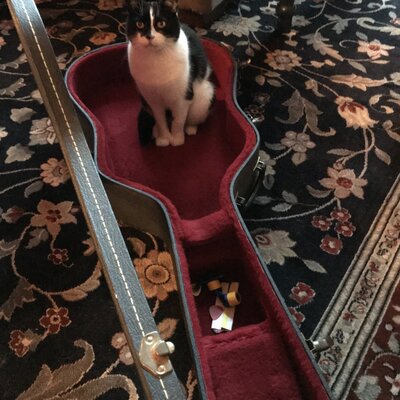
                                          @confusedMiddleAgedDad funnily, one of my very first scicomm pists on mastodon was on this https://mastodon.social/@vicgrinberg/109461953352960242 - for more info see the link in the image - here a nice article by the author herself
                                          https://www.americanscientist.org/article/a-chemical-history-of-the-universe
                                          1 Reply Last reply
                                          0
                                          Svar
                                          • Svar som emne
                                          Login for at svare
                                          • Ældste til nyeste
                                          • Nyeste til ældste
                                          • Most Votes


                                          • Log ind

                                          • Har du ikke en konto? Tilmeld

                                          • Login or register to search.
                                          Powered by NodeBB Contributors
                                          Graciously hosted by data.coop
                                          • First post
                                            Last post
                                          0
                                          • Hjem
                                          • Seneste
                                          • Etiketter
                                          • Populære
                                          • Verden
                                          • Bruger
                                          • Grupper