Skip to content
  • Hjem
  • Seneste
  • Etiketter
  • Populære
  • Verden
  • Bruger
  • Grupper
Temaer
  • Light
  • Brite
  • Cerulean
  • Cosmo
  • Flatly
  • Journal
  • Litera
  • Lumen
  • Lux
  • Materia
  • Minty
  • Morph
  • Pulse
  • Sandstone
  • Simplex
  • Sketchy
  • Spacelab
  • United
  • Yeti
  • Zephyr
  • Dark
  • Cyborg
  • Darkly
  • Quartz
  • Slate
  • Solar
  • Superhero
  • Vapor

  • Default (No Skin)
  • No Skin
Kollaps
FARVEL BIG TECH
  1. Forside
  2. Ikke-kategoriseret
  3. The oldest written #hummus recipe in the world is 776 years old...
The oldest written #hummus recipe in the world is 776 years old...

Planlagt Fastgjort Låst Flyttet Ikke-kategoriseret
hummusglobalmuseumrecipes
28 Indlæg 23 Posters 0 Visninger
  • Ældste til nyeste
  • Nyeste til ældste
  • Most Votes
Svar
  • Svar som emne
Login for at svare
Denne tråd er blevet slettet. Kun brugere med emne behandlings privilegier kan se den.
  • globalmuseum@mastodon.onlineG globalmuseum@mastodon.online

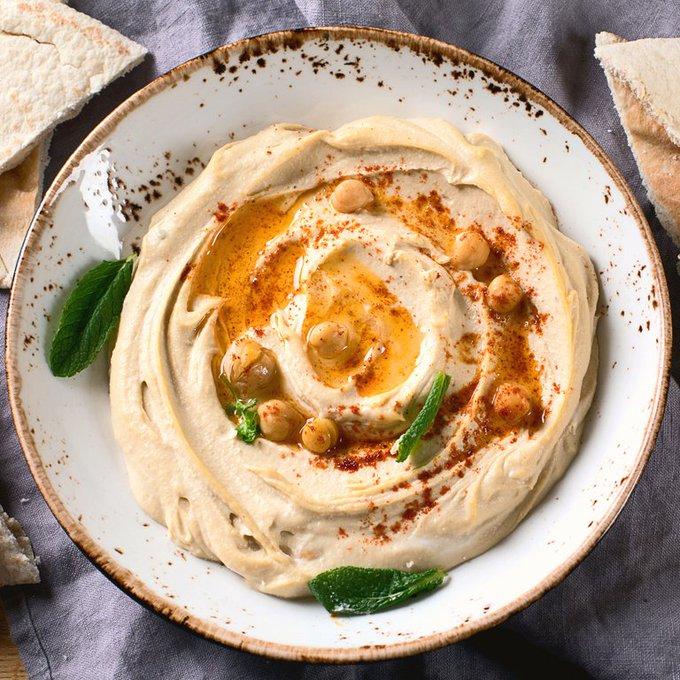
    What has changed is the garnish. After the hummus is spread flat on a wide plate, the 1250 CE manuscript says to drizzle it with sweet olive oil, scatter chopped parsley and pistachios across the top, dust it with Ceylon cinnamon, and finish with crushed rose buds.

    The manuscript also notes that the dish will look quite nice if you arrange whole chickpeas on top. A medieval Syrian historian giving you plating advice.

    domo@pizza.enby.cityD This user is from outside of this forum
    domo@pizza.enby.cityD This user is from outside of this forum
    domo@pizza.enby.city
    wrote sidst redigeret af
    #21

    @globalmuseum Can you link the manuscript?

    globalmuseum@mastodon.onlineG 1 Reply Last reply
    0
    • globalmuseum@mastodon.onlineG globalmuseum@mastodon.online

      The oldest written #hummus recipe in the world is 776 years old...

      It was written in Aleppo, Syria in 1250 CE by a historian named Ibn al-'Adeem. Not a chef. A historian. Who also happened to document one of the most extraordinary cookbooks of the medieval period.

      The base of the recipe is identical to what you make today. Chickpeas, tahini, lemon, garlic, salt. That part has not changed in 776 years.

      @histories_arch #globalmuseum #recipes

      globalmuseum@mastodon.onlineG This user is from outside of this forum
      globalmuseum@mastodon.onlineG This user is from outside of this forum
      globalmuseum@mastodon.online
      wrote sidst redigeret af
      #22

      https://eatshistory.com/the-oldest-hummus-recipe-in-the-world-from-a-13th-century-syrian-manuscript/

      1 Reply Last reply
      0
      • domo@pizza.enby.cityD domo@pizza.enby.city

        @globalmuseum Can you link the manuscript?

        globalmuseum@mastodon.onlineG This user is from outside of this forum
        globalmuseum@mastodon.onlineG This user is from outside of this forum
        globalmuseum@mastodon.online
        wrote sidst redigeret af
        #23

        @domo https://eatshistory.com/the-oldest-hummus-recipe-in-the-world-from-a-13th-century-syrian-manuscript/

        1 Reply Last reply
        0
        • globalmuseum@mastodon.onlineG globalmuseum@mastodon.online

          The oldest written #hummus recipe in the world is 776 years old...

          It was written in Aleppo, Syria in 1250 CE by a historian named Ibn al-'Adeem. Not a chef. A historian. Who also happened to document one of the most extraordinary cookbooks of the medieval period.

          The base of the recipe is identical to what you make today. Chickpeas, tahini, lemon, garlic, salt. That part has not changed in 776 years.

          @histories_arch #globalmuseum #recipes

          globalmuseum@mastodon.onlineG This user is from outside of this forum
          globalmuseum@mastodon.onlineG This user is from outside of this forum
          globalmuseum@mastodon.online
          wrote sidst redigeret af
          #24

          The hummus recipe comes from here:

          Scents and Flavors: A Syrian Cookbook (Library of Arabic Literature, 63).
          Paperback – March 3, 2020
          by Charles Perry (Translator), Claudia Roden (Foreword).

          This popular thirteenth-century Syrian cookbook (Kitab al-Wuslah ila l-habib) is an ode to what its anonymous author calls the “greater part of the pleasure of this life,” namely the consumption of food and drink, as well as the fragrances that garnish the meals.

          https://www.amazon.com/Scents-Flavors-Library-Arabic-Literature/dp/1479800813/drdrumsnotforpro

          dragonfrog@mastodon.sdf.orgD alexshendi@rollenspiel.socialA 2 Replies Last reply
          0
          • globalmuseum@mastodon.onlineG globalmuseum@mastodon.online

            The oldest written #hummus recipe in the world is 776 years old...

            It was written in Aleppo, Syria in 1250 CE by a historian named Ibn al-'Adeem. Not a chef. A historian. Who also happened to document one of the most extraordinary cookbooks of the medieval period.

            The base of the recipe is identical to what you make today. Chickpeas, tahini, lemon, garlic, salt. That part has not changed in 776 years.

            @histories_arch #globalmuseum #recipes

            moonshine_fox@meow.socialM This user is from outside of this forum
            moonshine_fox@meow.socialM This user is from outside of this forum
            moonshine_fox@meow.social
            wrote sidst redigeret af
            #25

            @globalmuseum if it ain’t broke, don’t fix it holding strong for near a millennium 😁

            1 Reply Last reply
            0
            • globalmuseum@mastodon.onlineG globalmuseum@mastodon.online

              The hummus recipe comes from here:

              Scents and Flavors: A Syrian Cookbook (Library of Arabic Literature, 63).
              Paperback – March 3, 2020
              by Charles Perry (Translator), Claudia Roden (Foreword).

              This popular thirteenth-century Syrian cookbook (Kitab al-Wuslah ila l-habib) is an ode to what its anonymous author calls the “greater part of the pleasure of this life,” namely the consumption of food and drink, as well as the fragrances that garnish the meals.

              https://www.amazon.com/Scents-Flavors-Library-Arabic-Literature/dp/1479800813/drdrumsnotforpro

              dragonfrog@mastodon.sdf.orgD This user is from outside of this forum
              dragonfrog@mastodon.sdf.orgD This user is from outside of this forum
              dragonfrog@mastodon.sdf.org
              wrote sidst redigeret af
              #26

              @globalmuseum thanks, I went looking for Ibn Al-Adeem's book but apparently it hasn't been translated from Arabic, which I can't read.

              1 Reply Last reply
              0
              • globalmuseum@mastodon.onlineG globalmuseum@mastodon.online

                The hummus recipe comes from here:

                Scents and Flavors: A Syrian Cookbook (Library of Arabic Literature, 63).
                Paperback – March 3, 2020
                by Charles Perry (Translator), Claudia Roden (Foreword).

                This popular thirteenth-century Syrian cookbook (Kitab al-Wuslah ila l-habib) is an ode to what its anonymous author calls the “greater part of the pleasure of this life,” namely the consumption of food and drink, as well as the fragrances that garnish the meals.

                https://www.amazon.com/Scents-Flavors-Library-Arabic-Literature/dp/1479800813/drdrumsnotforpro

                alexshendi@rollenspiel.socialA This user is from outside of this forum
                alexshendi@rollenspiel.socialA This user is from outside of this forum
                alexshendi@rollenspiel.social
                wrote sidst redigeret af
                #27

                @globalmuseum

                Also see:
                https://youtube.com/shorts/NM86mqdkwds

                https://www.tableofgods.com/hummus

                1 Reply Last reply
                0
                • kramse@helvede.netK kramse@helvede.net shared this topic
                • globalmuseum@mastodon.onlineG globalmuseum@mastodon.online

                  What has changed is the garnish. After the hummus is spread flat on a wide plate, the 1250 CE manuscript says to drizzle it with sweet olive oil, scatter chopped parsley and pistachios across the top, dust it with Ceylon cinnamon, and finish with crushed rose buds.

                  The manuscript also notes that the dish will look quite nice if you arrange whole chickpeas on top. A medieval Syrian historian giving you plating advice.

                  reynir@social.data.coopR This user is from outside of this forum
                  reynir@social.data.coopR This user is from outside of this forum
                  reynir@social.data.coop
                  wrote sidst redigeret af
                  #28

                  @globalmuseum what is sweet olive oil? I never heard of it

                  1 Reply Last reply
                  0
                  Svar
                  • Svar som emne
                  Login for at svare
                  • Ældste til nyeste
                  • Nyeste til ældste
                  • Most Votes


                  • Log ind

                  • Har du ikke en konto? Tilmeld

                  • Login or register to search.
                  Powered by NodeBB Contributors
                  Graciously hosted by data.coop
                  • First post
                    Last post
                  0
                  • Hjem
                  • Seneste
                  • Etiketter
                  • Populære
                  • Verden
                  • Bruger
                  • Grupper