#ClimateDiary We are in intense #Heatpump vs new boiler discussions in our household at the moment, and it is quite something how geopolitics and radiators (and other practicalities like: will the humming be loud?) all swirl through my head at once.
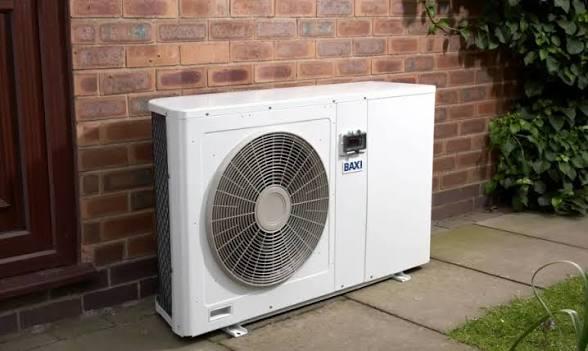
-
@sean @pvonhellermannn Yes, that's my thought too. It does make some noise, but so did the air conditioner it replaced.
In my climate, the savings are substantial in the summer, and it's about equal to gas heat during the coldest months. This may change going forward!
@ClimateJenny @sean thank you both - all really helpful, again. And yes, goong forward i am wondering too whether gas might become substantially more expensive, in which case heatpump definitely cheaper!
-
@bencourtice @pvonhellermannn @ClimateJenny in the UK domestic Aircon is very unusual
In order to encourage transition from gas boilers to heat pumps the government is offering a subsidy which only applies to heat pumps that heat via radiators
They don't offer cooling
You can get air to air systems here which offer both heating and cooling - you just can't get the subsidy for them
-
@bencourtice @pvonhellermannn @ClimateJenny in the UK domestic Aircon is very unusual
In order to encourage transition from gas boilers to heat pumps the government is offering a subsidy which only applies to heat pumps that heat via radiators
They don't offer cooling
You can get air to air systems here which offer both heating and cooling - you just can't get the subsidy for them
@pvonhellermannn from the Politico heat-pump article I posted earlier
"I later discovered the company Warmur*, who provide a survey service that charges one upfront fee, but allow multiple installers to provide quotes based on the same report. It's the first of many things I wish I’d known earlier."
-
@bencourtice @pvonhellermannn @ClimateJenny in the UK domestic Aircon is very unusual
In order to encourage transition from gas boilers to heat pumps the government is offering a subsidy which only applies to heat pumps that heat via radiators
They don't offer cooling
You can get air to air systems here which offer both heating and cooling - you just can't get the subsidy for them
@sean @bencourtice @pvonhellermannn @ClimateJenny
As of November 2025 the UK government offers £2,500 grant for Air to Air Source Heat Pumps (which can do cooling). Also Heat batteries come under the same scheme
https://www.gov.uk/government/news/discounts-for-families-to-keep-warm-in-winter-and-cool-in-summer
-
@sean @bencourtice @pvonhellermannn @ClimateJenny
As of November 2025 the UK government offers £2,500 grant for Air to Air Source Heat Pumps (which can do cooling). Also Heat batteries come under the same scheme
https://www.gov.uk/government/news/discounts-for-families-to-keep-warm-in-winter-and-cool-in-summer
@michaelokarimia @bencourtice @pvonhellermannn @ClimateJenny
Interesting - sounds like it isn't available just yet though
https://renewableheatinghub.co.uk/air-to-air-heat-pump-bus-grant-explained/
-
#ClimateDiary We are in intense #Heatpump vs new boiler discussions in our household at the moment, and it is quite something how geopolitics and radiators (and other practicalities like: will the humming be loud?) all swirl through my head at once.
(Our house is old, terraced and high ceilings - it looks like it’s not impossible but challenging. Costs come into it too, of course. Also worried on this front: might geopolitics mean i will not earn any money next few years?)
@pvonhellermannn My only argument here is this: the same people who are against this have the same (or louder) equipments in their second residences in Spain. Either they enjoy bothering their Spaniard neighbours or the technology isn’t that loud or inefficient (spoiler: it isn’t, we have those everywhere).
-
#ClimateDiary We are in intense #Heatpump vs new boiler discussions in our household at the moment, and it is quite something how geopolitics and radiators (and other practicalities like: will the humming be loud?) all swirl through my head at once.
(Our house is old, terraced and high ceilings - it looks like it’s not impossible but challenging. Costs come into it too, of course. Also worried on this front: might geopolitics mean i will not earn any money next few years?)
@pvonhellermannn
We have a larger, older house and have had heat pump for some 18 months (2 winters).
It's quiet and costs are about the same / less than gas (difficult to be precise given changing tariffs, warmer house and change from gas cooker).
Top tip, check the installer's heat loss calculations, e.g. room size measurements. Ours made an error (identified before installation) and so gave us radiator labour free.
You don't want to oversize or undersize. Consider hot water panels (greener) -
@pvonhellermannn
We have a larger, older house and have had heat pump for some 18 months (2 winters).
It's quiet and costs are about the same / less than gas (difficult to be precise given changing tariffs, warmer house and change from gas cooker).
Top tip, check the installer's heat loss calculations, e.g. room size measurements. Ours made an error (identified before installation) and so gave us radiator labour free.
You don't want to oversize or undersize. Consider hot water panels (greener)@pvonhellermannn
On heat loss calcs, they are critical to comfort and efficiency. You don't want too big or too small. Our neighbours were offered too big a pump because installer hadn't correct size in stock.Older terrace, you might need better insulation - it will work OK without but would use less energy and reduce running costs (but up front will cost - go for 'low hanging, cheap fruit' first).
-
@pvonhellermannn
On heat loss calcs, they are critical to comfort and efficiency. You don't want too big or too small. Our neighbours were offered too big a pump because installer hadn't correct size in stock.Older terrace, you might need better insulation - it will work OK without but would use less energy and reduce running costs (but up front will cost - go for 'low hanging, cheap fruit' first).
@markhburton thank you Mark, this is all incredibly helpful. The boiler/heat pump installer/plumber who is talking us through all this, mentioned this too - that it’s really key to get all the calculations right. We are a little bit wary of having to install a lot of additional radiators - we may get a detailed calculation/survey done before committing fully!
-
@markhburton thank you Mark, this is all incredibly helpful. The boiler/heat pump installer/plumber who is talking us through all this, mentioned this too - that it’s really key to get all the calculations right. We are a little bit wary of having to install a lot of additional radiators - we may get a detailed calculation/survey done before committing fully!
@pvonhellermannn
We had to change 5/13 rads. -
@markhburton thank you Mark, this is all incredibly helpful. The boiler/heat pump installer/plumber who is talking us through all this, mentioned this too - that it’s really key to get all the calculations right. We are a little bit wary of having to install a lot of additional radiators - we may get a detailed calculation/survey done before committing fully!
I don't have Mark's practical experience, but liked watching 'Heat Geek' explainers on YouTube.
Also, someone was telling me underspecification or bad installation by contractors is a big problem in social housing and a reason why some people are heat-pump-sceptical.
-
@michaelokarimia @bencourtice @pvonhellermannn @ClimateJenny
Interesting - sounds like it isn't available just yet though
https://renewableheatinghub.co.uk/air-to-air-heat-pump-bus-grant-explained/
@sean they also removed VAT on it fairly recently (as in, the last few years) I think.
-
I don't have Mark's practical experience, but liked watching 'Heat Geek' explainers on YouTube.
Also, someone was telling me underspecification or bad installation by contractors is a big problem in social housing and a reason why some people are heat-pump-sceptical.
@WansteadClimateAction @pvonhellermannn @markhburton heat geek are very good and provide software to installers to facilitate affordable installs, they offer guaranteed efficiency levels for different costs - search “heat geek zero disrupt” to find their form and get an indicative quote, it might be less than you expect compared with others.
-
@gsymon thank you! Yes, we are in Eastbourne. I hadn’t even heard of aquathermatic heating - will look into it today!
OK some of the criteria that persuaded us to go this route:
• Aquathermic is the most energy efficient currently available
• We have an old house with wrought iron radiators, which are ideal for 'slow heating'
• We have a large enough garden, to enable an extraction drill hole and a return drill hole, which under French law, must be 10m apart with the return hole 'down hill'. Maybe different under UK law?
• You must have workable access for the drilling machines -
OK some of the criteria that persuaded us to go this route:
• Aquathermic is the most energy efficient currently available
• We have an old house with wrought iron radiators, which are ideal for 'slow heating'
• We have a large enough garden, to enable an extraction drill hole and a return drill hole, which under French law, must be 10m apart with the return hole 'down hill'. Maybe different under UK law?
• You must have workable access for the drilling machines• Cost … we were elligible for a subsidy which was great, but I looked at it simply as a financial investment, like shares. I estimated that we would recover our investment over 8 years, but what’s important to take into account here, is that after the 8 years, you continue, every single year, to gain the same return on your investment. Our case was slightly blown apart by Covid, in which energy prices exploded somewhat.
-
• Cost … we were elligible for a subsidy which was great, but I looked at it simply as a financial investment, like shares. I estimated that we would recover our investment over 8 years, but what’s important to take into account here, is that after the 8 years, you continue, every single year, to gain the same return on your investment. Our case was slightly blown apart by Covid, in which energy prices exploded somewhat.
... but our aquathermic, which consumes only electricity, wasn’t so affected. Either way though, our savings relative to our previous gas heating, became pretty huge, so much so, that we’ve pretty much recovered the initial investment, plus of course, with a brain dead psychopath as US president, we’re set to increase our gains. (NB, our gas still worked fine. This was about renewables and climate change).
-
... but our aquathermic, which consumes only electricity, wasn’t so affected. Either way though, our savings relative to our previous gas heating, became pretty huge, so much so, that we’ve pretty much recovered the initial investment, plus of course, with a brain dead psychopath as US president, we’re set to increase our gains. (NB, our gas still worked fine. This was about renewables and climate change).
• We went with a German make of heat-exchanger, Vaillant, which we’re very pleased with. You do need a fair bit of space for it though, which for us was ok, as we have a basement. If geo/aqua thermic are 'no go' for you and you’re still considering air-air, then they may be good for that too, notably they talk of very low-noise levels. I should add that I researched and chose the heat exchanger.. then asked them to recommend a company in my region.
https://www.vaillant.co.uk/product-systems/heat-pumps/flexotherm/
-
Narrator: And as the days passed, the seasons turning, year after year, the old house became more and more aware that yes, the humming was loud.
(Yes, I've repeatedly heard people complain about the noise and no I haven't had enough experience with this personally or insight into how this can change from manufacturer to manufacturer)
@folfdk I can offer some insights: There are different designs. It depends on where the loud part of the heat pump system is. The loud part might be inside the building hidden in a well-insulated cellar, or outside on the front yard, or worst case on the side in the narrow gap between the buildings facing the neighbour's bedroom window.
Air heat pump consists of among other parts of a compressor (like in refrigerators or air conditioners) that makes deep, annoying humming noises, and a heat exchange (a ventilator pulling outside air over some pipes) that make a ventilator sound, so much softer, not deep humming.
One architecture of air heat pumps is to have one integrated box of machinery outside, and to pump the water that is used for heating (in floor heating or radiators) from the inside of the building out to the heat pump, where everything happens, and the warmer water back inside.
The other architecture is to have only the heat exchange outside (because it needs open air) and the compressor inside the building. The water used for heating goes only to/from the compressor unit, and between the compressor and the heat exchange outside there's a second cycle with a different liquid.
The first architecture ("monobloc") is cheaper but much louder for the surroundings.
The second architecture ("split") is more expensive but much quieter outside.
@pvonhellermannn -
@folfdk I can offer some insights: There are different designs. It depends on where the loud part of the heat pump system is. The loud part might be inside the building hidden in a well-insulated cellar, or outside on the front yard, or worst case on the side in the narrow gap between the buildings facing the neighbour's bedroom window.
Air heat pump consists of among other parts of a compressor (like in refrigerators or air conditioners) that makes deep, annoying humming noises, and a heat exchange (a ventilator pulling outside air over some pipes) that make a ventilator sound, so much softer, not deep humming.
One architecture of air heat pumps is to have one integrated box of machinery outside, and to pump the water that is used for heating (in floor heating or radiators) from the inside of the building out to the heat pump, where everything happens, and the warmer water back inside.
The other architecture is to have only the heat exchange outside (because it needs open air) and the compressor inside the building. The water used for heating goes only to/from the compressor unit, and between the compressor and the heat exchange outside there's a second cycle with a different liquid.
The first architecture ("monobloc") is cheaper but much louder for the surroundings.
The second architecture ("split") is more expensive but much quieter outside.
@pvonhellermannn@dasgrueneblatt
Thanks! That's really clear and understandable !
I appreciate it.