Skip to content
  • Hjem
  • Seneste
  • Etiketter
  • Populære
  • Verden
  • Bruger
  • Grupper
Temaer
  • Light
  • Brite
  • Cerulean
  • Cosmo
  • Flatly
  • Journal
  • Litera
  • Lumen
  • Lux
  • Materia
  • Minty
  • Morph
  • Pulse
  • Sandstone
  • Simplex
  • Sketchy
  • Spacelab
  • United
  • Yeti
  • Zephyr
  • Dark
  • Cyborg
  • Darkly
  • Quartz
  • Slate
  • Solar
  • Superhero
  • Vapor

  • Default (No Skin)
  • No Skin
Kollaps
FARVEL BIG TECH
  1. Forside
  2. Ikke-kategoriseret
  3. This is FASCINATING.

This is FASCINATING.

Planlagt Fastgjort Låst Flyttet Ikke-kategoriseret
220 Indlæg 120 Posters 0 Visninger
  • Ældste til nyeste
  • Nyeste til ældste
  • Most Votes
Svar
  • Svar som emne
Login for at svare
Denne tråd er blevet slettet. Kun brugere med emne behandlings privilegier kan se den.
  • hzulla@infosec.exchangeH hzulla@infosec.exchange

    @funkylab @benjamineskola My guess it's not cron/systemd daemon waking up on specific times being the problem, but maintainers setting up larger jobs (such as backups) starting at the minute mark. Too many things globally are set to run *something* at xx:xx:00 and this seems to add up to a measurable strain on the grid, thanks to synchronized system clocks. The researchers point out that this strain is not a giant problem yet, but it can be measured globally.

    funkylab@mastodon.socialF This user is from outside of this forum
    funkylab@mastodon.socialF This user is from outside of this forum
    funkylab@mastodon.social
    wrote sidst redigeret af
    #45

    @hzulla @benjamineskola yep, and the discussion here was whether the waking up itself was already part of the problem or the power intense job that you might delay randomly after waking up

    1 Reply Last reply
    0
    • funkylab@mastodon.socialF funkylab@mastodon.social

      @davidrylander yeah sure, and it's also the least necessary application of awk to implement something the shell that starts awk can already do itself.
      But you wouldn't do that on Debian at all, but just simply use a timer that's randomized.
      `systemd-run --on-calendar=your_time_specification --timer-property=RandomizedDelaySec=33 your_command_here`

      @DamonHD @GiantGinkgo @hzulla

      davidrylander@social.vivaldi.netD This user is from outside of this forum
      davidrylander@social.vivaldi.netD This user is from outside of this forum
      davidrylander@social.vivaldi.net
      wrote sidst redigeret af
      #46

      @funkylab Thank you! Must try.

      1 Reply Last reply
      0
      • artemist@social.mildlyfunctional.gayA artemist@social.mildlyfunctional.gay

        @hzulla I believe systemd timers do not start precisely at the minute they are configured, they are executed at a random position within the minute by default (see option AccuracySec).

        I have had similar issues with my network before with daily jobs running at midnight, so I have gotten in the habit of setting RandomizedDelaySec on timers, though it seems like RandomizedOffsetSec is closer to what I want.

        5225225@furry.engineer5 This user is from outside of this forum
        5225225@furry.engineer5 This user is from outside of this forum
        5225225@furry.engineer
        wrote sidst redigeret af
        #47

        @artemist @hzulla AccuracySec and RandomizedDelaySec are for different purposes btw, AccuracySec is for power saving (better to run everything at the same time than keep the cpu awake while one thing is running)

        but yeah, if you have a timer that runs once a day, no point in requiring it to run exactly midnight, i went and fixed my backup job system to run at a random time (also might switch to offset instead of delay, looking at it)

        funkylab@mastodon.socialF 1 Reply Last reply
        0
        • hzulla@infosec.exchangeH hzulla@infosec.exchange

          This is FASCINATING. Researchers were able to pin down the cause of measurable global 60 second power spikes to software that does regular checks on the minute mark. They found large scale battery installations as one major cause, but obviously this is true for any other computerized system that does cron jobs and has a synchronized clock. As weird as it sounds, adding random 0-59.999s delays to cron jobs in Linux distributions and other software would actually help the power grid.

          https://www.fz-juelich.de/en/news/archive/press-release/2026/mystery-of-60-second-fluctuations-in-power-grids-solved

          A This user is from outside of this forum
          A This user is from outside of this forum
          andy554@mastodon.social
          wrote sidst redigeret af
          #48

          @hzulla it's a common problem on cable TV networks where doing an update, or anything that accesses servers, all at the same time brings down the entire network. As well as randomising the point at which you 'wake up' it's a good idea to have a good back-off mechanism for when things fail.

          1 Reply Last reply
          0
          • damonhd@mastodon.socialD damonhd@mastodon.social

            @GiantGinkgo @hzulla

            sleep "$(awk 'BEGIN{srand(); print int(33*rand());}')"; <rest of cron task>

            hanscees@ieji.deH This user is from outside of this forum
            hanscees@ieji.deH This user is from outside of this forum
            hanscees@ieji.de
            wrote sidst redigeret af
            #49

            @DamonHD @GiantGinkgo @hzulla I would just take the entire cronfiles on all your computers and change all 0 minutes to a random value. Thats random enough no?

            damonhd@mastodon.socialD 1 Reply Last reply
            0
            • 5225225@furry.engineer5 5225225@furry.engineer

              @artemist @hzulla AccuracySec and RandomizedDelaySec are for different purposes btw, AccuracySec is for power saving (better to run everything at the same time than keep the cpu awake while one thing is running)

              but yeah, if you have a timer that runs once a day, no point in requiring it to run exactly midnight, i went and fixed my backup job system to run at a random time (also might switch to offset instead of delay, looking at it)

              funkylab@mastodon.socialF This user is from outside of this forum
              funkylab@mastodon.socialF This user is from outside of this forum
              funkylab@mastodon.social
              wrote sidst redigeret af
              #50

              @5225225 @artemist @hzulla it's a bit more nuanced than "AccuracySec is for power saving": Long-term timers are "coarser-grained", so if you need something to happen in 24h 3min 2s (+- 0.2 ms), then you might need to wake up on a coarse (say, 32s-accuracy) timer, and then go back to sleep on a finer timer. If you're like "eh, +-6s is totally OK", then there might be a direct way to do sleep for that amount of time.

              1 Reply Last reply
              0
              • anderslund@expressional.socialA anderslund@expressional.social shared this topic
              • hzulla@infosec.exchangeH hzulla@infosec.exchange

                This is FASCINATING. Researchers were able to pin down the cause of measurable global 60 second power spikes to software that does regular checks on the minute mark. They found large scale battery installations as one major cause, but obviously this is true for any other computerized system that does cron jobs and has a synchronized clock. As weird as it sounds, adding random 0-59.999s delays to cron jobs in Linux distributions and other software would actually help the power grid.

                https://www.fz-juelich.de/en/news/archive/press-release/2026/mystery-of-60-second-fluctuations-in-power-grids-solved

                xenotrope@bsd.networkX This user is from outside of this forum
                xenotrope@bsd.networkX This user is from outside of this forum
                xenotrope@bsd.network
                wrote sidst redigeret af
                #51

                @hzulla Something like:

                perl -e "sleep(300+int(rand(300)))"

                works wonders in a cronjob. Exec it through a script called /usr/local/bin/randomsleep if you want.

                1 Reply Last reply
                0
                • hzulla@infosec.exchangeH hzulla@infosec.exchange

                  This is FASCINATING. Researchers were able to pin down the cause of measurable global 60 second power spikes to software that does regular checks on the minute mark. They found large scale battery installations as one major cause, but obviously this is true for any other computerized system that does cron jobs and has a synchronized clock. As weird as it sounds, adding random 0-59.999s delays to cron jobs in Linux distributions and other software would actually help the power grid.

                  https://www.fz-juelich.de/en/news/archive/press-release/2026/mystery-of-60-second-fluctuations-in-power-grids-solved

                  lambda@chaosfurs.socialL This user is from outside of this forum
                  lambda@chaosfurs.socialL This user is from outside of this forum
                  lambda@chaosfurs.social
                  wrote sidst redigeret af
                  #52

                  @hzulla systemd timers actually already have a setting for this, RandomizedDelaySec=! https://www.man7.org/linux/man-pages/man5/systemd.timer.5.html

                  1 Reply Last reply
                  0
                  • hzulla@infosec.exchangeH hzulla@infosec.exchange

                    This is FASCINATING. Researchers were able to pin down the cause of measurable global 60 second power spikes to software that does regular checks on the minute mark. They found large scale battery installations as one major cause, but obviously this is true for any other computerized system that does cron jobs and has a synchronized clock. As weird as it sounds, adding random 0-59.999s delays to cron jobs in Linux distributions and other software would actually help the power grid.

                    https://www.fz-juelich.de/en/news/archive/press-release/2026/mystery-of-60-second-fluctuations-in-power-grids-solved

                    saua@troet.cafeS This user is from outside of this forum
                    saua@troet.cafeS This user is from outside of this forum
                    saua@troet.cafe
                    wrote sidst redigeret af
                    #53

                    @hzulla Reminds me of Google once self-DDOSing themselves by making every Android phone check for updates exactly every 15minutes without checking if they have the capacity for that spike ...

                    1 Reply Last reply
                    0
                    • damonhd@mastodon.socialD damonhd@mastodon.social

                      @josh @hzulla Some of us have been worrying about this for decades! B^>

                      @edavies

                      josh@fediscience.orgJ This user is from outside of this forum
                      josh@fediscience.orgJ This user is from outside of this forum
                      josh@fediscience.org
                      wrote sidst redigeret af
                      #54

                      @DamonHD @hzulla @edavies
                      That’s really interesting. What are some early conversations you remember? Now that I have 20/20 hindsight I’d like to learn more.

                      damonhd@mastodon.socialD 1 Reply Last reply
                      0
                      • hzulla@infosec.exchangeH hzulla@infosec.exchange

                        This is FASCINATING. Researchers were able to pin down the cause of measurable global 60 second power spikes to software that does regular checks on the minute mark. They found large scale battery installations as one major cause, but obviously this is true for any other computerized system that does cron jobs and has a synchronized clock. As weird as it sounds, adding random 0-59.999s delays to cron jobs in Linux distributions and other software would actually help the power grid.

                        https://www.fz-juelich.de/en/news/archive/press-release/2026/mystery-of-60-second-fluctuations-in-power-grids-solved

                        ross_@mastodon.gamedev.placeR This user is from outside of this forum
                        ross_@mastodon.gamedev.placeR This user is from outside of this forum
                        ross_@mastodon.gamedev.place
                        wrote sidst redigeret af
                        #55

                        @hzulla They don't actually say how they got synchronized though; how "the start of every minute" somehow lines up across totally different locations.

                        Presumably the *actual* problem here is that things are connected to the internet and can therefore synchronize their timers precisely?

                        1 Reply Last reply
                        0
                        • hzulla@infosec.exchangeH hzulla@infosec.exchange

                          It is such an obvious cause once you think about it, and yet before you hear about this, no software developer or maintainer ever considers the possible effects of e.g. a default Debian cron job setting on the global electricity grid.

                          _ryekdarkener_@mastodon.social_ This user is from outside of this forum
                          _ryekdarkener_@mastodon.social_ This user is from outside of this forum
                          _ryekdarkener_@mastodon.social
                          wrote sidst redigeret af
                          #56

                          @hzulla

                          The interesting question is if this randomisation might become necessary in case more and mor datacenters run more and more cron-jobs or other jobs historically timed at fixed hours?

                          1 Reply Last reply
                          0
                          • hzulla@infosec.exchangeH hzulla@infosec.exchange

                            It is such an obvious cause once you think about it, and yet before you hear about this, no software developer or maintainer ever considers the possible effects of e.g. a default Debian cron job setting on the global electricity grid.

                            kurt@mastodon.nelson.funK This user is from outside of this forum
                            kurt@mastodon.nelson.funK This user is from outside of this forum
                            kurt@mastodon.nelson.fun
                            wrote sidst redigeret af
                            #57

                            @hzulla in the early Android days, cell network operators were confused by sudden stampedes on a regular schedule. Turns out, all phones were checking for OTAs roughly at the same time. Google didn't notice because to them it was noise and expected.

                            1 Reply Last reply
                            0
                            • hzulla@infosec.exchangeH hzulla@infosec.exchange

                              This is FASCINATING. Researchers were able to pin down the cause of measurable global 60 second power spikes to software that does regular checks on the minute mark. They found large scale battery installations as one major cause, but obviously this is true for any other computerized system that does cron jobs and has a synchronized clock. As weird as it sounds, adding random 0-59.999s delays to cron jobs in Linux distributions and other software would actually help the power grid.

                              https://www.fz-juelich.de/en/news/archive/press-release/2026/mystery-of-60-second-fluctuations-in-power-grids-solved

                              pascalgi@techhub.socialP This user is from outside of this forum
                              pascalgi@techhub.socialP This user is from outside of this forum
                              pascalgi@techhub.social
                              wrote sidst redigeret af
                              #58

                              @hzulla Crazy how such a small software design detail can have a real impact on the entire power grid. Never thought synchronized tasks could cause this kind of problem.

                              1 Reply Last reply
                              0
                              • hzulla@infosec.exchangeH hzulla@infosec.exchange

                                This is FASCINATING. Researchers were able to pin down the cause of measurable global 60 second power spikes to software that does regular checks on the minute mark. They found large scale battery installations as one major cause, but obviously this is true for any other computerized system that does cron jobs and has a synchronized clock. As weird as it sounds, adding random 0-59.999s delays to cron jobs in Linux distributions and other software would actually help the power grid.

                                https://www.fz-juelich.de/en/news/archive/press-release/2026/mystery-of-60-second-fluctuations-in-power-grids-solved

                                msh@coales.coM This user is from outside of this forum
                                msh@coales.coM This user is from outside of this forum
                                msh@coales.co
                                wrote sidst redigeret af
                                #59

                                @hzulla systemd timer units have just such a randomising setting but the default is zero so this is in essence a demonstration of the Power of The Default Setting

                                nelson@tech.lgbtN 1 Reply Last reply
                                0
                                • hzulla@infosec.exchangeH hzulla@infosec.exchange

                                  It is such an obvious cause once you think about it, and yet before you hear about this, no software developer or maintainer ever considers the possible effects of e.g. a default Debian cron job setting on the global electricity grid.

                                  maya_b@hachyderm.ioM This user is from outside of this forum
                                  maya_b@hachyderm.ioM This user is from outside of this forum
                                  maya_b@hachyderm.io
                                  wrote sidst redigeret af
                                  #60

                                  @hzulla

                                  UK tv broadcasters had to deliberately stagger their commercial breaks as everyone put the kettle on to make tea during the commercials. And none of that non-British 1kW kettle nonsense, proper British kettles are 3kW!

                                  notsoloud@expressional.socialN azonenberg@ioc.exchangeA darkling@mstdn.socialD 3 Replies Last reply
                                  0
                                  • hzulla@infosec.exchangeH hzulla@infosec.exchange

                                    This is FASCINATING. Researchers were able to pin down the cause of measurable global 60 second power spikes to software that does regular checks on the minute mark. They found large scale battery installations as one major cause, but obviously this is true for any other computerized system that does cron jobs and has a synchronized clock. As weird as it sounds, adding random 0-59.999s delays to cron jobs in Linux distributions and other software would actually help the power grid.

                                    https://www.fz-juelich.de/en/news/archive/press-release/2026/mystery-of-60-second-fluctuations-in-power-grids-solved

                                    adrianco@mastodon.socialA This user is from outside of this forum
                                    adrianco@mastodon.socialA This user is from outside of this forum
                                    adrianco@mastodon.social
                                    wrote sidst redigeret af
                                    #61

                                    @hzulla This is a fairly well known problem. The AWS Well Architected Guide for Sustainability (which I helped write 5 years ago) talks about using cron-jitter to prevent synchronized load spikes in networks and control planes. You also get better performance as jobs aren’t competing for resources. There’s a bigger issue now with AI training runs turning on many GPUs at the same time.

                                    1 Reply Last reply
                                    0
                                    • hzulla@infosec.exchangeH hzulla@infosec.exchange

                                      This is FASCINATING. Researchers were able to pin down the cause of measurable global 60 second power spikes to software that does regular checks on the minute mark. They found large scale battery installations as one major cause, but obviously this is true for any other computerized system that does cron jobs and has a synchronized clock. As weird as it sounds, adding random 0-59.999s delays to cron jobs in Linux distributions and other software would actually help the power grid.

                                      https://www.fz-juelich.de/en/news/archive/press-release/2026/mystery-of-60-second-fluctuations-in-power-grids-solved

                                      czauner@social.vivaldi.netC This user is from outside of this forum
                                      czauner@social.vivaldi.netC This user is from outside of this forum
                                      czauner@social.vivaldi.net
                                      wrote sidst redigeret af
                                      #62

                                      @hzulla

                                      The Linux Cron doesn't have a -J / -j option?

                                      Sorry, I'm too lazy to look that up, but that's what I'm using on BSD. Not because I care for the power-grid, but It keeps load-spikes at bay (hello, Disk-IO)

                                      drwho@masto.hackers.townD 1 Reply Last reply
                                      0
                                      • josh@fediscience.orgJ josh@fediscience.org

                                        @DamonHD @hzulla @edavies
                                        That’s really interesting. What are some early conversations you remember? Now that I have 20/20 hindsight I’d like to learn more.

                                        damonhd@mastodon.socialD This user is from outside of this forum
                                        damonhd@mastodon.socialD This user is from outside of this forum
                                        damonhd@mastodon.social
                                        wrote sidst redigeret af
                                        #63

                                        @josh @hzulla @edavies Ed in particular said words ~20 years ago to the effect of all our NTP-synchronised loads would be hurting the grid...

                                        I introduced NTP to at least one trading floor, where synchronisation is good, but my distributed systems design tools to avoid accidental deadly embraces have long long included randomisation and prime numbers!

                                        1 Reply Last reply
                                        0
                                        • hanscees@ieji.deH hanscees@ieji.de

                                          @DamonHD @GiantGinkgo @hzulla I would just take the entire cronfiles on all your computers and change all 0 minutes to a random value. Thats random enough no?

                                          damonhd@mastodon.socialD This user is from outside of this forum
                                          damonhd@mastodon.socialD This user is from outside of this forum
                                          damonhd@mastodon.social
                                          wrote sidst redigeret af
                                          #64

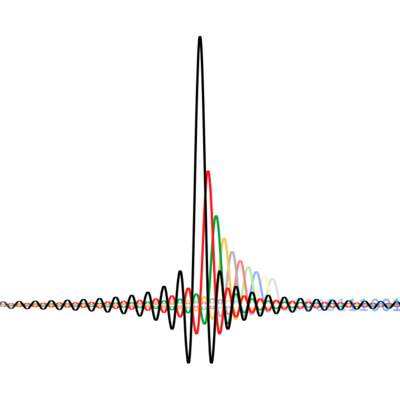
                                          @hanscees @GiantGinkgo @hzulla No. That's good and helpful and I do a lot of that, but the fact that cron starts everything on the start of *any* minute is part of the issue here.

                                          1 Reply Last reply
                                          0
                                          Svar
                                          • Svar som emne
                                          Login for at svare
                                          • Ældste til nyeste
                                          • Nyeste til ældste
                                          • Most Votes


                                          • Log ind

                                          • Login or register to search.
                                          Powered by NodeBB Contributors
                                          Graciously hosted by data.coop
                                          • First post
                                            Last post
                                          0
                                          • Hjem
                                          • Seneste
                                          • Etiketter
                                          • Populære
                                          • Verden
                                          • Bruger
                                          • Grupper