Skip to content
  • Hjem
  • Seneste
  • Etiketter
  • Populære
  • Verden
  • Bruger
  • Grupper
Temaer
  • Light
  • Brite
  • Cerulean
  • Cosmo
  • Flatly
  • Journal
  • Litera
  • Lumen
  • Lux
  • Materia
  • Minty
  • Morph
  • Pulse
  • Sandstone
  • Simplex
  • Sketchy
  • Spacelab
  • United
  • Yeti
  • Zephyr
  • Dark
  • Cyborg
  • Darkly
  • Quartz
  • Slate
  • Solar
  • Superhero
  • Vapor

  • Default (No Skin)
  • No Skin
Kollaps
FARVEL BIG TECH
  1. Forside
  2. Ikke-kategoriseret
  3. I'm kind of obsessed with this old puzzle.
I'm kind of obsessed with this old puzzle.

Planlagt Fastgjort Låst Flyttet Ikke-kategoriseret
45 Indlæg 35 Posters 0 Visninger
  • Ældste til nyeste
  • Nyeste til ældste
  • Most Votes
Svar
  • Svar som emne
Login for at svare
Denne tråd er blevet slettet. Kun brugere med emne behandlings privilegier kan se den.
  • futurebird@sauropods.winF futurebird@sauropods.win

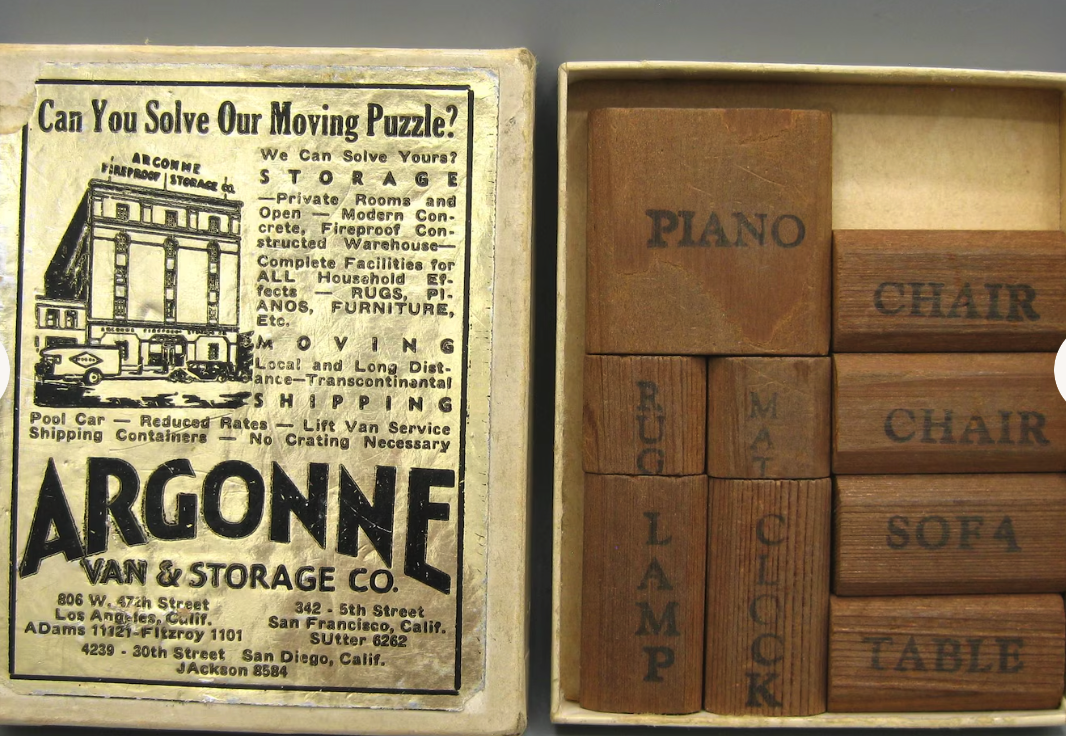
    I'm kind of obsessed with this old puzzle. You need to move the piano to the lower LEFT corner by sliding the pieces.

    Curious if anyone has done any math things with such tile puzzles?

    It's easy to move it to the lower right, and possible but kind of hard to get it to the left.

    I guess what I want to know is "why is it so hard?"

    rnd@toot.catR This user is from outside of this forum
    rnd@toot.catR This user is from outside of this forum
    rnd@toot.cat
    wrote sidst redigeret af
    #20

    @futurebird looks like a variation on the "klotski" puzzle, so there probably is some math on that

    1 Reply Last reply
    0
    • futurebird@sauropods.winF futurebird@sauropods.win

      I'm kind of obsessed with this old puzzle. You need to move the piano to the lower LEFT corner by sliding the pieces.

      Curious if anyone has done any math things with such tile puzzles?

      It's easy to move it to the lower right, and possible but kind of hard to get it to the left.

      I guess what I want to know is "why is it so hard?"

      grumpasaurus@infosec.exchangeG This user is from outside of this forum
      grumpasaurus@infosec.exchangeG This user is from outside of this forum
      grumpasaurus@infosec.exchange
      wrote sidst redigeret af
      #21

      @futurebird did you ever play klotski on Windows 3.1

      1 Reply Last reply
      0
      • futurebird@sauropods.winF futurebird@sauropods.win

        I'm kind of obsessed with this old puzzle. You need to move the piano to the lower LEFT corner by sliding the pieces.

        Curious if anyone has done any math things with such tile puzzles?

        It's easy to move it to the lower right, and possible but kind of hard to get it to the left.

        I guess what I want to know is "why is it so hard?"

        sandriver@zoner.workS This user is from outside of this forum
        sandriver@zoner.workS This user is from outside of this forum
        sandriver@zoner.work
        wrote sidst redigeret af
        #22

        @futurebird@sauropods.win I guess the reason it's hard is because the single square pieces are distracting. A totally consistent graph muncher algorithm would find the solution eventually, but a human working quickly on intuition is going to be subject to misdirection and red herrings and bad intuitions due to the way we think quickly.

        I think it's interesting from a psychology and cognition standpoint, beyond just the surface level "fast thinking mistakes" thing, there's something really interesting going on with how cognitions blend unconscious intuition and conscious reasoning 🙂

        1 Reply Last reply
        0
        • michaelgemar@cosocial.caM michaelgemar@cosocial.ca

          @futurebird The real puzzle is how a van & storage company became a national lab.

          michaelgemar@cosocial.caM This user is from outside of this forum
          michaelgemar@cosocial.caM This user is from outside of this forum
          michaelgemar@cosocial.ca
          wrote sidst redigeret af
          #23

          @futurebird (Now that I think of it, that’s not that far removed from the background of Aperture Science…)

          1 Reply Last reply
          0
          • futurebird@sauropods.winF futurebird@sauropods.win

            I'm kind of obsessed with this old puzzle. You need to move the piano to the lower LEFT corner by sliding the pieces.

            Curious if anyone has done any math things with such tile puzzles?

            It's easy to move it to the lower right, and possible but kind of hard to get it to the left.

            I guess what I want to know is "why is it so hard?"

            nyquildotorg@gts.nyquil.orgN This user is from outside of this forum
            nyquildotorg@gts.nyquil.orgN This user is from outside of this forum
            nyquildotorg@gts.nyquil.org
            wrote sidst redigeret af
            #24

            @futurebird is this photo taken from the top down, or is it meant to be played in a vertical orientation keeping gravity in mind?

            1 Reply Last reply
            0
            • futurebird@sauropods.winF futurebird@sauropods.win

              I'm kind of obsessed with this old puzzle. You need to move the piano to the lower LEFT corner by sliding the pieces.

              Curious if anyone has done any math things with such tile puzzles?

              It's easy to move it to the lower right, and possible but kind of hard to get it to the left.

              I guess what I want to know is "why is it so hard?"

              A This user is from outside of this forum
              A This user is from outside of this forum
              agreeable_landfall@mastodon.social
              wrote sidst redigeret af
              #25

              @futurebird Nice piece of ephemera, obviously an advertising give-away for the moving company.

              Here's the history of this puzzle:

              https://en.wikipedia.org/wiki/Klotski

              1 Reply Last reply
              0
              • futurebird@sauropods.winF futurebird@sauropods.win

                I'm kind of obsessed with this old puzzle. You need to move the piano to the lower LEFT corner by sliding the pieces.

                Curious if anyone has done any math things with such tile puzzles?

                It's easy to move it to the lower right, and possible but kind of hard to get it to the left.

                I guess what I want to know is "why is it so hard?"

                rachelthornsub@famichiki.jpR This user is from outside of this forum
                rachelthornsub@famichiki.jpR This user is from outside of this forum
                rachelthornsub@famichiki.jp
                wrote sidst redigeret af
                #26

                @futurebird I don't do math, but am pretty good with visual problem solving. I've made a replica on paper and am trying it now. Like you, I was able to get it to the lower right corner easily, but am currently stumped. Some instinct tells me that getting the lamp and clock on opposite sides of the field would help, but I don't yet see how to do that (or how exactly it would help).

                1 Reply Last reply
                0
                • futurebird@sauropods.winF futurebird@sauropods.win

                  I'm kind of obsessed with this old puzzle. You need to move the piano to the lower LEFT corner by sliding the pieces.

                  Curious if anyone has done any math things with such tile puzzles?

                  It's easy to move it to the lower right, and possible but kind of hard to get it to the left.

                  I guess what I want to know is "why is it so hard?"

                  somebody@circumstances.runS This user is from outside of this forum
                  somebody@circumstances.runS This user is from outside of this forum
                  somebody@circumstances.run
                  wrote sidst redigeret af
                  #27

                  @futurebird A lot of work has been done on Klotski type games. The reason one possible outcome seems harder than another is because the possible paths in the moves graph to get to that outcome are more hidden with more branch points that foreclose them (like a system of roads that it's easier to get lost on). Here's a neat visualization of how these games work.
                  https://www.youtube.com/watch?v=YGLNyHd2w10
                  https://inv.nadeko.net/watch?v=YGLNyHd2w10 (no google proxy link)

                  djl@mastodon.mit.eduD 1 Reply Last reply
                  0
                  • futurebird@sauropods.winF futurebird@sauropods.win

                    I'm kind of obsessed with this old puzzle. You need to move the piano to the lower LEFT corner by sliding the pieces.

                    Curious if anyone has done any math things with such tile puzzles?

                    It's easy to move it to the lower right, and possible but kind of hard to get it to the left.

                    I guess what I want to know is "why is it so hard?"

                    jrdepriest@infosec.exchangeJ This user is from outside of this forum
                    jrdepriest@infosec.exchangeJ This user is from outside of this forum
                    jrdepriest@infosec.exchange
                    wrote sidst redigeret af
                    #28

                    @futurebird

                    I have an old game I've copied from phone to phone called "Unblock Me" which is basically this.

                    You get into a groove eventually and it just happens.

                    The Wikipedia article doesn't really explain how or why. https://en.wikipedia.org/wiki/Sliding_puzzle

                    1 Reply Last reply
                    0
                    • bumblefish@mastodon.scotB This user is from outside of this forum
                      bumblefish@mastodon.scotB This user is from outside of this forum
                      bumblefish@mastodon.scot
                      wrote sidst redigeret af
                      #29

                      @FediThing @futurebird @TerryHancock It's experience. When you work with materials and your hands, you come to understand all kinds of physical properties. Woodworkers understand grain. Spinners understand how different kinds of fibers will split or combine. Repeating again and again with slight variations each time develops instinct. Instinct is highly internalized knowledge that you know with your body and brain together.

                      pseudonymsupreme@pnw.zoneP sinvega@mas.toS timtfj@mastodon.socialT 3 Replies Last reply
                      0
                      • bumblefish@mastodon.scotB bumblefish@mastodon.scot

                        @FediThing @futurebird @TerryHancock It's experience. When you work with materials and your hands, you come to understand all kinds of physical properties. Woodworkers understand grain. Spinners understand how different kinds of fibers will split or combine. Repeating again and again with slight variations each time develops instinct. Instinct is highly internalized knowledge that you know with your body and brain together.

                        pseudonymsupreme@pnw.zoneP This user is from outside of this forum
                        pseudonymsupreme@pnw.zoneP This user is from outside of this forum
                        pseudonymsupreme@pnw.zone
                        wrote sidst redigeret af
                        #30

                        @Bumblefish @FediThing @futurebird @TerryHancock I have nothing to add here, but I love this conversation so much. So many cool things to think about.

                        1 Reply Last reply
                        0
                        • futurebird@sauropods.winF futurebird@sauropods.win

                          I'm kind of obsessed with this old puzzle. You need to move the piano to the lower LEFT corner by sliding the pieces.

                          Curious if anyone has done any math things with such tile puzzles?

                          It's easy to move it to the lower right, and possible but kind of hard to get it to the left.

                          I guess what I want to know is "why is it so hard?"

                          iagox86@infosec.exchangeI This user is from outside of this forum
                          iagox86@infosec.exchangeI This user is from outside of this forum
                          iagox86@infosec.exchange
                          wrote sidst redigeret af
                          #31

                          @futurebird the various Professor Layton games have this style of puzzle and they're so hard!!

                          1 Reply Last reply
                          0
                          • somebody@circumstances.runS somebody@circumstances.run

                            @futurebird A lot of work has been done on Klotski type games. The reason one possible outcome seems harder than another is because the possible paths in the moves graph to get to that outcome are more hidden with more branch points that foreclose them (like a system of roads that it's easier to get lost on). Here's a neat visualization of how these games work.
                            https://www.youtube.com/watch?v=YGLNyHd2w10
                            https://inv.nadeko.net/watch?v=YGLNyHd2w10 (no google proxy link)

                            djl@mastodon.mit.eduD This user is from outside of this forum
                            djl@mastodon.mit.eduD This user is from outside of this forum
                            djl@mastodon.mit.edu
                            wrote sidst redigeret af
                            #32

                            @somebody @futurebird

                            That seems way too hairy. It can be seen as just a game tree with a set of possible moves. You cache positions so you can detect loops*, and then you just search the resultant tree.

                            Folks who wrote chess/othello sorts of games could program this up real quick.

                            * A move that returns to a prior position forms a loop, and thus can't be making progress towards an end state.

                            1 Reply Last reply
                            0
                            • futurebird@sauropods.winF futurebird@sauropods.win

                              I'm kind of obsessed with this old puzzle. You need to move the piano to the lower LEFT corner by sliding the pieces.

                              Curious if anyone has done any math things with such tile puzzles?

                              It's easy to move it to the lower right, and possible but kind of hard to get it to the left.

                              I guess what I want to know is "why is it so hard?"

                              benroyce@mastodon.socialB This user is from outside of this forum
                              benroyce@mastodon.socialB This user is from outside of this forum
                              benroyce@mastodon.social
                              wrote sidst redigeret af
                              #33

                              @futurebird

                              easy solution

                              as a moving company, what you do is you break the piano by accident

                              voila, extra room

                              _the_cloud@mastodon.social_ 1 Reply Last reply
                              0
                              • bumblefish@mastodon.scotB bumblefish@mastodon.scot

                                @FediThing @futurebird @TerryHancock It's experience. When you work with materials and your hands, you come to understand all kinds of physical properties. Woodworkers understand grain. Spinners understand how different kinds of fibers will split or combine. Repeating again and again with slight variations each time develops instinct. Instinct is highly internalized knowledge that you know with your body and brain together.

                                sinvega@mas.toS This user is from outside of this forum
                                sinvega@mas.toS This user is from outside of this forum
                                sinvega@mas.to
                                wrote sidst redigeret af
                                #34

                                @Bumblefish @FediThing @futurebird @TerryHancock not just material! Spotting spambots and sock puppets (or lately, chatbot shite) was never about "rules" or "tells". You can just SEE it and you can't really explain how

                                And when I worked with complex records, I made such a habit of checking over the whole record (instead of just changing the little part of it some form or other instructed), that after a while I could often tell that something was wrong with it just from a couple of glances, without consciously knowing why

                                sinvega@mas.toS 1 Reply Last reply
                                0
                                • sinvega@mas.toS sinvega@mas.to

                                  @Bumblefish @FediThing @futurebird @TerryHancock not just material! Spotting spambots and sock puppets (or lately, chatbot shite) was never about "rules" or "tells". You can just SEE it and you can't really explain how

                                  And when I worked with complex records, I made such a habit of checking over the whole record (instead of just changing the little part of it some form or other instructed), that after a while I could often tell that something was wrong with it just from a couple of glances, without consciously knowing why

                                  sinvega@mas.toS This user is from outside of this forum
                                  sinvega@mas.toS This user is from outside of this forum
                                  sinvega@mas.to
                                  wrote sidst redigeret af
                                  #35

                                  @Bumblefish @FediThing @futurebird @TerryHancock probably the part of me that did mental arithmetic to pass the time during ad breaks as a kid (before years of shitty maths teachers ruined it) was lighting up and detecting that something literally didn't add up

                                  1 Reply Last reply
                                  0
                                  • bumblefish@mastodon.scotB bumblefish@mastodon.scot

                                    @FediThing @futurebird @TerryHancock It's experience. When you work with materials and your hands, you come to understand all kinds of physical properties. Woodworkers understand grain. Spinners understand how different kinds of fibers will split or combine. Repeating again and again with slight variations each time develops instinct. Instinct is highly internalized knowledge that you know with your body and brain together.

                                    timtfj@mastodon.socialT This user is from outside of this forum
                                    timtfj@mastodon.socialT This user is from outside of this forum
                                    timtfj@mastodon.social
                                    wrote sidst redigeret af
                                    #36

                                    @Bumblefish @FediThing @futurebird @TerryHancock And also: there are physical things we know how to do, without knowing how we know. For example, if you practise singing in tune, you learn to tense precisely the right muscles in precisely the right way to get the right pitch, probably without even having any idea which muscles they are. Your brain just knows "to make this sound, I send out these signals via those nerves", and you couldn't work out logically how much muscle tension to use.

                                    timtfj@mastodon.socialT cavyherd@wandering.shopC 2 Replies Last reply
                                    0
                                    • timtfj@mastodon.socialT timtfj@mastodon.social

                                      @Bumblefish @FediThing @futurebird @TerryHancock And also: there are physical things we know how to do, without knowing how we know. For example, if you practise singing in tune, you learn to tense precisely the right muscles in precisely the right way to get the right pitch, probably without even having any idea which muscles they are. Your brain just knows "to make this sound, I send out these signals via those nerves", and you couldn't work out logically how much muscle tension to use.

                                      timtfj@mastodon.socialT This user is from outside of this forum
                                      timtfj@mastodon.socialT This user is from outside of this forum
                                      timtfj@mastodon.social
                                      wrote sidst redigeret af
                                      #37

                                      @Bumblefish @FediThing @futurebird @TerryHancock Similarly with playing in tune on a violin: your fingers have to be a the right distance apart, which feels a certain way, and by practice you sort of calibrate the feeling. But once you've got it, trying to analyse instead of trusting the feeling will probably make you play the note out of tune.

                                      1 Reply Last reply
                                      0
                                      • timtfj@mastodon.socialT timtfj@mastodon.social

                                        @Bumblefish @FediThing @futurebird @TerryHancock And also: there are physical things we know how to do, without knowing how we know. For example, if you practise singing in tune, you learn to tense precisely the right muscles in precisely the right way to get the right pitch, probably without even having any idea which muscles they are. Your brain just knows "to make this sound, I send out these signals via those nerves", and you couldn't work out logically how much muscle tension to use.

                                        cavyherd@wandering.shopC This user is from outside of this forum
                                        cavyherd@wandering.shopC This user is from outside of this forum
                                        cavyherd@wandering.shop
                                        wrote sidst redigeret af
                                        #38

                                        @timtfj @Bumblefish @FediThing @futurebird @TerryHancock

                                        And the amount of that detail that's outside of awareness is—!

                                        ISTR that researchers struggled for years to develop an automated welding machine & just couldn't get there. Until some bright soul figured out that a main cue that human welders use to track their work quality is the •sound• of the bead they're welding.

                                        1 Reply Last reply
                                        0
                                        • futurebird@sauropods.winF futurebird@sauropods.win

                                          I'm kind of obsessed with this old puzzle. You need to move the piano to the lower LEFT corner by sliding the pieces.

                                          Curious if anyone has done any math things with such tile puzzles?

                                          It's easy to move it to the lower right, and possible but kind of hard to get it to the left.

                                          I guess what I want to know is "why is it so hard?"

                                          newshund@mastodon.socialN This user is from outside of this forum
                                          newshund@mastodon.socialN This user is from outside of this forum
                                          newshund@mastodon.social
                                          wrote sidst redigeret af
                                          #39

                                          @futurebird I don’t know how to solve it, but I do wonder immediately if we’re sure all the pieces are correctly oriented. Is there an initial layout diagram to confirm?

                                          1 Reply Last reply
                                          0
                                          Svar
                                          • Svar som emne
                                          Login for at svare
                                          • Ældste til nyeste
                                          • Nyeste til ældste
                                          • Most Votes


                                          • Log ind

                                          • Login or register to search.
                                          Powered by NodeBB Contributors
                                          Graciously hosted by data.coop
                                          • First post
                                            Last post
                                          0
                                          • Hjem
                                          • Seneste
                                          • Etiketter
                                          • Populære
                                          • Verden
                                          • Bruger
                                          • Grupper