So, this weekend I'm playing with Fiwix.
-
@hp all the necessary parts should be in place, in theory. But having it compiling might not necessarily be trivial for someone who didn't work with old UNIX-like systems day and night in the recent past
@nina_kali_nina maybe I still remember how to do that! I definitely used to install my own x servers from source in the day.
I might be misremembering whether that was or was not a cluster fuck. I'm remembering it as "not that terrible".
I'll see if I can find some time to try! It'd be a fun exercise. If that works maybe...
CDE?

-
@nina_kali_nina maybe I still remember how to do that! I definitely used to install my own x servers from source in the day.
I might be misremembering whether that was or was not a cluster fuck. I'm remembering it as "not that terrible".
I'll see if I can find some time to try! It'd be a fun exercise. If that works maybe...
CDE?
@hp ha ha! Maybe:)
I tried to compile tinyx/Kdrive from sources, but even after bringing a bunch of undocumented dependencies it still refuses to compile. And my emulation speed is akin to Pentium MMX 166, so it's not like I'm super interested in rebuilding a bunch of stuff from scratch until I do something about my rig -
@hp ha ha! Maybe:)
I tried to compile tinyx/Kdrive from sources, but even after bringing a bunch of undocumented dependencies it still refuses to compile. And my emulation speed is akin to Pentium MMX 166, so it's not like I'm super interested in rebuilding a bunch of stuff from scratch until I do something about my rig@nina_kali_nina I'd probably go with Xfree86 pre-driver, and try XVesa.
I seem to recall the only truly exotic thing it wanted was libpciaccess, which may or may not be vendoered in the older monolithic trees.
-
@nina_kali_nina I'd probably go with Xfree86 pre-driver, and try XVesa.
I seem to recall the only truly exotic thing it wanted was libpciaccess, which may or may not be vendoered in the older monolithic trees.
@hp good point! I'll try to install an old Linux and see if I can salvage something from it.
-
@nina_kali_nina Ohhh, that sounds very fitting!
It might not be that hard to run an older xfree86 vesa server, it also expects to just poke at the VGA directly. It should work, theoretically. I think all it really needs from the os is PCI access and a VT. And I think the VT might be optional?
@hp @nina_kali_nina XFree is pretty big and bulky if trying to run a tiny system, the small X server done for the ipaq might be a better basepoint and a lot more easy to use.
Bashing the VGA registers was definitely a Linux 2.0 mistake versus using frame buffer interfaces throughout though.
-
Fiwix understandably misses a few important tools here and there. Having an emulator capable of running different systems would be nice, right?
Qemu is generally quite portable, but DosBox is smaller, and is good enough for running a large chunk of software I might want to run on my system.
FiwixOS has an SDL1.2 port, so compiling DosBox for it was not difficult at all (a couple of patches are still required). I've thrashed around the video card settings a little bit, until I got it mostly working. I need to figure out why the keyboard is buggy, but I can start Windows under Fiwix, and play a game of solitaire.
So, uh, viva FOSS? Great stuff, hobbyists! It is super duper awesome that I can just get a random toy-like OS, and simply compile the stuff I use regularly for it, and it would work. Extra kudos when the toy OS can boot with as little as 8 megs of RAM. Not gigs, megs.
🧵cont?
@nina_kali_nina holy shit, this is awesome! sad that it doesn't have tts and a tty screenreader, but O well. Now, an interesting thing would be compiling wlroots or another wayland compositor for that OS. The problem is that most of them require modesetting from linux as well as the drm components, but who knows, maybe it's not too far out of the realms of imagination

-
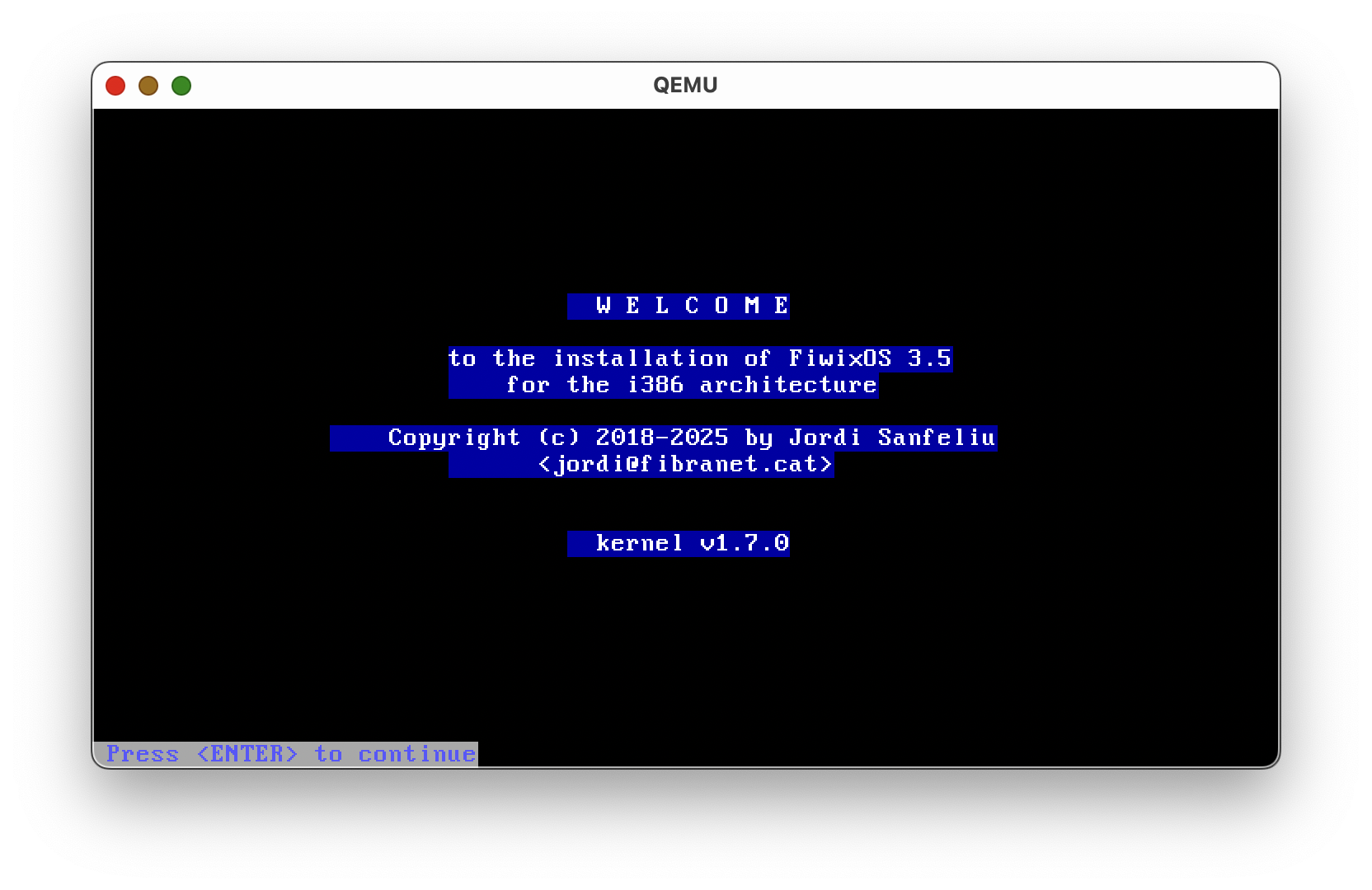
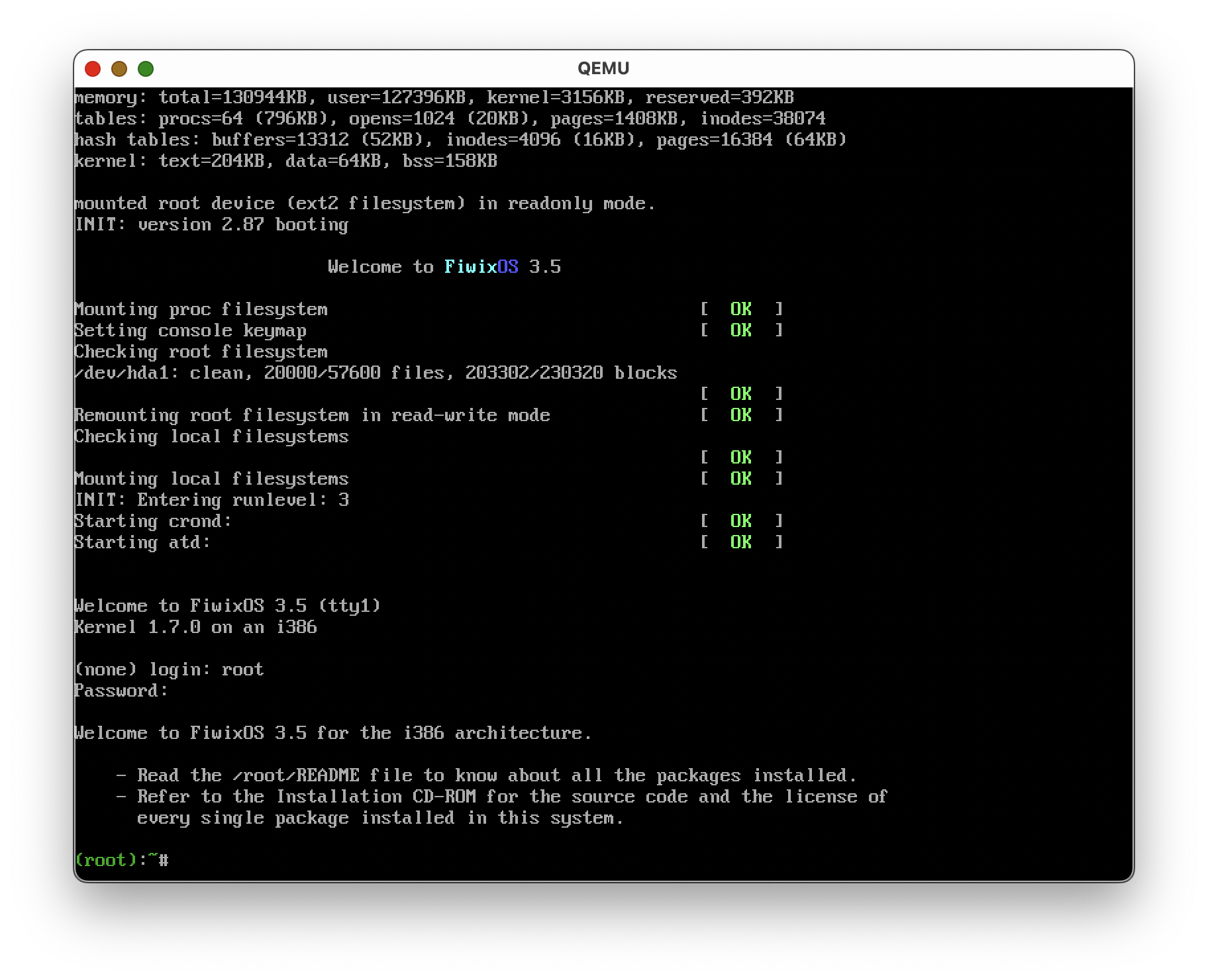
So, this weekend I'm playing with Fiwix. Fiwix (https://fiwix.org/) is a small hobbyist operating system for i386 that aims to be Linux 2.0 compatible while being small enough that a single human could understand it as a whole (it's ~30k SLOC, self-hosted, and can be built with tcc).
A couple of years ago Fiwix was used in a fun project of "let's bootstrap a Linux system with only tiny tools that can be understood by a single person": https://github.com/fosslinux/live-bootstrap/blob/master/parts.rst
My refreshed interest in it comes from multiple sources: first, there is now a TCP/IP stack (still WIP). Second, GNU/Linux is *gestures ambiguously* in a strange state, so it is interesting to see how far one could get with a completely non-BSD non-standard tiny, toy-like operating system.
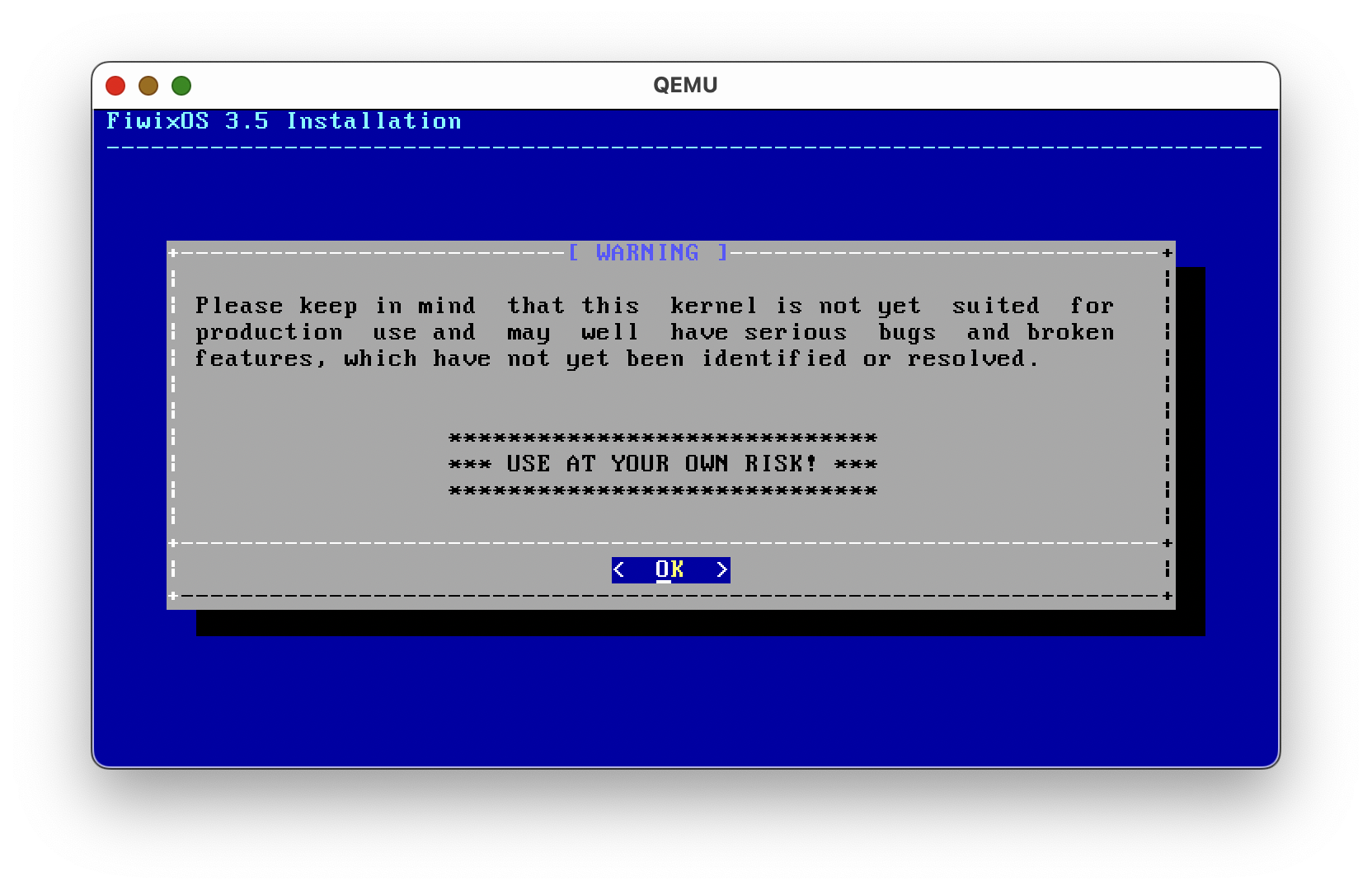
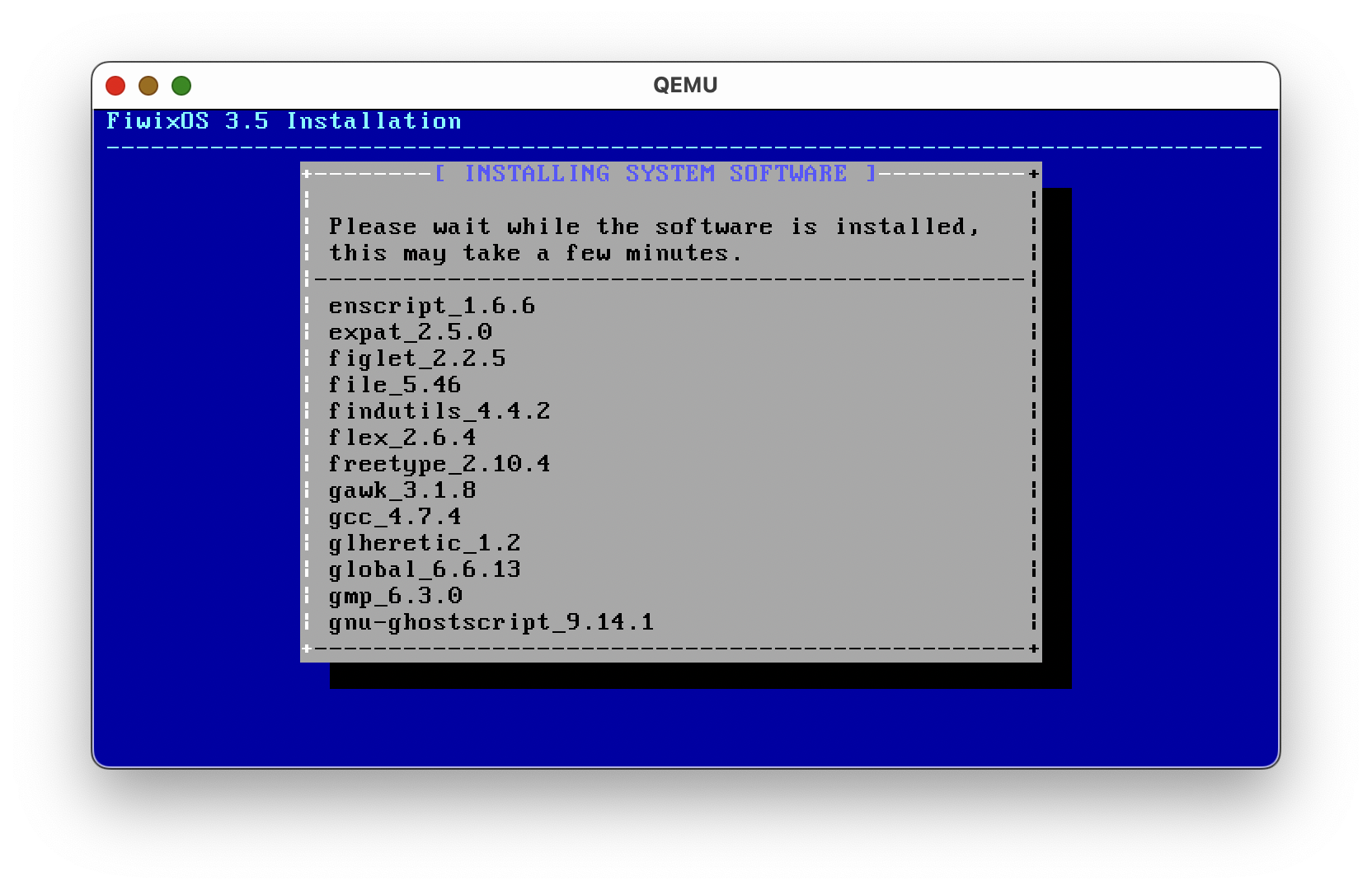
The installation is quite straightforward. "Please keep in mind this kernel is not yet suited for production. Use at your own risk!" is, in itself, a proof of reliability.
This is a beginning of a slow-going🧵
@nina_kali_nina@tech.lgbt Nina how do you keep finding so many Weird, Cool and Obscure systems
 i’m usually good at this, but you’re on another level, this rules <img class=“not-responsive emoji” src=“https://donotsta.re/emoji/blobcat/ablobcatbongo.png” title=“:ablobcatbongo:” />
 -
@nina_kali_nina@tech.lgbt Nina how do you keep finding so many Weird, Cool and Obscure systems
i’m usually good at this, but you’re on another level, this rules <img class=“not-responsive emoji” src=“https://donotsta.re/emoji/blobcat/ablobcatbongo.png” title=“:ablobcatbongo:” />@domi I've been doing it for 25 years now. I'm sure someone who's had OS autism^w special interest for 50 years is capable of much more
-
@nina_kali_nina holy shit, this is awesome! sad that it doesn't have tts and a tty screenreader, but O well. Now, an interesting thing would be compiling wlroots or another wayland compositor for that OS. The problem is that most of them require modesetting from linux as well as the drm components, but who knows, maybe it's not too far out of the realms of imagination
@esoteric_programmer I suspect it might not be that difficult to get a screenreader working for it. It also supports serial TTYs, so it should be possible to login to the system from something that supports tts out of the box
-
@domi I've been doing it for 25 years now. I'm sure someone who's had OS autism^w special interest for 50 years is capable of much more
@nina_kali_nina@tech.lgbt unfair, you’ve had a 10 year headstart over me! <img class=“not-responsive emoji” src=“https://donotsta.re/emoji/akko/akko_giggle.png” title=“:akko_giggle:” />
-
@esoteric_programmer I suspect it might not be that difficult to get a screenreader working for it. It also supports serial TTYs, so it should be possible to login to the system from something that supports tts out of the box
@nina_kali_nina espeakup is a kernel module. It doesn't support those, right? maybe telnet?
-
So, this weekend I'm playing with Fiwix. Fiwix (https://fiwix.org/) is a small hobbyist operating system for i386 that aims to be Linux 2.0 compatible while being small enough that a single human could understand it as a whole (it's ~30k SLOC, self-hosted, and can be built with tcc).
A couple of years ago Fiwix was used in a fun project of "let's bootstrap a Linux system with only tiny tools that can be understood by a single person": https://github.com/fosslinux/live-bootstrap/blob/master/parts.rst
My refreshed interest in it comes from multiple sources: first, there is now a TCP/IP stack (still WIP). Second, GNU/Linux is *gestures ambiguously* in a strange state, so it is interesting to see how far one could get with a completely non-BSD non-standard tiny, toy-like operating system.
The installation is quite straightforward. "Please keep in mind this kernel is not yet suited for production. Use at your own risk!" is, in itself, a proof of reliability.
This is a beginning of a slow-going🧵
@nina_kali_nina IRC client? maybe https://rhapsody.sourceforge.net/
-
So, this weekend I'm playing with Fiwix. Fiwix (https://fiwix.org/) is a small hobbyist operating system for i386 that aims to be Linux 2.0 compatible while being small enough that a single human could understand it as a whole (it's ~30k SLOC, self-hosted, and can be built with tcc).
A couple of years ago Fiwix was used in a fun project of "let's bootstrap a Linux system with only tiny tools that can be understood by a single person": https://github.com/fosslinux/live-bootstrap/blob/master/parts.rst
My refreshed interest in it comes from multiple sources: first, there is now a TCP/IP stack (still WIP). Second, GNU/Linux is *gestures ambiguously* in a strange state, so it is interesting to see how far one could get with a completely non-BSD non-standard tiny, toy-like operating system.
The installation is quite straightforward. "Please keep in mind this kernel is not yet suited for production. Use at your own risk!" is, in itself, a proof of reliability.
This is a beginning of a slow-going🧵
@nina_kali_nina this is cool. This is what I want for ubttix. Stability is hard.
-
@nina_kali_nina espeakup is a kernel module. It doesn't support those, right? maybe telnet?
@esoteric_programmer well, it doesn't, yeah. But maybe a similar one can be added!
-
@nina_kali_nina IRC client? maybe https://rhapsody.sourceforge.net/
@mmu_man Good idea! I think I'll try to get links and something like that working sometime later this week. For now I'm fighting windows
-
So, this weekend I'm playing with Fiwix. Fiwix (https://fiwix.org/) is a small hobbyist operating system for i386 that aims to be Linux 2.0 compatible while being small enough that a single human could understand it as a whole (it's ~30k SLOC, self-hosted, and can be built with tcc).
A couple of years ago Fiwix was used in a fun project of "let's bootstrap a Linux system with only tiny tools that can be understood by a single person": https://github.com/fosslinux/live-bootstrap/blob/master/parts.rst
My refreshed interest in it comes from multiple sources: first, there is now a TCP/IP stack (still WIP). Second, GNU/Linux is *gestures ambiguously* in a strange state, so it is interesting to see how far one could get with a completely non-BSD non-standard tiny, toy-like operating system.
The installation is quite straightforward. "Please keep in mind this kernel is not yet suited for production. Use at your own risk!" is, in itself, a proof of reliability.
This is a beginning of a slow-going🧵
@nina_kali_nina does it support the linux framebuffer?
if so you might be able to run uxn-lfb on it!
-
@nina_kali_nina does it support the linux framebuffer?
if so you might be able to run uxn-lfb on it!
@nina_kali_nina (that said the input devices might be sufficiently divergent that they won't work properly)
-
@nina_kali_nina (that said the input devices might be sufficiently divergent that they won't work properly)
@nina_kali_nina looking at the "to do" list i think maybe it won't work, sadly:
> Improve framebuffer interface with Linux ioctl() commands.
currently uxn-lfb relies on those ioctls
-
So, this weekend I'm playing with Fiwix. Fiwix (https://fiwix.org/) is a small hobbyist operating system for i386 that aims to be Linux 2.0 compatible while being small enough that a single human could understand it as a whole (it's ~30k SLOC, self-hosted, and can be built with tcc).
A couple of years ago Fiwix was used in a fun project of "let's bootstrap a Linux system with only tiny tools that can be understood by a single person": https://github.com/fosslinux/live-bootstrap/blob/master/parts.rst
My refreshed interest in it comes from multiple sources: first, there is now a TCP/IP stack (still WIP). Second, GNU/Linux is *gestures ambiguously* in a strange state, so it is interesting to see how far one could get with a completely non-BSD non-standard tiny, toy-like operating system.
The installation is quite straightforward. "Please keep in mind this kernel is not yet suited for production. Use at your own risk!" is, in itself, a proof of reliability.
This is a beginning of a slow-going🧵
@nina_kali_nina something for @osnews Thom?
-
@nina_kali_nina something for @osnews Thom?