Skip to content
  • Hjem
  • Seneste
  • Etiketter
  • Populære
  • Verden
  • Bruger
  • Grupper
Temaer
  • Light
  • Brite
  • Cerulean
  • Cosmo
  • Flatly
  • Journal
  • Litera
  • Lumen
  • Lux
  • Materia
  • Minty
  • Morph
  • Pulse
  • Sandstone
  • Simplex
  • Sketchy
  • Spacelab
  • United
  • Yeti
  • Zephyr
  • Dark
  • Cyborg
  • Darkly
  • Quartz
  • Slate
  • Solar
  • Superhero
  • Vapor

  • Default (No Skin)
  • No Skin
Kollaps
FARVEL BIG TECH
  1. Forside
  2. Ikke-kategoriseret
  3. Between my normal meetings and writing, I'm watching a few talks at the American Astronomical Society's (AAS) Division for Dynamical Astronomy (DDA) annual meeting this week.

Between my normal meetings and writing, I'm watching a few talks at the American Astronomical Society's (AAS) Division for Dynamical Astronomy (DDA) annual meeting this week.

Planlagt Fastgjort Låst Flyttet Ikke-kategoriseret
dda2026
95 Indlæg 43 Posters 0 Visninger
  • Ældste til nyeste
  • Nyeste til ældste
  • Most Votes
Svar
  • Svar som emne
Login for at svare
Denne tråd er blevet slettet. Kun brugere med emne behandlings privilegier kan se den.
  • sundogplanets@mastodon.socialS sundogplanets@mastodon.social

    Helena Buschermohle (Instituto Nacional de Pesquisas Espacias) what happens to moons around circumbinary planets? As planets migrate inwards, Hill sphere gets smaller and moons would become unbound. HAHA she calls stable moons "smoons" and a moon that becomes a planet a "ploonet"

    All circumbinary exoplanets discovered so far are gas giants, but maybe moons could be habitable, now that we know some moons survive migration.

    #DDA2026

    semantikast@openbiblio.socialS This user is from outside of this forum
    semantikast@openbiblio.socialS This user is from outside of this forum
    semantikast@openbiblio.social
    wrote sidst redigeret af
    #56

    @sundogplanets Wow, I think I identify as circumbinary now.

    1 Reply Last reply
    0
    • sundogplanets@mastodon.socialS sundogplanets@mastodon.social

      Most super earth systems are not resonant (they don't sound so nice), and lots are near-resonant and sound a little out of tune (some sound quite ominous!)

      If you throw a few Plutos in to the system, scattering will disrupt the chain that formed, sometimes leaves them near but not quite in the resonance.

      Ends with a note to Kepler (the astronomer) who thought the planets should be in perfect resonance, if not now, maybe when formed. Cool!

      #DDA2026

      docalm@mastodon.socialD This user is from outside of this forum
      docalm@mastodon.socialD This user is from outside of this forum
      docalm@mastodon.social
      wrote sidst redigeret af
      #57

      @sundogplanets respnance may be an objection for KAM theory (and therefore, the stability of the respective solar system), though

      1 Reply Last reply
      0
      • sundogplanets@mastodon.socialS sundogplanets@mastodon.social

        Oooo he's got a bunch of orbital sonification on his website! https://shadden.github.io/sonification/

        Oooo really neat to hear a chord change during an N-body simulation when stability is lost and a planet swaps to a different resonance.

        Resonant chain migration behaves like masses on springs, says it's like vibrato! Cool.

        "So that's a lot of fun, but so what?" Unstable modes grow or decay depending on how eccentricities are damped.

        #DDA2026

        stevenray@sfba.socialS This user is from outside of this forum
        stevenray@sfba.socialS This user is from outside of this forum
        stevenray@sfba.social
        wrote sidst redigeret af
        #58

        @sundogplanets this stuff is super fascinating.

        1 Reply Last reply
        0
        • sundogplanets@mastodon.socialS sundogplanets@mastodon.social

          Most super earth systems are not resonant (they don't sound so nice), and lots are near-resonant and sound a little out of tune (some sound quite ominous!)

          If you throw a few Plutos in to the system, scattering will disrupt the chain that formed, sometimes leaves them near but not quite in the resonance.

          Ends with a note to Kepler (the astronomer) who thought the planets should be in perfect resonance, if not now, maybe when formed. Cool!

          #DDA2026

          sundogplanets@mastodon.socialS This user is from outside of this forum
          sundogplanets@mastodon.socialS This user is from outside of this forum
          sundogplanets@mastodon.social
          wrote sidst redigeret af
          #59

          Leia Shen & Kavi Dey (Harvey Mudd College) current categorization looking for asteroid dynamical families takes ~30 minutes of computation per asteroid. Vera Rubin observatory will discover 10 million more asteroids. Using machine learning and computationally cheaper asteroid properties to find families. Code is available, but they only gave it as QR code not a link...sigh.

          #DDA2026

          sundogplanets@mastodon.socialS ve2uwy@mastodon.radioV 2 Replies Last reply
          0
          • sundogplanets@mastodon.socialS sundogplanets@mastodon.social

            Leia Shen & Kavi Dey (Harvey Mudd College) current categorization looking for asteroid dynamical families takes ~30 minutes of computation per asteroid. Vera Rubin observatory will discover 10 million more asteroids. Using machine learning and computationally cheaper asteroid properties to find families. Code is available, but they only gave it as QR code not a link...sigh.

            #DDA2026

            sundogplanets@mastodon.socialS This user is from outside of this forum
            sundogplanets@mastodon.socialS This user is from outside of this forum
            sundogplanets@mastodon.social
            wrote sidst redigeret af
            #60

            David Minton (Purdue): Starts with really cool animation of Moon getting blasted by asteroids! Compares craters to dino footprints. Makes the point that better data (seeing smaller craters) changes the story dramatically

            #DDA2026

            sundogplanets@mastodon.socialS bashstkid@mastodon.onlineB 2 Replies Last reply
            0
            • sundogplanets@mastodon.socialS sundogplanets@mastodon.social

              David Minton (Purdue): Starts with really cool animation of Moon getting blasted by asteroids! Compares craters to dino footprints. Makes the point that better data (seeing smaller craters) changes the story dramatically

              #DDA2026

              sundogplanets@mastodon.socialS This user is from outside of this forum
              sundogplanets@mastodon.socialS This user is from outside of this forum
              sundogplanets@mastodon.social
              wrote sidst redigeret af
              #61

              Ben Cassese (MPC): here comes the flood of Solar System small body data! Expect 200 million observations per year from Rubin, + 200 million from NEO Surveyor. MPC has to quickly link previous observations into new orbits, this is hard. Will need machine learning to process everything.

              #DDA2026

              quoidian@mstdn.caQ sundogplanets@mastodon.socialS 2 Replies Last reply
              0
              • sundogplanets@mastodon.socialS sundogplanets@mastodon.social

                Ben Cassese (MPC): here comes the flood of Solar System small body data! Expect 200 million observations per year from Rubin, + 200 million from NEO Surveyor. MPC has to quickly link previous observations into new orbits, this is hard. Will need machine learning to process everything.

                #DDA2026

                quoidian@mstdn.caQ This user is from outside of this forum
                quoidian@mstdn.caQ This user is from outside of this forum
                quoidian@mstdn.ca
                wrote sidst redigeret af
                #62

                @sundogplanets
                Certainly something like the BOINC project.

                1 Reply Last reply
                0
                • sundogplanets@mastodon.socialS sundogplanets@mastodon.social

                  David Minton (Purdue): Starts with really cool animation of Moon getting blasted by asteroids! Compares craters to dino footprints. Makes the point that better data (seeing smaller craters) changes the story dramatically

                  #DDA2026

                  bashstkid@mastodon.onlineB This user is from outside of this forum
                  bashstkid@mastodon.onlineB This user is from outside of this forum
                  bashstkid@mastodon.online
                  wrote sidst redigeret af
                  #63

                  @sundogplanets Thanks for today’s threads, it’s been really interesting.

                  1 Reply Last reply
                  0
                  • sundogplanets@mastodon.socialS sundogplanets@mastodon.social

                    Ben Cassese (MPC): here comes the flood of Solar System small body data! Expect 200 million observations per year from Rubin, + 200 million from NEO Surveyor. MPC has to quickly link previous observations into new orbits, this is hard. Will need machine learning to process everything.

                    #DDA2026

                    sundogplanets@mastodon.socialS This user is from outside of this forum
                    sundogplanets@mastodon.socialS This user is from outside of this forum
                    sundogplanets@mastodon.social
                    wrote sidst redigeret af
                    #64

                    Paul Wiegert (U. Western Ontario): finding interstellar meteors is really hard! Lots of meteors are from comets with high-eccentricity orbits, hard to get good enough data to measure meteor pre-impact orbits. There *are* interstellar meteors, just not as many as that Harvard astronomer (who the speaker did not name) seems to think, and none have been conclusively discovered yet.

                    #DDA2026

                    grb090423@mastodon.socialG sundogplanets@mastodon.socialS nev@flipping.rocksN 3 Replies Last reply
                    0
                    • sundogplanets@mastodon.socialS sundogplanets@mastodon.social

                      Oooo he's got a bunch of orbital sonification on his website! https://shadden.github.io/sonification/

                      Oooo really neat to hear a chord change during an N-body simulation when stability is lost and a planet swaps to a different resonance.

                      Resonant chain migration behaves like masses on springs, says it's like vibrato! Cool.

                      "So that's a lot of fun, but so what?" Unstable modes grow or decay depending on how eccentricities are damped.

                      #DDA2026

                      inchulk@mastodon.greenI This user is from outside of this forum
                      inchulk@mastodon.greenI This user is from outside of this forum
                      inchulk@mastodon.green
                      wrote sidst redigeret af
                      #65

                      @sundogplanets Really Cool!

                      1 Reply Last reply
                      0
                      • sundogplanets@mastodon.socialS sundogplanets@mastodon.social

                        Konstantin Batygin (Caltech): most common planets are super-Earths on very short orbits. How do they not fall into their star? How do they pick which resonance to lock in to? (Bonus points for joke about a system with a 6:7 resonance for everyone with middle-school-aged kids)

                        Giant equation in a confetti explosion (this guy likes giving talks). Shows that 6:7 resonance requires planets to form simultaneously at 1-3AU: the "planet factory ring"

                        #DDA2026

                        red_shirt_no2@c.imR This user is from outside of this forum
                        red_shirt_no2@c.imR This user is from outside of this forum
                        red_shirt_no2@c.im
                        wrote sidst redigeret af
                        #66

                        @sundogplanets
                        Do we still have sampling issues? Is “most common planets are super-Earths on very short orbits” because those are easier to detect than super-Earths on longer orbits, or sub-Earths?

                        1 Reply Last reply
                        0
                        • sundogplanets@mastodon.socialS sundogplanets@mastodon.social

                          Leia Shen & Kavi Dey (Harvey Mudd College) current categorization looking for asteroid dynamical families takes ~30 minutes of computation per asteroid. Vera Rubin observatory will discover 10 million more asteroids. Using machine learning and computationally cheaper asteroid properties to find families. Code is available, but they only gave it as QR code not a link...sigh.

                          #DDA2026

                          ve2uwy@mastodon.radioV This user is from outside of this forum
                          ve2uwy@mastodon.radioV This user is from outside of this forum
                          ve2uwy@mastodon.radio
                          wrote sidst redigeret af
                          #67

                          @sundogplanets

                          Wait … Harcourt Fenton Mudd conned his way into owning … a *college*??

                          1 Reply Last reply
                          0
                          • sundogplanets@mastodon.socialS sundogplanets@mastodon.social

                            As part of the CV-rejiggering for academic stuff that I previously complained about, I also need to update my academic website (which is embarrassingly simple, but at least I didn't write it in 1999 and it doesn't have a dancing-linux-penguin-gif like Some Other Academics). Will be trying to do that while listening to the next set of #DDA2026 talks

                            uxmark@cosocial.caU This user is from outside of this forum
                            uxmark@cosocial.caU This user is from outside of this forum
                            uxmark@cosocial.ca
                            wrote sidst redigeret af
                            #68

                            @sundogplanets But surely it needs to be sprinkled with goat emoji! WIth a good boy looking after them 😀❤️

                            🐐 🐐 🐐 🐐 🐐 🐕

                            1 Reply Last reply
                            0
                            • sundogplanets@mastodon.socialS sundogplanets@mastodon.social

                              Paul Wiegert (U. Western Ontario): finding interstellar meteors is really hard! Lots of meteors are from comets with high-eccentricity orbits, hard to get good enough data to measure meteor pre-impact orbits. There *are* interstellar meteors, just not as many as that Harvard astronomer (who the speaker did not name) seems to think, and none have been conclusively discovered yet.

                              #DDA2026

                              grb090423@mastodon.socialG This user is from outside of this forum
                              grb090423@mastodon.socialG This user is from outside of this forum
                              grb090423@mastodon.social
                              wrote sidst redigeret af
                              #69

                              @sundogplanets

                              Good on PW for not naming him. That particular astronomer doesn't need any more promotion.

                              1 Reply Last reply
                              0
                              • sundogplanets@mastodon.socialS sundogplanets@mastodon.social

                                Paul Wiegert (U. Western Ontario): finding interstellar meteors is really hard! Lots of meteors are from comets with high-eccentricity orbits, hard to get good enough data to measure meteor pre-impact orbits. There *are* interstellar meteors, just not as many as that Harvard astronomer (who the speaker did not name) seems to think, and none have been conclusively discovered yet.

                                #DDA2026

                                sundogplanets@mastodon.socialS This user is from outside of this forum
                                sundogplanets@mastodon.socialS This user is from outside of this forum
                                sundogplanets@mastodon.social
                                wrote sidst redigeret af
                                #70

                                Apostolos Christou (Armaugh Obs.) this talk title is hilarious "Larger asteroids stay sober, smaller asteroids get drunk"

                                Wow what a cartoon!

                                Small asteroids end up with gaussian distributions around the family centre.

                                #DDA2026

                                sundogplanets@mastodon.socialS nev@flipping.rocksN michaeltbacon@social.coopM 3 Replies Last reply
                                0
                                • sundogplanets@mastodon.socialS sundogplanets@mastodon.social

                                  Apostolos Christou (Armaugh Obs.) this talk title is hilarious "Larger asteroids stay sober, smaller asteroids get drunk"

                                  Wow what a cartoon!

                                  Small asteroids end up with gaussian distributions around the family centre.

                                  #DDA2026

                                  sundogplanets@mastodon.socialS This user is from outside of this forum
                                  sundogplanets@mastodon.socialS This user is from outside of this forum
                                  sundogplanets@mastodon.social
                                  wrote sidst redigeret af
                                  #71

                                  Daniel Durda (SWRI): Overview talk. The asteroid belt is a fossilized collisional system - the size distribution (particularly waves in size dist) tells us about the past. Dust production is "spikey": lots right after a big collision.

                                  Lots of work on Chicxulub impact, where does debris land? (Back into atmosphere, heating it up, burning everything)

                                  Used Ames gun to smash real meteorites and study dust from them.

                                  #DDA2026

                                  sundogplanets@mastodon.socialS 1 Reply Last reply
                                  0
                                  • sundogplanets@mastodon.socialS sundogplanets@mastodon.social

                                    Apostolos Christou (Armaugh Obs.) this talk title is hilarious "Larger asteroids stay sober, smaller asteroids get drunk"

                                    Wow what a cartoon!

                                    Small asteroids end up with gaussian distributions around the family centre.

                                    #DDA2026

                                    nev@flipping.rocksN This user is from outside of this forum
                                    nev@flipping.rocksN This user is from outside of this forum
                                    nev@flipping.rocks
                                    wrote sidst redigeret af
                                    #72

                                    @sundogplanets we need more scientific illustrations like this

                                    1 Reply Last reply
                                    0
                                    • sundogplanets@mastodon.socialS sundogplanets@mastodon.social

                                      Daniel Durda (SWRI): Overview talk. The asteroid belt is a fossilized collisional system - the size distribution (particularly waves in size dist) tells us about the past. Dust production is "spikey": lots right after a big collision.

                                      Lots of work on Chicxulub impact, where does debris land? (Back into atmosphere, heating it up, burning everything)

                                      Used Ames gun to smash real meteorites and study dust from them.

                                      #DDA2026

                                      sundogplanets@mastodon.socialS This user is from outside of this forum
                                      sundogplanets@mastodon.socialS This user is from outside of this forum
                                      sundogplanets@mastodon.social
                                      wrote sidst redigeret af
                                      #73

                                      I should note that this session (and a at least one other) at #DDA2026 are tributes to Stan Dermott, who wrote the Solar System Dynamics bible, and taught a LOT of students.

                                      I guess I have a 1-degree-removed connection here? The postdoc I first worked with, Beth Holmes, who taught me a lot, when I was a baby undergrad, had just finished her PhD with him. (She died from a heart condition while I was still an undergrad)

                                      sundogplanets@mastodon.socialS 1 Reply Last reply
                                      0
                                      • sundogplanets@mastodon.socialS sundogplanets@mastodon.social

                                        Paul Wiegert (U. Western Ontario): finding interstellar meteors is really hard! Lots of meteors are from comets with high-eccentricity orbits, hard to get good enough data to measure meteor pre-impact orbits. There *are* interstellar meteors, just not as many as that Harvard astronomer (who the speaker did not name) seems to think, and none have been conclusively discovered yet.

                                        #DDA2026

                                        nev@flipping.rocksN This user is from outside of this forum
                                        nev@flipping.rocksN This user is from outside of this forum
                                        nev@flipping.rocks
                                        wrote sidst redigeret af
                                        #74

                                        @sundogplanets

                                        > that Harvard astronomer

                                        I exhaled strongly out my nose

                                        1 Reply Last reply
                                        0
                                        • sundogplanets@mastodon.socialS sundogplanets@mastodon.social

                                          I should note that this session (and a at least one other) at #DDA2026 are tributes to Stan Dermott, who wrote the Solar System Dynamics bible, and taught a LOT of students.

                                          I guess I have a 1-degree-removed connection here? The postdoc I first worked with, Beth Holmes, who taught me a lot, when I was a baby undergrad, had just finished her PhD with him. (She died from a heart condition while I was still an undergrad)

                                          sundogplanets@mastodon.socialS This user is from outside of this forum
                                          sundogplanets@mastodon.socialS This user is from outside of this forum
                                          sundogplanets@mastodon.social
                                          wrote sidst redigeret af
                                          #75

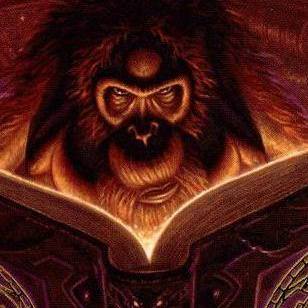
                                          Mark Wyatt (U. of Cambridge) talking about dynamical effects of planets on debris disks (I LOVE this stuff). This is true in our own solar system, zodiacal dust is affected by our planets' orbits.

                                          Ooo Fomalhaut, my favourite disk system! The brightness variations in the disk place constraints on the forced eccentricities resulting from unseen planets in the system.

                                          Fom b is a dust cloud, not a planet, which I am incredibly proud I wrote about years ago! Now proven from JWST images!

                                          #DDA2026

                                          sundogplanets@mastodon.socialS carrideen@c18.masto.hostC 2 Replies Last reply
                                          0
                                          Svar
                                          • Svar som emne
                                          Login for at svare
                                          • Ældste til nyeste
                                          • Nyeste til ældste
                                          • Most Votes


                                          • Log ind

                                          • Har du ikke en konto? Tilmeld

                                          • Login or register to search.
                                          Powered by NodeBB Contributors
                                          Graciously hosted by data.coop
                                          • First post
                                            Last post
                                          0
                                          • Hjem
                                          • Seneste
                                          • Etiketter
                                          • Populære
                                          • Verden
                                          • Bruger
                                          • Grupper