Good morning Mastodon!
-
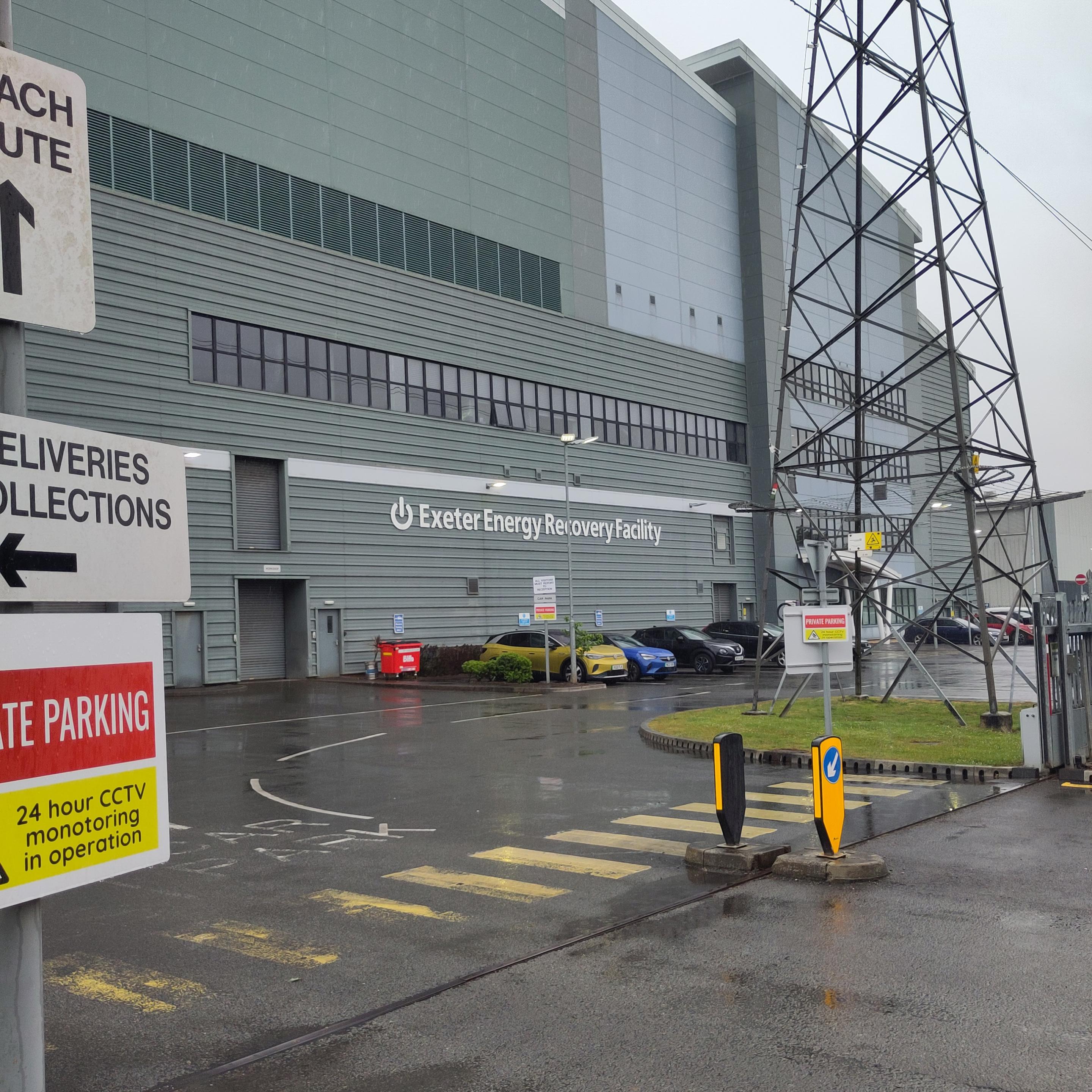
Good morning Mastodon! Remember when you were in primary school and went on school trips to places teachers though were important or free, and retained nothing from them except for who was sick on whom on the way there? Now you're older and nerdier did you ever think "Actually it might be really interesting to visit a major piece of civic infrastructure and learn how it works?" Just me? Well I was in luck today because the University sustainability team has organised a tour of #Exeter Energy Recovery Facility in #MarshBarton, where all our non-recyclable rubbish ends up.
https://www.viridor.co.uk/energy/energy-recovery-facilities/exeter-erf/
@afewbugs I walk past that place multiple times a week, it’s pretty dystopian.
-
@afewbugs you're clearly very dedicated to bike riding, given that closeness of the rail station.
It's not very nice weather today down here in Devon for cycling, albeit the rain is quite light.
A regularly cycle past Marsh Barton, and expect to do so at the weekend, but I'm very much a fair weather cyclist.@marjolica it's a lovely ride beside the water up from St Davids, and completely flat

-
They have now put me in a room with coffee to await the rest of the tour group and instructed me not to touch anything, so I'm back on Mastodon to distract me from the irresistible urge to touch everything
You'll be relieved to know (or maybe not) that I stopped posting because the tour started, not because I touched something I shouldn't have and blew up the entire Marsh Barton industrial estate. It was an extremely cool tour. I took some notes but apparently the presentation is going to be emailed to us later so I'll go back and add any facts and figures I missed.
-
You'll be relieved to know (or maybe not) that I stopped posting because the tour started, not because I touched something I shouldn't have and blew up the entire Marsh Barton industrial estate. It was an extremely cool tour. I took some notes but apparently the presentation is going to be emailed to us later so I'll go back and add any facts and figures I missed.
@afewbugs Phew... the explosion wouldn't have been good.
-
Good morning Mastodon! Remember when you were in primary school and went on school trips to places teachers though were important or free, and retained nothing from them except for who was sick on whom on the way there? Now you're older and nerdier did you ever think "Actually it might be really interesting to visit a major piece of civic infrastructure and learn how it works?" Just me? Well I was in luck today because the University sustainability team has organised a tour of #Exeter Energy Recovery Facility in #MarshBarton, where all our non-recyclable rubbish ends up.
https://www.viridor.co.uk/energy/energy-recovery-facilities/exeter-erf/
@afewbugs@social.coop being from a somewhat rural area, we were brought to farms, bakeries, stuff like that. I loved each one of those trips, partly because we got to sample freshly harvested or made food. -
You'll be relieved to know (or maybe not) that I stopped posting because the tour started, not because I touched something I shouldn't have and blew up the entire Marsh Barton industrial estate. It was an extremely cool tour. I took some notes but apparently the presentation is going to be emailed to us later so I'll go back and add any facts and figures I missed.
So the Exeter energy-from-waste facility, along with another one in Plymouth, opened for operation in 2015. Before that Devon recycled 55% of its waste and sent the remaining 45% to landfill. Now it recycles 56% (not a massive improvement in that time!), sends 43% to EFW and only 1% goes to landfill.
Managing closed landfill is still a massive logistical and financial operation for Devon County Council, which has responsibility for 58 of them, some of which date from before 1950 when records began so they don't even know what's in them. I didn't realise how much ongoing maintenance they need, but methane has to be flared off periodically and leachate has to be cleaned up before it can contaminate waterways.
-
They have now put me in a room with coffee to await the rest of the tour group and instructed me not to touch anything, so I'm back on Mastodon to distract me from the irresistible urge to touch everything
@afewbugs it's great you can get adult group tours for this, instead of waiting until popular youtubers manage to get themselves s invited in
-
So the Exeter energy-from-waste facility, along with another one in Plymouth, opened for operation in 2015. Before that Devon recycled 55% of its waste and sent the remaining 45% to landfill. Now it recycles 56% (not a massive improvement in that time!), sends 43% to EFW and only 1% goes to landfill.
Managing closed landfill is still a massive logistical and financial operation for Devon County Council, which has responsibility for 58 of them, some of which date from before 1950 when records began so they don't even know what's in them. I didn't realise how much ongoing maintenance they need, but methane has to be flared off periodically and leachate has to be cleaned up before it can contaminate waterways.
@afewbugs Suffolk also offer free outings to anyone who wishes to visit for similar plant in the Mid Suffolk area (these are surprisingly popular)
-
So the Exeter energy-from-waste facility, along with another one in Plymouth, opened for operation in 2015. Before that Devon recycled 55% of its waste and sent the remaining 45% to landfill. Now it recycles 56% (not a massive improvement in that time!), sends 43% to EFW and only 1% goes to landfill.
Managing closed landfill is still a massive logistical and financial operation for Devon County Council, which has responsibility for 58 of them, some of which date from before 1950 when records began so they don't even know what's in them. I didn't realise how much ongoing maintenance they need, but methane has to be flared off periodically and leachate has to be cleaned up before it can contaminate waterways.
The Exeter and Plymouth plants incinerate residual waste (ie what's left over when everything recyclable or compostable has been removed) and generate electricity. There were plans to use the generated heat of the Exeter plant for a district heating system but they never came to fruition. The Plymouth plant does run a district heating system which heats the neighbouring Royal Navy barracks and dockyard, and I'm honestly not sure how I feel about the fact we can manage to implement the most sustainable solution, but apparently only in the service of waging war more efficiently
-
The Exeter and Plymouth plants incinerate residual waste (ie what's left over when everything recyclable or compostable has been removed) and generate electricity. There were plans to use the generated heat of the Exeter plant for a district heating system but they never came to fruition. The Plymouth plant does run a district heating system which heats the neighbouring Royal Navy barracks and dockyard, and I'm honestly not sure how I feel about the fact we can manage to implement the most sustainable solution, but apparently only in the service of waging war more efficiently
@afewbugs I'd imagine its also one of those problems of planning scale. Getting the navy to agree is a bureaucracy but its one bureaucracy, a residential neighbourhood is hundreds of tiny bureaucracies to deal with.
-
The Exeter and Plymouth plants incinerate residual waste (ie what's left over when everything recyclable or compostable has been removed) and generate electricity. There were plans to use the generated heat of the Exeter plant for a district heating system but they never came to fruition. The Plymouth plant does run a district heating system which heats the neighbouring Royal Navy barracks and dockyard, and I'm honestly not sure how I feel about the fact we can manage to implement the most sustainable solution, but apparently only in the service of waging war more efficiently
The Exeter plant produces 24,000 MWh/year. I've written down that it consumes 75 somethings for its own operation and exports the rest to the grid, but this will be amended with the correct more legible figure when I get a copy of the presentation.
-
The Exeter plant produces 24,000 MWh/year. I've written down that it consumes 75 somethings for its own operation and exports the rest to the grid, but this will be amended with the correct more legible figure when I get a copy of the presentation.
The plant takes residual waste from mid Devon where I live, so some of my illegible scrawls may have been illuminated by photons generated from my very own household's cat turds and plastic films. It doesn't take all the University's waste, which not including specialist chemical and biological waste generated by the laboratories is managed by three separate subcontractors. The student accommodation blocks are managed by two separate contractors, who contract out their waste collection to different contractors, and the non-accommodation buildings have another separate waste collection contract. Very illogically waste doesn't go to the nearest disposal facility, it could be trucked across the country to the one the cheapest contractor has a contract with.
-
The plant takes residual waste from mid Devon where I live, so some of my illegible scrawls may have been illuminated by photons generated from my very own household's cat turds and plastic films. It doesn't take all the University's waste, which not including specialist chemical and biological waste generated by the laboratories is managed by three separate subcontractors. The student accommodation blocks are managed by two separate contractors, who contract out their waste collection to different contractors, and the non-accommodation buildings have another separate waste collection contract. Very illogically waste doesn't go to the nearest disposal facility, it could be trucked across the country to the one the cheapest contractor has a contract with.
The Marsh Barton facility isn't actually owned by the council, it has a contract with company Viridor which it pays to operate it. This is all utterly insane and probably Margaret Thatcher's fault.
-
The plant takes residual waste from mid Devon where I live, so some of my illegible scrawls may have been illuminated by photons generated from my very own household's cat turds and plastic films. It doesn't take all the University's waste, which not including specialist chemical and biological waste generated by the laboratories is managed by three separate subcontractors. The student accommodation blocks are managed by two separate contractors, who contract out their waste collection to different contractors, and the non-accommodation buildings have another separate waste collection contract. Very illogically waste doesn't go to the nearest disposal facility, it could be trucked across the country to the one the cheapest contractor has a contract with.
@afewbugs what are the emissions from the plant ?
-
The Marsh Barton facility isn't actually owned by the council, it has a contract with company Viridor which it pays to operate it. This is all utterly insane and probably Margaret Thatcher's fault.
@afewbugs What isn't, really?
-
@afewbugs what are the emissions from the plant ?
@quixoticgeek I'm getting to that but there's a spoiler here if you want to skip ahead https://www.viridor.co.uk/exeter-emissions-data/
-
The Exeter plant produces 24,000 MWh/year. I've written down that it consumes 75 somethings for its own operation and exports the rest to the grid, but this will be amended with the correct more legible figure when I get a copy of the presentation.
@afewbugs that's only a ~2.7MW power plant. Less than a modern wind turbine. That's lower than I expected.
-
The Marsh Barton facility isn't actually owned by the council, it has a contract with company Viridor which it pays to operate it. This is all utterly insane and probably Margaret Thatcher's fault.
@afewbugs I suspect use of the communal heating only in RN barracks and dockyard is because military is often the only well funded and trusted public sector organisation these days, and they have the clout to impose on sailors and shipbuilders what heating solutions are used rather than let them choose their own.
There are district heating schemes in Britain but very few and ever since the govt has considered increasing regulation and demanding more customer service no private businesses want to build them..
-
The Marsh Barton facility isn't actually owned by the council, it has a contract with company Viridor which it pays to operate it. This is all utterly insane and probably Margaret Thatcher's fault.
Here's a schematic of the process.
-
@afewbugs that's only a ~2.7MW power plant. Less than a modern wind turbine. That's lower than I expected.
@quixoticgeek The primary purpose it was built for is disposing of waste, not creating energy I think. There are much more efficient ways to produce electricity, and the energy density of household waste is apparently very variable and often fairly low, depending on what's getting burnt