Here's a tale of how nature triumphs in the end.
-
@johncarlosbaez @quoidian isn't 'pristine nature' one of those impossible ideals? I'm in Australia where we've had 100m of sea level rise since people arrived so questions like "what would nature look like here" are pretty abstract.
"The Biggest Estate on Earth" is a book asking which bits people made.
@moz @johncarlosbaez @quoidian impossible and also colonial in nature. E.g. Spaniards arriving on Turtle Island saw the way indigenous people were actively stewarding the land and demonized it, encouraging instead to leave "wilderness" without any human intervention. Now, a lot of those areas where colonists interfered with native stewardship have been doing worse off without human intervention, e.g. building up kindling for huge ecosystem-destroying wildfires instead of small controlled burns
-
Here's a tale of how nature triumphs in the end.
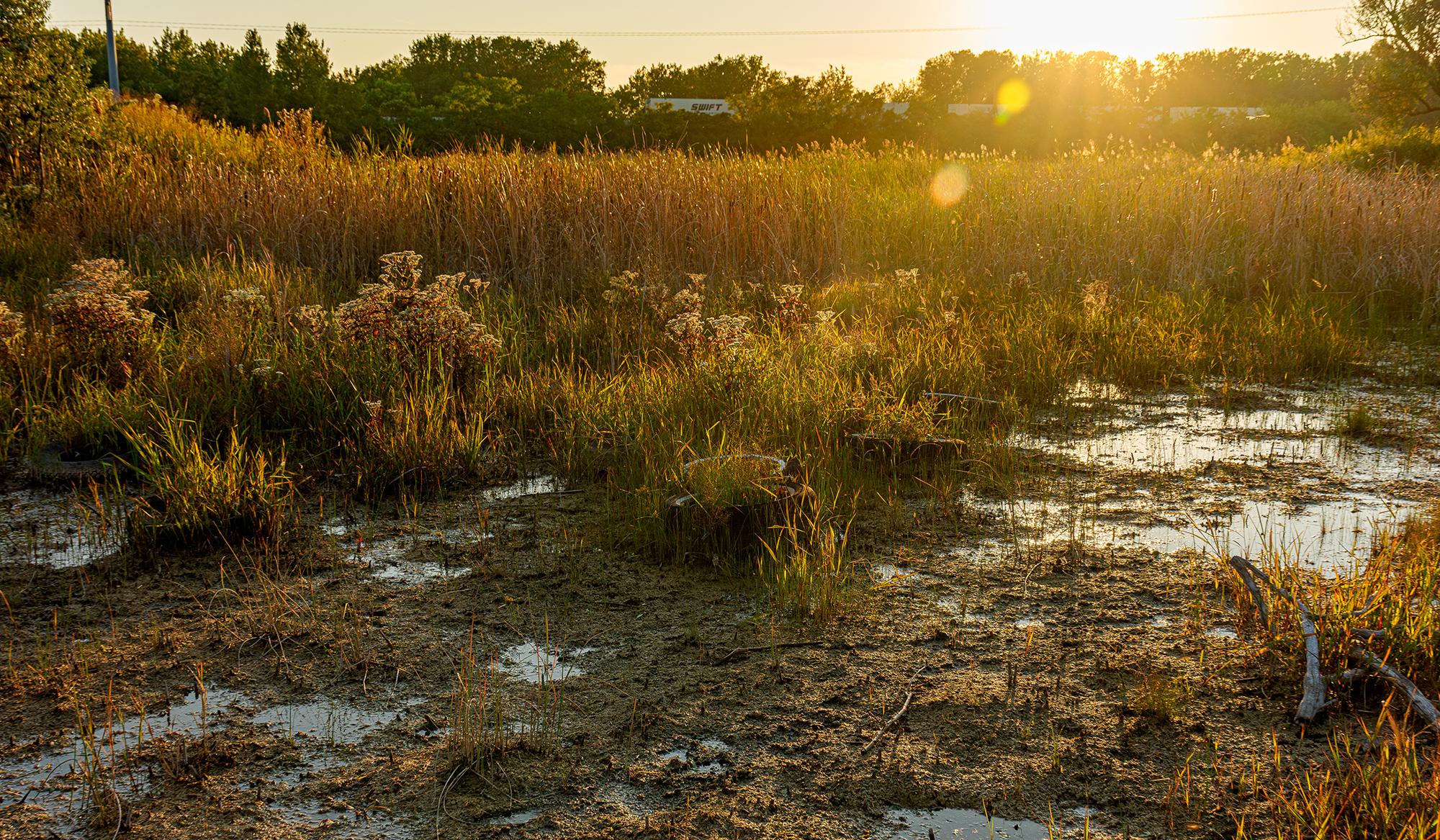
Steel mills dumped molten slag in parts of Chicago and nearby areas. The slag hardened in layers up to 5 meters deep. These places became barren wastelands. Other industries dumped hot ash and cinders there.
But eventually the steel mills closed.
The deep layers of hard, toxic material were not friendly to plants. Cottonwoods are usually 30 meters tall or more. In the slag fields, stunted cottonwoods grow to just 2 meters.
But rare species that could handle these conditions began to thrive. The lakeside daisy, a federally threatened species lost to Illinois for decades, turned out to grow taller on slag than on topsoil! The capitate spike-rush, last recorded in Illinois in 1894 and considered locally extinct, was rediscovered growing on slag.
And more! Native prairie grasses like little bluestem. Native milkweeds. Even tiny white orchids called sphinx ladies' tresses.
A team of women ecologists began studying these unusual landscapes. They call themselves the Slag Queens.
(1/2)
@johncarlosbaez As they point out in the article, the management decisions are highly site-specific. If it’s a wasteland for miles around, go wild with the invasives.
But, wow. The sedge that’s been missing for more than a century? How did it get back there? One gets the impression that somewhere off in a forgotten corner, some plants have been quietly biding their time.
-
Ecologist Alison Anastasio visited a former US Steel South Works site in Chicago. She expected to find “all crap plants” — common invasive weeds. To her surprise she spotted little bluestem and three species of native milkweed. She already knew she didn't want a career as an academic scientist. But she came up with the idea of forming a group to study this ecosystem: “a dream team of people I wanted to work with.”
She knew Laura Merwin from the University of Chicago, and later she met Lauren Umek, a project manager for the Chicago Park District. She invited them to brunch to pitch her idea to research plants growing on slag. Not for any obvious career goal. Just from sheer curiosity.
Merwin and Umek were excited to join her project - which she called a “reverse side hustle,” since it involved a lot of work, but didn't make any money: it actually costs money.
And thus the Slag Queens were born.
Their first paper, “Urban post-industrial landscapes have unrealized ecological potential,” was published in Restoration Ecology in 2022. It argues that slag fields don't need to be fixed. They have ecological value in and of themselves. And land managers should forget whatever ecosystem was there before. Instead, they should look to more exotic ecosystems as a guide, like the dolomite prairies of Illinois, where magnesium-rich rock near the surface makes it hard for ordinary plants to thrive. Slag too is rich in magnesium.
The Slag Queens are continuing their revolutionary work even now! For more, start here:
• Carrie Gous, The beauty of slag, https://mag.uchicago.edu/science-medicine/beauty-slag
Some of what I just wrote is a paraphrase of this article.
(2/2)
@johncarlosbaez love Love LOVE THIS STORY SO MUCH! it’s about resilience outside of neoliberal, settler-capitalist conventions and not just from an ecological point of view; but a academic and scientist point of view as well.
-
Ecologist Alison Anastasio visited a former US Steel South Works site in Chicago. She expected to find “all crap plants” — common invasive weeds. To her surprise she spotted little bluestem and three species of native milkweed. She already knew she didn't want a career as an academic scientist. But she came up with the idea of forming a group to study this ecosystem: “a dream team of people I wanted to work with.”
She knew Laura Merwin from the University of Chicago, and later she met Lauren Umek, a project manager for the Chicago Park District. She invited them to brunch to pitch her idea to research plants growing on slag. Not for any obvious career goal. Just from sheer curiosity.
Merwin and Umek were excited to join her project - which she called a “reverse side hustle,” since it involved a lot of work, but didn't make any money: it actually costs money.
And thus the Slag Queens were born.
Their first paper, “Urban post-industrial landscapes have unrealized ecological potential,” was published in Restoration Ecology in 2022. It argues that slag fields don't need to be fixed. They have ecological value in and of themselves. And land managers should forget whatever ecosystem was there before. Instead, they should look to more exotic ecosystems as a guide, like the dolomite prairies of Illinois, where magnesium-rich rock near the surface makes it hard for ordinary plants to thrive. Slag too is rich in magnesium.
The Slag Queens are continuing their revolutionary work even now! For more, start here:
• Carrie Gous, The beauty of slag, https://mag.uchicago.edu/science-medicine/beauty-slag
Some of what I just wrote is a paraphrase of this article.
(2/2)
Their conclusion reminds a little bit of "Nausicaä of the Valley of the Wind". In as beautiful a way as possible.


-
@johncarlosbaez love Love LOVE THIS STORY SO MUCH! it’s about resilience outside of neoliberal, settler-capitalist conventions and not just from an ecological point of view; but a academic and scientist point of view as well.
@blogdiva - yeah, it's full of deep points. You'd probably enjoy the longer version I linked to, if you haven't already read it.
-
@johncarlosbaez As they point out in the article, the management decisions are highly site-specific. If it’s a wasteland for miles around, go wild with the invasives.
But, wow. The sedge that’s been missing for more than a century? How did it get back there? One gets the impression that somewhere off in a forgotten corner, some plants have been quietly biding their time.
@ClimateJenny - reminds me of how Felis silvestris is showing up in parts of Europe where human populations are declining.
-
Here's a tale of how nature triumphs in the end.
Steel mills dumped molten slag in parts of Chicago and nearby areas. The slag hardened in layers up to 5 meters deep. These places became barren wastelands. Other industries dumped hot ash and cinders there.
But eventually the steel mills closed.
The deep layers of hard, toxic material were not friendly to plants. Cottonwoods are usually 30 meters tall or more. In the slag fields, stunted cottonwoods grow to just 2 meters.
But rare species that could handle these conditions began to thrive. The lakeside daisy, a federally threatened species lost to Illinois for decades, turned out to grow taller on slag than on topsoil! The capitate spike-rush, last recorded in Illinois in 1894 and considered locally extinct, was rediscovered growing on slag.
And more! Native prairie grasses like little bluestem. Native milkweeds. Even tiny white orchids called sphinx ladies' tresses.
A team of women ecologists began studying these unusual landscapes. They call themselves the Slag Queens.
(1/2)
I've always wanted to get my hands on a slag queen. -
Ecologist Alison Anastasio visited a former US Steel South Works site in Chicago. She expected to find “all crap plants” — common invasive weeds. To her surprise she spotted little bluestem and three species of native milkweed. She already knew she didn't want a career as an academic scientist. But she came up with the idea of forming a group to study this ecosystem: “a dream team of people I wanted to work with.”
She knew Laura Merwin from the University of Chicago, and later she met Lauren Umek, a project manager for the Chicago Park District. She invited them to brunch to pitch her idea to research plants growing on slag. Not for any obvious career goal. Just from sheer curiosity.
Merwin and Umek were excited to join her project - which she called a “reverse side hustle,” since it involved a lot of work, but didn't make any money: it actually costs money.
And thus the Slag Queens were born.
Their first paper, “Urban post-industrial landscapes have unrealized ecological potential,” was published in Restoration Ecology in 2022. It argues that slag fields don't need to be fixed. They have ecological value in and of themselves. And land managers should forget whatever ecosystem was there before. Instead, they should look to more exotic ecosystems as a guide, like the dolomite prairies of Illinois, where magnesium-rich rock near the surface makes it hard for ordinary plants to thrive. Slag too is rich in magnesium.
The Slag Queens are continuing their revolutionary work even now! For more, start here:
• Carrie Gous, The beauty of slag, https://mag.uchicago.edu/science-medicine/beauty-slag
Some of what I just wrote is a paraphrase of this article.
(2/2)
@johncarlosbaez How much do I love this story? Let me count the ways. . .or never mind. It's just singularly delightful!
-
@quoidian - thanks! The ethics of "invasive species" will need to be rethought as we go deeper into the Anthropocene and "pristine nature" becomes a thing of the past. This book looks interesting!
I think there is a perception that resources for invasive species management are directed at any invasive species wherever they may occur simply because it is non-native. Or that the concern about invasive species impacts (and scientific work on the topic) are unobjective and inappropriately value laden. The reality is that the vast majority of invasive species are largely or completely unmanageable, and most interventions must be defensible from a variety of perspectives before the limited resources that may be available are invested. As someone who has lived and worked on oceanic islands a lot, invasive species' impacts are very conspicuous. Their impacts also create ethical dilemmas in relation to the fate of endemic biodiversity. Functional equivalency arguments don't hold up IMO as they seem to reflect our tendency to view nature as being there primarily to serve human needs. I think this slag heap site acting as refuge for specialist native species is cool, but the story says only a little about the legitimacy, ethics or complexity of our concerns about invasive species - these intersect with so many different aspects of the environment, human health and welfare.
-
I think there is a perception that resources for invasive species management are directed at any invasive species wherever they may occur simply because it is non-native. Or that the concern about invasive species impacts (and scientific work on the topic) are unobjective and inappropriately value laden. The reality is that the vast majority of invasive species are largely or completely unmanageable, and most interventions must be defensible from a variety of perspectives before the limited resources that may be available are invested. As someone who has lived and worked on oceanic islands a lot, invasive species' impacts are very conspicuous. Their impacts also create ethical dilemmas in relation to the fate of endemic biodiversity. Functional equivalency arguments don't hold up IMO as they seem to reflect our tendency to view nature as being there primarily to serve human needs. I think this slag heap site acting as refuge for specialist native species is cool, but the story says only a little about the legitimacy, ethics or complexity of our concerns about invasive species - these intersect with so many different aspects of the environment, human health and welfare.
TL;DR people concerned about invasive species and advocating for some action are more aware than most about how unattainable some vision of "pristine nature" is. #IAS #biodiversity #anthropocene
-
Ecologist Alison Anastasio visited a former US Steel South Works site in Chicago. She expected to find “all crap plants” — common invasive weeds. To her surprise she spotted little bluestem and three species of native milkweed. She already knew she didn't want a career as an academic scientist. But she came up with the idea of forming a group to study this ecosystem: “a dream team of people I wanted to work with.”
She knew Laura Merwin from the University of Chicago, and later she met Lauren Umek, a project manager for the Chicago Park District. She invited them to brunch to pitch her idea to research plants growing on slag. Not for any obvious career goal. Just from sheer curiosity.
Merwin and Umek were excited to join her project - which she called a “reverse side hustle,” since it involved a lot of work, but didn't make any money: it actually costs money.
And thus the Slag Queens were born.
Their first paper, “Urban post-industrial landscapes have unrealized ecological potential,” was published in Restoration Ecology in 2022. It argues that slag fields don't need to be fixed. They have ecological value in and of themselves. And land managers should forget whatever ecosystem was there before. Instead, they should look to more exotic ecosystems as a guide, like the dolomite prairies of Illinois, where magnesium-rich rock near the surface makes it hard for ordinary plants to thrive. Slag too is rich in magnesium.
The Slag Queens are continuing their revolutionary work even now! For more, start here:
• Carrie Gous, The beauty of slag, https://mag.uchicago.edu/science-medicine/beauty-slag
Some of what I just wrote is a paraphrase of this article.
(2/2)
@johncarlosbaez As a child, I used to play (against my Mother's wishes) on an area of grey coal-mining slag in the Cannock Chase coal-field. It's now in recovery and a local farmer has been tree planting, to supplement the willows that naturally grew along the brook. The trees are protected by fence from the deer that have moved into the area, to escape the noise and disruption of an area of housing development a couple of Miles away. In the summer there are butterflies and dragon-flies.
-
Here's a tale of how nature triumphs in the end.
Steel mills dumped molten slag in parts of Chicago and nearby areas. The slag hardened in layers up to 5 meters deep. These places became barren wastelands. Other industries dumped hot ash and cinders there.
But eventually the steel mills closed.
The deep layers of hard, toxic material were not friendly to plants. Cottonwoods are usually 30 meters tall or more. In the slag fields, stunted cottonwoods grow to just 2 meters.
But rare species that could handle these conditions began to thrive. The lakeside daisy, a federally threatened species lost to Illinois for decades, turned out to grow taller on slag than on topsoil! The capitate spike-rush, last recorded in Illinois in 1894 and considered locally extinct, was rediscovered growing on slag.
And more! Native prairie grasses like little bluestem. Native milkweeds. Even tiny white orchids called sphinx ladies' tresses.
A team of women ecologists began studying these unusual landscapes. They call themselves the Slag Queens.
(1/2)
@johncarlosbaez
Over on this side of the pond one of the conspicuous ironies is the large proportion of Sites of Special Scientific Interest and nature reserves that have industrial origins. -
@ClimateJenny @arisummerland - it's possible that in the long run, fighting invasive species is a losing battle in most cases. Maybe it's better to just let succession take place: often the first stages of succession involve scrappy species that can survive tough conditions, while later a more complex ecosystem develops. But I'm no expert. I just agree with both of you that plants tends to know more about these issues than people.
@johncarlosbaez @ClimateJenny @arisummerland If you've spent your life loving and looking at the native plants of your area it's still heartbreaking to see them go though. Small wonder people fight to keep them even when it's a fool's errand.
-
TL;DR people concerned about invasive species and advocating for some action are more aware than most about how unattainable some vision of "pristine nature" is. #IAS #biodiversity #anthropocene
@cbuddenhagen @johncarlosbaez
I live where a 2 km block of ice shifted the last interglacial thaw, betimes a long distance. Every species here, now, is an invasive species that could adapt to a climate regime that is now ending. If there are fewer blackflies in the new Ontario that emerges, I'd be happy. -
@johncarlosbaez @ClimateJenny @arisummerland If you've spent your life loving and looking at the native plants of your area it's still heartbreaking to see them go though. Small wonder people fight to keep them even when it's a fool's errand.
@nancywisser @johncarlosbaez @arisummerland Not a fool’s errand! Every plant you can save holds the possibility of being the one who can re-emerge later when conditions are right. All biodiversity is precious, and we can’t predict which species is going to be crucial later on.
What’s worse is that we don’t have, and probably never will have, the tools to replicate intact ecosystems. The plants are very clever, but our so-called civilization is a bad neighbor. Keep conserving. #NativePlants
-
@nancywisser @johncarlosbaez @arisummerland Not a fool’s errand! Every plant you can save holds the possibility of being the one who can re-emerge later when conditions are right. All biodiversity is precious, and we can’t predict which species is going to be crucial later on.
What’s worse is that we don’t have, and probably never will have, the tools to replicate intact ecosystems. The plants are very clever, but our so-called civilization is a bad neighbor. Keep conserving. #NativePlants
@nancywisser @johncarlosbaez @arisummerland To paraphrase Frank Landis, think of life as an infinite game where the goal is to keep as many players — critters, plants, fungi, ecosystems —in the game as long as possible. All of them will come to an end eventually, but you don’t need to be the one to exterminate any of them.
-
@nancywisser @johncarlosbaez @arisummerland Not a fool’s errand! Every plant you can save holds the possibility of being the one who can re-emerge later when conditions are right. All biodiversity is precious, and we can’t predict which species is going to be crucial later on.
What’s worse is that we don’t have, and probably never will have, the tools to replicate intact ecosystems. The plants are very clever, but our so-called civilization is a bad neighbor. Keep conserving. #NativePlants
@ClimateJenny Yes, we actually don't even know what microorganisms and small and large critters are needed to keep certain native plant communities in balance. It's all more complicated and more of a net than is fully understood. Some elements may be gone in some places. We know for example that once garlic mustard moves into a woodland and wipes out certain plants, they can't thrive there if replanted because it kills certain soil organisms just by growing there.
-
@nancywisser @johncarlosbaez @arisummerland To paraphrase Frank Landis, think of life as an infinite game where the goal is to keep as many players — critters, plants, fungi, ecosystems —in the game as long as possible. All of them will come to an end eventually, but you don’t need to be the one to exterminate any of them.
@ClimateJenny I've watched so many species disappear around me and many more will but it's invisible to almost everyone as Leopold says in his famous quotation. Although it doesn't make up for it I'm up to over 40 native species in my little gardens, leaving leaves on the ground and most plants standing until spring in hopes the insects they need will be able to live too.
I've seen too many woodland plants in parks especially wild orchids disappear leaving holes behind where they were dug.
-
@ClimateJenny I've watched so many species disappear around me and many more will but it's invisible to almost everyone as Leopold says in his famous quotation. Although it doesn't make up for it I'm up to over 40 native species in my little gardens, leaving leaves on the ground and most plants standing until spring in hopes the insects they need will be able to live too.
I've seen too many woodland plants in parks especially wild orchids disappear leaving holes behind where they were dug.
@ClimateJenny The only plants I ever dug were from a woodland where the bulldozers were parked waiting to obliterate it the next day.
-
@ClimateJenny I've watched so many species disappear around me and many more will but it's invisible to almost everyone as Leopold says in his famous quotation. Although it doesn't make up for it I'm up to over 40 native species in my little gardens, leaving leaves on the ground and most plants standing until spring in hopes the insects they need will be able to live too.
I've seen too many woodland plants in parks especially wild orchids disappear leaving holes behind where they were dug.
@nancywisser Ugh, I hate that. I have a friend, a park volunteer, who leads nature walks in the spring to see the spring ephemerals. She’s found holes too.
I’ve also given over my garden to native plants, including a few rescues. It feels like walking a tightrope to get a balance: On one hand, there is a tiny corner of really nice intact habitat that I want to nurture, while on the other hand there’s the clear-cut suburban lawn that needs major restoration work ASAP.