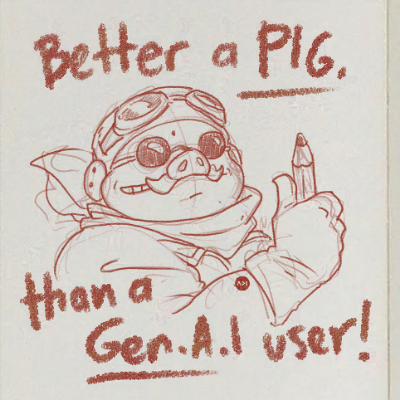
I keep seeing the "cars replaced horses" thing related to "AI."
-
While what you said is true specifically for the US, for europe it is actually not.
define "europe" - i'm in the UK, the country where a serving prime minister said "anyone still catching a bus at 30 is a failure" and a project to build a couple of hundred miles of high speed track to link our biggest cities is half-cancelled and on the verge of collapsing completely having somehow run up cost overruns into the hundeds of billions, and it feels pretty damn true here
@millihertz
France here, the government pushed like hell to build an uneeded highway (there is a road already), destroying ecosystems, going against anything that is aligned with science, still with no obvious reasons other than private interests
@hackbyte @Hex -
@hc it's not extinction, but simply the collapse of complex society. So, for example, the US never finished recovering from Katrina two decades and multiple disasters later. As climate change accelerates, disasters pile up faster than there can be disaster response.
Climate change increases weather based disasters, but it also increases the chance of earthquakes because ice melt rebalances tectonic plates. The collapse of the AMOC will collapse the European food system. The most populated places on earth are at risk of heat events that push them past the survival limits of humans.
With the collapse of heat movement, the equator bakes and everything else freezes. That basically destroys the world agricultural system. Ocean acidification collapses the ocean food web.
I'm not sure how complex society survives the collapse of global food supply, mass extinctions in the ocean, and the most populated parts of the earth becoming uninhabitable.
Humans will probably survive, but I'd expect that to be in small pockets. That is, if the mass migration and fascism that follows doesn't kick off nuclear war.
@hc oh, I forgot pandemics. As the climate changes animal ranges change which increases the opportunities for cross species infection. Cross species infection increases the probability of human infection. So climate change increases pandemic risk.
From a cybernetic perspective, there's a point where the complexity of the situation exceeds the ability of the society to absorb. We are approaching that point.
And the most skeptical climate scientists predict that human habitability will be significantly decreased. So far, the most extreme estimates about climate change have been an underestimate.
Now, I don't think we're talking "Venus" here, but we may well be talking about a climate that is so chaotic it's hard for humans to do anything but perpetually struggle to survive.
-
@Hex Your supposed "fact" that cars are somehow the "primary driver of climate change" is horseshit.
https://www.epa.gov/ghgemissions/global-greenhouse-gas-overview
@xylophilist apparently I missed "one of" that I thought I had typed.
But let's actually talk about that chart for a second. "Transportation" literally just means the fuel used. It doesn't account for the carbon released through the entire manufacturing process (from mining ore to steel refining, which is *huge*). That's all lumped into "industry." It also doesn't account for the electricity used for cooling, which is a side effect of the "heat island" effect caused by the giant rivers and lakes of asfalt needed for cars. Nor does it cover electricity generation for EVs. Both of those are in the number 1 category: "electricity and heat production."
The number one source of climate change globally is the US military. Guess what that military spends its time doing.
And while all of the rest of those are falling, guess which one is growing.
Yeah, I think I'll leave the mistake in.
-
I keep seeing the "cars replaced horses" thing related to "AI."
People keep comparing "AI" to cars (positively) without thinking about the fact that cars were forced on people (AAA bought up and destroyed tram lines, there were massive protests, etc), and are the primary driver of climate change that is currently on track to make complex human society impossible. Meanwhile, cities that weren't destroyed for cars, or that have reversed most of the damage, are some of the most desirable places to live.
Maybe we could take the car analogy as a warning. Maybe it could be a reminder to think about how forcing technology on people against their will can reshape society in a profoundly negative way.
The answer for cities has been to right-size transit. Eliminate cars wherever possible, maintain emergency vehicles and mobility aids, and find more efficient alternatives (bikes, trams, metros, and trains) where possible. I feel as though we can extrapolate from the metaphor.
We do not have to repeat the mistake of reshaping society around a single, oversimplified, solution in order to benefit a tiny minority. Perhaps we can actually choose the right technologies based on use cases, rather than hype or dogma.
Cars didn't replace horses. Cars replaced walkable cities, tram lines and mass transit, and children playing in the streets.
"Cars replaced horses" to the benefit of a small group of elite men, at tremendous cost to literally everyone else. When people say, "AI is the new 'cars replacing horses'" they are saying something very specific about their privilege and intentions.
@Hex Indeed. And as André Gorz wrote in the 50 year old, yet still relevant "The Social Ideology of the Car":
"The worst thing about cars is that they are like castles or villas by the sea: luxury goods invented for the exclusive pleasure of a very rich minority...And the essence of luxury is that it cannot be democratized. If everyone can have luxury, no one gets any advantages from it."
Analogously, mass AI use will destroy knowledge ecologies that make AI possible.
https://unevenearth.org/2018/08/the-social-ideology-of-the-motorcar/
-
@Hex Indeed. And as André Gorz wrote in the 50 year old, yet still relevant "The Social Ideology of the Car":
"The worst thing about cars is that they are like castles or villas by the sea: luxury goods invented for the exclusive pleasure of a very rich minority...And the essence of luxury is that it cannot be democratized. If everyone can have luxury, no one gets any advantages from it."
Analogously, mass AI use will destroy knowledge ecologies that make AI possible.
https://unevenearth.org/2018/08/the-social-ideology-of-the-motorcar/
-
I keep seeing the "cars replaced horses" thing related to "AI."
People keep comparing "AI" to cars (positively) without thinking about the fact that cars were forced on people (AAA bought up and destroyed tram lines, there were massive protests, etc), and are the primary driver of climate change that is currently on track to make complex human society impossible. Meanwhile, cities that weren't destroyed for cars, or that have reversed most of the damage, are some of the most desirable places to live.
Maybe we could take the car analogy as a warning. Maybe it could be a reminder to think about how forcing technology on people against their will can reshape society in a profoundly negative way.
The answer for cities has been to right-size transit. Eliminate cars wherever possible, maintain emergency vehicles and mobility aids, and find more efficient alternatives (bikes, trams, metros, and trains) where possible. I feel as though we can extrapolate from the metaphor.
We do not have to repeat the mistake of reshaping society around a single, oversimplified, solution in order to benefit a tiny minority. Perhaps we can actually choose the right technologies based on use cases, rather than hype or dogma.
Cars didn't replace horses. Cars replaced walkable cities, tram lines and mass transit, and children playing in the streets.
"Cars replaced horses" to the benefit of a small group of elite men, at tremendous cost to literally everyone else. When people say, "AI is the new 'cars replacing horses'" they are saying something very specific about their privilege and intentions.
@Hex there’s a nice post on this thread on resetera https://www.resetera.com/threads/linus-torvalds-ai-is-a-tool-just-like-other-tools-we-use-and-its-clearly-a-useful-one.1578862/post-158015905 that explores the same comparison.
It took cities years to rightsize transit and limit cars to proper uses. Capitalists pushed them massively first and turned them into symbols of status, not caring the least for the crushed folks, noises, pollution. -
@hc oh, I forgot pandemics. As the climate changes animal ranges change which increases the opportunities for cross species infection. Cross species infection increases the probability of human infection. So climate change increases pandemic risk.
From a cybernetic perspective, there's a point where the complexity of the situation exceeds the ability of the society to absorb. We are approaching that point.
And the most skeptical climate scientists predict that human habitability will be significantly decreased. So far, the most extreme estimates about climate change have been an underestimate.
Now, I don't think we're talking "Venus" here, but we may well be talking about a climate that is so chaotic it's hard for humans to do anything but perpetually struggle to survive.
-
@xylophilist apparently I missed "one of" that I thought I had typed.
But let's actually talk about that chart for a second. "Transportation" literally just means the fuel used. It doesn't account for the carbon released through the entire manufacturing process (from mining ore to steel refining, which is *huge*). That's all lumped into "industry." It also doesn't account for the electricity used for cooling, which is a side effect of the "heat island" effect caused by the giant rivers and lakes of asfalt needed for cars. Nor does it cover electricity generation for EVs. Both of those are in the number 1 category: "electricity and heat production."
The number one source of climate change globally is the US military. Guess what that military spends its time doing.
And while all of the rest of those are falling, guess which one is growing.
Yeah, I think I'll leave the mistake in.
@Hex @xylophilist The construction and maintenance of roads is also has a very substantial cost in fossil hydrocarbon use.
-
I keep seeing the "cars replaced horses" thing related to "AI."
People keep comparing "AI" to cars (positively) without thinking about the fact that cars were forced on people (AAA bought up and destroyed tram lines, there were massive protests, etc), and are the primary driver of climate change that is currently on track to make complex human society impossible. Meanwhile, cities that weren't destroyed for cars, or that have reversed most of the damage, are some of the most desirable places to live.
Maybe we could take the car analogy as a warning. Maybe it could be a reminder to think about how forcing technology on people against their will can reshape society in a profoundly negative way.
The answer for cities has been to right-size transit. Eliminate cars wherever possible, maintain emergency vehicles and mobility aids, and find more efficient alternatives (bikes, trams, metros, and trains) where possible. I feel as though we can extrapolate from the metaphor.
We do not have to repeat the mistake of reshaping society around a single, oversimplified, solution in order to benefit a tiny minority. Perhaps we can actually choose the right technologies based on use cases, rather than hype or dogma.
Cars didn't replace horses. Cars replaced walkable cities, tram lines and mass transit, and children playing in the streets.
"Cars replaced horses" to the benefit of a small group of elite men, at tremendous cost to literally everyone else. When people say, "AI is the new 'cars replacing horses'" they are saying something very specific about their privilege and intentions.
@Hex I think @notjustbikes might like this ...
-
I keep seeing the "cars replaced horses" thing related to "AI."
People keep comparing "AI" to cars (positively) without thinking about the fact that cars were forced on people (AAA bought up and destroyed tram lines, there were massive protests, etc), and are the primary driver of climate change that is currently on track to make complex human society impossible. Meanwhile, cities that weren't destroyed for cars, or that have reversed most of the damage, are some of the most desirable places to live.
Maybe we could take the car analogy as a warning. Maybe it could be a reminder to think about how forcing technology on people against their will can reshape society in a profoundly negative way.
The answer for cities has been to right-size transit. Eliminate cars wherever possible, maintain emergency vehicles and mobility aids, and find more efficient alternatives (bikes, trams, metros, and trains) where possible. I feel as though we can extrapolate from the metaphor.
We do not have to repeat the mistake of reshaping society around a single, oversimplified, solution in order to benefit a tiny minority. Perhaps we can actually choose the right technologies based on use cases, rather than hype or dogma.
Cars didn't replace horses. Cars replaced walkable cities, tram lines and mass transit, and children playing in the streets.
"Cars replaced horses" to the benefit of a small group of elite men, at tremendous cost to literally everyone else. When people say, "AI is the new 'cars replacing horses'" they are saying something very specific about their privilege and intentions.
@Hex They're also saying something about people who happily drive their car while saying AI is bad for us.
-
Some old white dude decided to jump all over yelling "Ackchyually, no one forced you to buy a car!!", and I'm just blocking. This shit is so easy to research. Like, yeah, people were forced to buy a car by minimum parking zoning that spread out cities, mass transit being (very intentionally) destroyed, and giant cars that murder people. There are actual laws that very intentionally made things worse, and then there's the intentionally created prisoner's dilemma of ever expanding car sizes.
This shit is extremely easy to research. At this point I'm just assuming it's trolls or the type of people who would be like "but no one has *proved* smoking causes cancer" back in the 90's. Yeah, that was a thing, and they sounded *just fucking like these people today.*
@Hex I'm convinced that cars gave us a brain worm that is very similar to its AI cousin. Once it has taken hold, refflecting about cars or AI becomes almost impossible.
-
@Hex it’s very difficult to talk plain facts with someone who has been brainwashed. we are living in a system designed to extract quality of life from the masses and concentrate it at the top. People will go down with their ship, defending this system, the same system that they are oppressed by. It’s actually scary. 
@TransitBiker @Hex Did you watch the Not Just Bikes video about how American fire trucks are too big? The part where a fire crew is showing how bike lanes supposedly prevent them getting their truck along a street that IS LINED WITH PARKED CARS THAT ARE APPARENTLY INVISIBLE made me want to scream. People literally being obstructed on the way to save lives can't see what is actually obstructing them, because cars are apparently just natural features of the landscape.
-
@andymouse @Hex horses aren't as dangerous as cars but they're surprisingly dangerous
-
@TransitBiker @Hex Did you watch the Not Just Bikes video about how American fire trucks are too big? The part where a fire crew is showing how bike lanes supposedly prevent them getting their truck along a street that IS LINED WITH PARKED CARS THAT ARE APPARENTLY INVISIBLE made me want to scream. People literally being obstructed on the way to save lives can't see what is actually obstructing them, because cars are apparently just natural features of the landscape.
@beecycling And don't forget the Diet Coke * Hamburger / Bald Eagle.
-
@Hex but even if you weren't forced to buy a car you are forced to deal with the negative externalities like air pollution, noise pollution, and pedestrian fatalities. Let's not forget that cars brought us the delightful innovation of leaded gasoline, which then literally coated the planet in lead.
I do think LLMs are bringing us the next form of leaded gasoline, everything is getting worse, and all information is getting warped. Misinformation was already getting bad before LLMs but it's accelerated that problem by an order of magnitude. It seems to exacerbate mental health problems in many people. I could go on.
@fancysandwiches @Hex considering how many studies about AI-caused cognitive impairment (brain rot) are emerging (plus, damage to mental health), the lead analogy you pose is so appropriate.
-
I keep seeing the "cars replaced horses" thing related to "AI."
People keep comparing "AI" to cars (positively) without thinking about the fact that cars were forced on people (AAA bought up and destroyed tram lines, there were massive protests, etc), and are the primary driver of climate change that is currently on track to make complex human society impossible. Meanwhile, cities that weren't destroyed for cars, or that have reversed most of the damage, are some of the most desirable places to live.
Maybe we could take the car analogy as a warning. Maybe it could be a reminder to think about how forcing technology on people against their will can reshape society in a profoundly negative way.
The answer for cities has been to right-size transit. Eliminate cars wherever possible, maintain emergency vehicles and mobility aids, and find more efficient alternatives (bikes, trams, metros, and trains) where possible. I feel as though we can extrapolate from the metaphor.
We do not have to repeat the mistake of reshaping society around a single, oversimplified, solution in order to benefit a tiny minority. Perhaps we can actually choose the right technologies based on use cases, rather than hype or dogma.
Cars didn't replace horses. Cars replaced walkable cities, tram lines and mass transit, and children playing in the streets.
"Cars replaced horses" to the benefit of a small group of elite men, at tremendous cost to literally everyone else. When people say, "AI is the new 'cars replacing horses'" they are saying something very specific about their privilege and intentions.
Why we are forcing needles and hammers on society [by a few white men] and making us dependent on tools that hit our thumbs? We should be building with clay instead! I think we should work this analogy further.
Replace hammers, cars, or AI with any tool, and you can build narratives showing structural dependence.
Nobody forces cars in here Finland. Except the evolution and gentrification of transportation (horses -> cars) and long distances on the country side
Fossil fuels are too cheap
@Hex -
@Hex Your supposed "fact" that cars are somehow the "primary driver of climate change" is horseshit.
https://www.epa.gov/ghgemissions/global-greenhouse-gas-overview
@xylophilist @Hex dunno were you took those but most resources I've seen in my lifetime regard "industry" as the top one.
That one includes, obviously, the costs in transport. For no industry is completed without giant ass trucks.
Electricity is usually right behind, so it's not that hard see how the methods of measuring may swap both places. -
Some old white dude decided to jump all over yelling "Ackchyually, no one forced you to buy a car!!", and I'm just blocking. This shit is so easy to research. Like, yeah, people were forced to buy a car by minimum parking zoning that spread out cities, mass transit being (very intentionally) destroyed, and giant cars that murder people. There are actual laws that very intentionally made things worse, and then there's the intentionally created prisoner's dilemma of ever expanding car sizes.
This shit is extremely easy to research. At this point I'm just assuming it's trolls or the type of people who would be like "but no one has *proved* smoking causes cancer" back in the 90's. Yeah, that was a thing, and they sounded *just fucking like these people today.*
Sealioning cultists are swarming like muggen and earn the same treatment.
-
@richpuchalsky @Hex no, because of they did, they would have to think about who they put in power. They would have to think!
@LieschenrelleuM
Sure a vote ("put in power") could have some effect, but the idea of us putting people in power is a complete misreading of our Western democratic systems. It's a diversion of how power works here.When all your politicians are pro-cars because"it's the future! it's freedom!", or turn pro-cars after the elections (see Labour UK) or when your "choice" is limited to 2 parties (see USA), you're not going to think yourself out of this situation.
-
I keep seeing the "cars replaced horses" thing related to "AI."
People keep comparing "AI" to cars (positively) without thinking about the fact that cars were forced on people (AAA bought up and destroyed tram lines, there were massive protests, etc), and are the primary driver of climate change that is currently on track to make complex human society impossible. Meanwhile, cities that weren't destroyed for cars, or that have reversed most of the damage, are some of the most desirable places to live.
Maybe we could take the car analogy as a warning. Maybe it could be a reminder to think about how forcing technology on people against their will can reshape society in a profoundly negative way.
The answer for cities has been to right-size transit. Eliminate cars wherever possible, maintain emergency vehicles and mobility aids, and find more efficient alternatives (bikes, trams, metros, and trains) where possible. I feel as though we can extrapolate from the metaphor.
We do not have to repeat the mistake of reshaping society around a single, oversimplified, solution in order to benefit a tiny minority. Perhaps we can actually choose the right technologies based on use cases, rather than hype or dogma.
Cars didn't replace horses. Cars replaced walkable cities, tram lines and mass transit, and children playing in the streets.
"Cars replaced horses" to the benefit of a small group of elite men, at tremendous cost to literally everyone else. When people say, "AI is the new 'cars replacing horses'" they are saying something very specific about their privilege and intentions.
thought this was apt:
https://mastodonapp.uk/@MarkHoltom/116946077281335738