Skip to content
  • Hjem
  • Seneste
  • Etiketter
  • Populære
  • Verden
  • Bruger
  • Grupper
Temaer
  • Light
  • Brite
  • Cerulean
  • Cosmo
  • Flatly
  • Journal
  • Litera
  • Lumen
  • Lux
  • Materia
  • Minty
  • Morph
  • Pulse
  • Sandstone
  • Simplex
  • Sketchy
  • Spacelab
  • United
  • Yeti
  • Zephyr
  • Dark
  • Cyborg
  • Darkly
  • Quartz
  • Slate
  • Solar
  • Superhero
  • Vapor

  • Default (No Skin)
  • No Skin
Kollaps
FARVEL BIG TECH
  1. Forside
  2. Ikke-kategoriseret
  3. The teacher said "In English a double negative forms a positive.

The teacher said "In English a double negative forms a positive.

Planlagt Fastgjort Låst Flyttet Ikke-kategoriseret
115 Indlæg 62 Posters 669 Visninger
  • Ældste til nyeste
  • Nyeste til ældste
  • Most Votes
Svar
  • Svar som emne
Login for at svare
Denne tråd er blevet slettet. Kun brugere med emne behandlings privilegier kan se den.
  • the_wub@mastodon.socialT the_wub@mastodon.social

    @mfeilner @kibcol1049 @chillicampari Then there is "jo" in Norwegian which (among other uses) is a "Yes" that preceeds the other person first affirming and then disagreeing with you in some way.

    "Kan jeg ta bussen herfra til Ullevaal?"

    "Can I get to Ullevaal from here by bus?"

    "Jo, men det er lettere å ta en taxi"

    "Yes, but it is easier to take a taxi".

    mfeilner@mastodon.socialM This user is from outside of this forum
    mfeilner@mastodon.socialM This user is from outside of this forum
    mfeilner@mastodon.social
    wrote sidst redigeret af
    #84

    @the_wub @kibcol1049 @chillicampari "Doch!"

    the_wub@mastodon.socialT 1 Reply Last reply
    0
    • kibcol1049@mstdn.socialK kibcol1049@mstdn.social

      The teacher said "In English a double negative forms a positive. In some languages, though, such as Russian, a double negative is still a negative. However, there is no language wherein a double positive can form a negative."
      A voice from the back of the room piped up, "Yeah, right."

      andreas_sturm@mastodon.socialA This user is from outside of this forum
      andreas_sturm@mastodon.socialA This user is from outside of this forum
      andreas_sturm@mastodon.social
      wrote sidst redigeret af
      #85

      @kibcol1049 In German it varies from case to case. Emphasis, gestures, facial expressions, comma placement, context, the personal relationship, geographical region or dialect and regional humour - all is playing a role.

      "Ja ja" - "yeah yeah" / "yes yes" can be positive but just as easily negative.

      1 Reply Last reply
      0
      • stevewfolds@mastodon.worldS stevewfolds@mastodon.world

        @kibcol1049
        First day of English class, prof says that there two words that he never wants to see or hear. One of them is “nice” and the other is lousy. Someone in the back asks, “what are the two words?”

        npettiaux@mamot.frN This user is from outside of this forum
        npettiaux@mamot.frN This user is from outside of this forum
        npettiaux@mamot.fr
        wrote sidst redigeret af
        #86

        @stevewfolds @kibcol1049 thanks. I have appreciated and written a little based on your words

        1 Reply Last reply
        0
        • mfeilner@mastodon.socialM mfeilner@mastodon.social

          @the_wub @kibcol1049 @chillicampari "Doch!"

          the_wub@mastodon.socialT This user is from outside of this forum
          the_wub@mastodon.socialT This user is from outside of this forum
          the_wub@mastodon.social
          wrote sidst redigeret af
          #87

          @mfeilner @kibcol1049 @chillicampari "Toch?"

          mfeilner@mastodon.socialM 1 Reply Last reply
          0
          • the_wub@mastodon.socialT the_wub@mastodon.social

            @mfeilner @kibcol1049 @chillicampari Then there is "jo" in Norwegian which (among other uses) is a "Yes" that preceeds the other person first affirming and then disagreeing with you in some way.

            "Kan jeg ta bussen herfra til Ullevaal?"

            "Can I get to Ullevaal from here by bus?"

            "Jo, men det er lettere å ta en taxi"

            "Yes, but it is easier to take a taxi".

            jbenjamint@mastodon.scotJ This user is from outside of this forum
            jbenjamint@mastodon.scotJ This user is from outside of this forum
            jbenjamint@mastodon.scot
            wrote sidst redigeret af
            #88

            @the_wub @mfeilner @kibcol1049 @chillicampari Jo is such a handy word. Every time i come back from Norway i seem to keep using it in the UK for a few weeks. Maybe the nearest in English is a sort of drawn out yeeaasss while sucking air through the teeth.

            the_wub@mastodon.socialT 1 Reply Last reply
            0
            • ard_the_rich@mastodon.artA ard_the_rich@mastodon.art

              @kibcol1049
              Be careful in Germany:
              "yes, yes" means "kiss my ass".

              ("Ja, ja" heißt "leck mich am Arsch".)

              oddel@social.cologneO This user is from outside of this forum
              oddel@social.cologneO This user is from outside of this forum
              oddel@social.cologne
              wrote sidst redigeret af
              #89

              @ard_the_rich @kibcol1049
              Depends on pronounciation .

              1 Reply Last reply
              0
              • kibcol1049@mstdn.socialK kibcol1049@mstdn.social

                The teacher said "In English a double negative forms a positive. In some languages, though, such as Russian, a double negative is still a negative. However, there is no language wherein a double positive can form a negative."
                A voice from the back of the room piped up, "Yeah, right."

                paavi@mastodontti.fiP This user is from outside of this forum
                paavi@mastodontti.fiP This user is from outside of this forum
                paavi@mastodontti.fi
                wrote sidst redigeret af
                #90

                @kibcol1049 In Finnish we have got "joo joo" which means 1) a very reclutant "yes, gonna do it even though I could not be bothered" or 2) not willing to say no but disagreeing with the statement or plead. "Joo" is just something akin to "yeah" in spoken language, borrowed from some Swedish dialect, probably.

                paavi@mastodontti.fiP 1 Reply Last reply
                0
                • rzeta0@mastodon.ieR rzeta0@mastodon.ie

                  @kibcol1049

                  English is my second language and phrases like

                  "we don't want no education"

                  always bother me.

                  paavi@mastodontti.fiP This user is from outside of this forum
                  paavi@mastodontti.fiP This user is from outside of this forum
                  paavi@mastodontti.fi
                  wrote sidst redigeret af
                  #91

                  @rzeta0 @kibcol1049 The IT Crowd (TV series) had Moss answering "oh yes you do, that's a double negative" in one of the episodes.

                  1 Reply Last reply
                  0
                  • truenorthspice@mastodon.worldT truenorthspice@mastodon.world

                    @maggiejk

                    Nope, it started here, sorry.

                    paavi@mastodontti.fiP This user is from outside of this forum
                    paavi@mastodontti.fiP This user is from outside of this forum
                    paavi@mastodontti.fi
                    wrote sidst redigeret af
                    #92

                    @TrueNorthSpice @maggiejk I'm pretty sure that Finnish people can be blamed for that, maybe.

                    1 Reply Last reply
                    0
                    • paavi@mastodontti.fiP paavi@mastodontti.fi

                      @kibcol1049 In Finnish we have got "joo joo" which means 1) a very reclutant "yes, gonna do it even though I could not be bothered" or 2) not willing to say no but disagreeing with the statement or plead. "Joo" is just something akin to "yeah" in spoken language, borrowed from some Swedish dialect, probably.

                      paavi@mastodontti.fiP This user is from outside of this forum
                      paavi@mastodontti.fiP This user is from outside of this forum
                      paavi@mastodontti.fi
                      wrote sidst redigeret af
                      #93

                      @kibcol1049 We've also got "niin" with numerous meanings replacing whole sentences. The meaning depends on intonation (very subtle though) and tone etc. It's all surprisingly high-context.

                      1 Reply Last reply
                      0
                      • kibcol1049@mstdn.socialK kibcol1049@mstdn.social

                        @Lily_and_frog @eleder @jack @Wolf_Baginski The text book English language rules are different to the current spoken language trends. The meaning is usually clear when spoken even though grammatically incorrect. I feel sorry for non English speakers.

                        sylvie@chitter.xyzS This user is from outside of this forum
                        sylvie@chitter.xyzS This user is from outside of this forum
                        sylvie@chitter.xyz
                        wrote sidst redigeret af
                        #94

                        @kibcol1049 clearly, interpret it in whichever way is detremental to the speaker until they learn to speak clearly

                        1 Reply Last reply
                        0
                        • stevewfolds@mastodon.worldS stevewfolds@mastodon.world

                          @kibcol1049
                          First day of English class, prof says that there two words that he never wants to see or hear. One of them is “nice” and the other is lousy. Someone in the back asks, “what are the two words?”

                          oldfartrant@mstdn.caO This user is from outside of this forum
                          oldfartrant@mstdn.caO This user is from outside of this forum
                          oldfartrant@mstdn.ca
                          wrote sidst redigeret af
                          #95

                          @stevewfolds @kibcol1049 😂

                          1 Reply Last reply
                          0
                          • lankohr@mastodon.socialL lankohr@mastodon.social

                            @AlexanderVI @EF @rzeta0 @kibcol1049 Depends on the definition of education. To me they criticized dumb, blind memorized ... stuff.

                            highlandlawyer@mastodon.socialH This user is from outside of this forum
                            highlandlawyer@mastodon.socialH This user is from outside of this forum
                            highlandlawyer@mastodon.social
                            wrote sidst redigeret af
                            #96

                            @lankohr @AlexanderVI @EF @rzeta0 @kibcol1049
                            "Repeat after me: 'an acre is the area of land whose length...' "

                            lankohr@mastodon.socialL 1 Reply Last reply
                            0
                            • jbenjamint@mastodon.scotJ jbenjamint@mastodon.scot

                              @the_wub @mfeilner @kibcol1049 @chillicampari Jo is such a handy word. Every time i come back from Norway i seem to keep using it in the UK for a few weeks. Maybe the nearest in English is a sort of drawn out yeeaasss while sucking air through the teeth.

                              the_wub@mastodon.socialT This user is from outside of this forum
                              the_wub@mastodon.socialT This user is from outside of this forum
                              the_wub@mastodon.social
                              wrote sidst redigeret af
                              #97

                              @jbenjamint @mfeilner @kibcol1049 @chillicampari Jo!

                              Or do you mean like "Yerssss. That's a very 'interesting' proposal you have there".

                              1 Reply Last reply
                              0
                              • highlandlawyer@mastodon.socialH highlandlawyer@mastodon.social

                                @lankohr @AlexanderVI @EF @rzeta0 @kibcol1049
                                "Repeat after me: 'an acre is the area of land whose length...' "

                                lankohr@mastodon.socialL This user is from outside of this forum
                                lankohr@mastodon.socialL This user is from outside of this forum
                                lankohr@mastodon.social
                                wrote sidst redigeret af
                                #98

                                @HighlandLawyer @AlexanderVI @EF @rzeta0 @kibcol1049 It's not against education, it's against black pedagogy.

                                highlandlawyer@mastodon.socialH 1 Reply Last reply
                                0
                                • E ef@mastodon.bsd.cafe

                                  @rzeta0 @kibcol1049 apparently the double negative thing is a convention rather than a hard rule. Double negative can make a sentence more klunky (sound awkward) and it is usually better to try and remove it busy most people simply would not care.

                                  etchedpixels@mastodon.socialE This user is from outside of this forum
                                  etchedpixels@mastodon.socialE This user is from outside of this forum
                                  etchedpixels@mastodon.social
                                  wrote sidst redigeret af
                                  #99

                                  @EF @rzeta0 @kibcol1049 to me a double negative is usually emphatic. It's complicated because double negatives in English work differently in different bits of the UK, hence the guidance not to use them when you need clarity. There are lots of cases though like 'no he did not break wind' that are universal-ish

                                  English is what happens when you steal good ideas randomly from everyone else but have nobody doing the architecture for it 🤣

                                  1 Reply Last reply
                                  0
                                  • kibcol1049@mstdn.socialK kibcol1049@mstdn.social

                                    The teacher said "In English a double negative forms a positive. In some languages, though, such as Russian, a double negative is still a negative. However, there is no language wherein a double positive can form a negative."
                                    A voice from the back of the room piped up, "Yeah, right."

                                    r1rail@pouet.chapril.orgR This user is from outside of this forum
                                    r1rail@pouet.chapril.orgR This user is from outside of this forum
                                    r1rail@pouet.chapril.org
                                    wrote sidst redigeret af
                                    #100

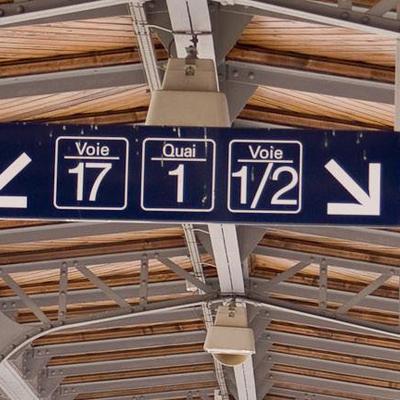
                                    @kibcol1049 Could be done in french
                                    "Ouais, bien sûr !"

                                    1 Reply Last reply
                                    0
                                    • lankohr@mastodon.socialL lankohr@mastodon.social

                                      @HighlandLawyer @AlexanderVI @EF @rzeta0 @kibcol1049 It's not against education, it's against black pedagogy.

                                      highlandlawyer@mastodon.socialH This user is from outside of this forum
                                      highlandlawyer@mastodon.socialH This user is from outside of this forum
                                      highlandlawyer@mastodon.social
                                      wrote sidst redigeret af
                                      #101

                                      @lankohr @AlexanderVI @EF @rzeta0 @kibcol1049
                                      I believe the English term for Schwarze Pädagogik is "poisonous pedagogy", to avoid confusion with educational practices applied to African Americans.

                                      But yes, the song (and surrounding material of the film) is explicit on that point.

                                      lankohr@mastodon.socialL 1 Reply Last reply
                                      0
                                      • eleder@frikiverse.zoneE eleder@frikiverse.zone

                                        @Wolf_Baginski @kibcol1049 But Spanish has a similar expression: "Sí, claro", with the same negative meaning.
                                        What happens is here irony acts, and that's why the meaning changes; it's not a syntax thing, like the double negative stuff.

                                        cascheranno@hachyderm.ioC This user is from outside of this forum
                                        cascheranno@hachyderm.ioC This user is from outside of this forum
                                        cascheranno@hachyderm.io
                                        wrote sidst redigeret af
                                        #102

                                        @eleder i mean, i get your point about irony being how meaning shifts, but i disagree that it somehow is unique. ‘Ain’t no reason’ are a double negative syntactically but remain negative. Syntax stops mattering strictly in most of these.

                                        1 Reply Last reply
                                        0
                                        • the_wub@mastodon.socialT the_wub@mastodon.social

                                          @mfeilner @kibcol1049 @chillicampari "Toch?"

                                          mfeilner@mastodon.socialM This user is from outside of this forum
                                          mfeilner@mastodon.socialM This user is from outside of this forum
                                          mfeilner@mastodon.social
                                          wrote sidst redigeret af
                                          #103

                                          @the_wub @kibcol1049 @chillicampari "Doch" is the one-word solution for Germans for insisting on being right. "Doch" is what children say, thumping their feet on the ground, crying. "Doch" means "Still" or "Yes I f***g do" or "No, I will never do that" depending on context before. It can also mean "Yes, really!!" after somebody voiced doubt. Famous is Louis de Funes "Nein! Doch! Oooooh! in German Internet culture...


                                          the_wub@mastodon.socialT lankohr@mastodon.socialL dc4ac@radiosocial.deD 3 Replies Last reply
                                          0
                                          Svar
                                          • Svar som emne
                                          Login for at svare
                                          • Ældste til nyeste
                                          • Nyeste til ældste
                                          • Most Votes


                                          • Log ind

                                          • Har du ikke en konto? Tilmeld

                                          • Login or register to search.
                                          Powered by NodeBB Contributors
                                          Graciously hosted by data.coop
                                          • First post
                                            Last post
                                          0
                                          • Hjem
                                          • Seneste
                                          • Etiketter
                                          • Populære
                                          • Verden
                                          • Bruger
                                          • Grupper