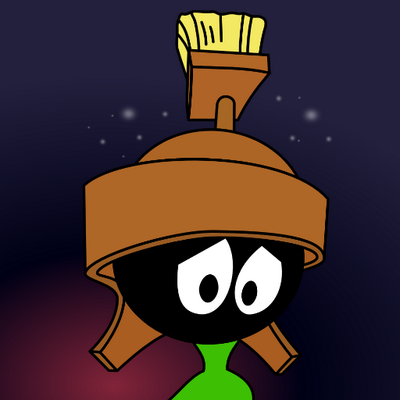
Free software people: A major goal of free software is for individuals to be able to cause software to behave in the way they want it toLLMs: (enable that)Free software people: Oh no not like that
-
Look, coders, we are not writers. There's no way to turn "increment this variable" into life changing prose. The creativity exists outside the code. It always has done and it always will do. Let it go.
Pragmatic standpoint is completely valid, but don't forget why do we have writing systems: to convey information. That's the basic need. So taking the same pragmatic approach we don't need writers nor poets nor prose or anything of sorts: language exists to transfer data from human to human, and don't you dare to find any of that serialization into english/anything beautiful. Is that it?
-
@ignaloidas @mjg59 @david_chisnall @newhinton do you blindly trust code just because it’s been written by a human? Or your own code for that matter? I don’t, and yet I am able to produce hopefully useful software. In fact I have to trust an immense amount of software without verifying it, based on vibes. For llms at least I can benchmark the vibes, or at least more easily gather empirical observations than with humans.
@mnl@hachyderm.io @mjg59@nondeterministic.computer @david_chisnall@infosec.exchange @newhinton@troet.cafe Not blindly, of course, but I build up trust relationships with people I work with. And I do trust my own code to a certain extent. I can't trust a bunch of dice. The fact that you don't trust your own code at all honestly tells me all I ever need to know about you.
-
@mnl@hachyderm.io @mjg59@nondeterministic.computer @david_chisnall@infosec.exchange @newhinton@troet.cafe Not blindly, of course, but I build up trust relationships with people I work with. And I do trust my own code to a certain extent. I can't trust a bunch of dice. The fact that you don't trust your own code at all honestly tells me all I ever need to know about you.
@ignaloidas @mjg59 @david_chisnall @newhinton how did you gain your confidence? How can you call machine learning a bunch of dice? I try to study and build things everyday and yes I don’t trust my code at all, which I think is a healthy attitude to have? I am definitely not able to produce perfect code on the first try.
-
@mjg59 You will get backlash, but you are right.
Free software folks will have to decide whether what they really wanted was *everyone* to have the freedom to use and modify software, or only that subset of everyone who had the privilege of learning software development.
There has always been this elitist dividing line in the community between people who contribute code, and people who contribute all the other things FOSS needs to thrive. Now those people can contribute code too.
@kyle @mjg59 Proprietary tooling is the reason "Stallman was right" about Bitkeeper, but "everyone was better off for having not listened to him" is the pragmatic side.
Yes, I want people to benefit from the freedom to modify code, but they will never truly be free if they are using a proprietary LLM to make their modifications. -
@mjg59 Yeah, as soon as there‘s an ethically sourced and trained free LLM that‘s not controlled by very shitty companies I‘m totally on board with you.
Until then we shouldn’t let that shit near our projects.
@chris_evelyn
What do you mean by "ethically sourced and trained"?
@mjg59 -
@engideer @david_chisnall @mjg59 @ignaloidas I don’t think llms are “rando”. They have randomized elements during training and inference, but they’re not a random number generator. I also would trust a “rando” less than an expert in real life. I wouldn’t trust either blindly either.
-
@mjg59 What you propose is actually illegal, even if the law doesn’t make much sense. I wonder if you ever had the cops sent after you on a corp-run IP case… maybe it would make you feel different?
@promovicz
Let's hope the AI lobby will (in any combination of purposely and inadvertently) make that law obsolete.
@mjg59 -
Free software people: A major goal of free software is for individuals to be able to cause software to behave in the way they want it to
LLMs: (enable that)
Free software people: Oh no not like that@mjg59 I think the issue is more on the forcing of LLMs/AI in *everything* right now, not specifically F/OSS projects. It reeks of dot-com bubble era marketing and in many cases is completely unnecessary.
-
@engideer @david_chisnall @mjg59 @ignaloidas I don’t think llms are “rando”. They have randomized elements during training and inference, but they’re not a random number generator. I also would trust a “rando” less than an expert in real life. I wouldn’t trust either blindly either.
@engideer @david_chisnall @mjg59 @ignaloidas also I didn’t say anything of what you quoted, and I don’t know where you got it from.
-
@ignaloidas @mjg59 @david_chisnall @newhinton how did you gain your confidence? How can you call machine learning a bunch of dice? I try to study and build things everyday and yes I don’t trust my code at all, which I think is a healthy attitude to have? I am definitely not able to produce perfect code on the first try.
@mnl@hachyderm.io @mjg59@nondeterministic.computer @david_chisnall@infosec.exchange @newhinton@troet.cafe through repeated checks and knowledge that humans are consistent.
And like, really, you don't trust your code at all? I, for example, know that the code I wrote is not going to cheat by unit tests, not going to re-implement half of the things from scratch when I'm working on a small feature, nor will it randomly delete files. After working with people for a while, I can be fairly sure that the code they've written can be trusted to the same standards. LLMs can't be trusted with these things, and in fact have been documented to do all of these things.
It is not a blind, absolute trust, but trust within reason. The fact that I have to explain this to you is honestly embarrassing. -
Free software people: A major goal of free software is for individuals to be able to cause software to behave in the way they want it to
LLMs: (enable that)
Free software people: Oh no not like that@mjg59 i actually like LLMs -
@mjg59 but wait, there's more
What if you're not renowned security expert and open-source celebrity @mjg59 (that currently works at nvidia btw, profiting from the LLM boom, sorry) but just some guy trying to make ends meet doing some coding?...
Now you get an LLM mandate from your company that comes with the implication that 'either you boost your productivity with 80% or we fire you and contract a cheap prompter in your place'...
-
@engideer @david_chisnall @mjg59 @ignaloidas I don’t think llms are “rando”. They have randomized elements during training and inference, but they’re not a random number generator. I also would trust a “rando” less than an expert in real life. I wouldn’t trust either blindly either.
@mnl@hachyderm.io @engideer@tech.lgbt @david_chisnall@infosec.exchange @mjg59@nondeterministic.computer LLMs are very much a random number generators. The distribution is far, far from uniform, but the whole breakthrough of LLMs was the introduction of "temperature", quite literally random choices, to break them out of monotonous tendencies.
-
@mnl@hachyderm.io @mjg59@nondeterministic.computer @david_chisnall@infosec.exchange @newhinton@troet.cafe through repeated checks and knowledge that humans are consistent.
And like, really, you don't trust your code at all? I, for example, know that the code I wrote is not going to cheat by unit tests, not going to re-implement half of the things from scratch when I'm working on a small feature, nor will it randomly delete files. After working with people for a while, I can be fairly sure that the code they've written can be trusted to the same standards. LLMs can't be trusted with these things, and in fact have been documented to do all of these things.
It is not a blind, absolute trust, but trust within reason. The fact that I have to explain this to you is honestly embarrassing.@ignaloidas @mjg59 @david_chisnall @newhinton but “fairly sure” is not full trust. I can also be “fairly sure” that something works, but I’m not going to trust my judgment and instead will try to validate it and provide proper guardrails so that if it is misbehaving, it is at least contained. Some things will be just fine even if broken, some less and will make me invest me more of my time. I am not going to try to prove the kernel correct just because I am changing a css color. I don’t see how that is different with llms, and I use them everyday. If anything, they allow me to validate more.
-
@mjg59 This doesn't feel right to me. IMO few people actually object to use of LLMs by individuals for tinkering on personal stuff.
The criticism as I see it is primarily that:
1) there are huge societal/political impacts - uncompensated use of copyrighted material; benefits of it accruing primarily to a few big players; energy use; layoffs; perceived misallocation of massive amounts of capital
2) the output quality of LLMs is t r a s h, unsuitable for professional use -
@ignaloidas @mjg59 @david_chisnall @newhinton but “fairly sure” is not full trust. I can also be “fairly sure” that something works, but I’m not going to trust my judgment and instead will try to validate it and provide proper guardrails so that if it is misbehaving, it is at least contained. Some things will be just fine even if broken, some less and will make me invest me more of my time. I am not going to try to prove the kernel correct just because I am changing a css color. I don’t see how that is different with llms, and I use them everyday. If anything, they allow me to validate more.
@mnl@hachyderm.io @mjg59@nondeterministic.computer @david_chisnall@infosec.exchange @newhinton@troet.cafe you are falling down the cryptocurrency fallacy, assuming that you cannot trust anyone and as such have to build stuff assuming everyone is looking to get one over you.
This is tiresome, and I do not care to discuss with you on this any longer, if you cannot understand that there are levels between "no trust" and "absolute trust", there is nothing more to discuss. -
@mnl@hachyderm.io @engideer@tech.lgbt @david_chisnall@infosec.exchange @mjg59@nondeterministic.computer LLMs are very much a random number generators. The distribution is far, far from uniform, but the whole breakthrough of LLMs was the introduction of "temperature", quite literally random choices, to break them out of monotonous tendencies.
@ignaloidas @mjg59 @david_chisnall @engideer temperature based sampling is just one of the many sampling modalities. Nucleus sampling, top-k, frequency penalties, all of these introduce controlled randomness to improve the performance of llms as measured by a wide variety of benchmarks.
A random sampling of tokens would actually be uniformly distributed… and obviously grammatically correct sentences is a clear sign that we are not randomly sampling tokens.
Are we talking about the same thing?
-
-
@mnl@hachyderm.io @mjg59@nondeterministic.computer @david_chisnall@infosec.exchange @newhinton@troet.cafe you are falling down the cryptocurrency fallacy, assuming that you cannot trust anyone and as such have to build stuff assuming everyone is looking to get one over you.
This is tiresome, and I do not care to discuss with you on this any longer, if you cannot understand that there are levels between "no trust" and "absolute trust", there is nothing more to discuss.@ignaloidas @mjg59 @david_chisnall @newhinton I think you are misreading what I am saying. That is exactly what I am saying. I never fully trust my code, not a single line of it, partly because every line of my code usually requires billions of lines of code I haven’t written to run. I can apply methods and use my experience to trust it enough to run it.
-
@ignaloidas @mjg59 @david_chisnall @engideer temperature based sampling is just one of the many sampling modalities. Nucleus sampling, top-k, frequency penalties, all of these introduce controlled randomness to improve the performance of llms as measured by a wide variety of benchmarks.
A random sampling of tokens would actually be uniformly distributed… and obviously grammatically correct sentences is a clear sign that we are not randomly sampling tokens.
Are we talking about the same thing?
@mnl@hachyderm.io @mjg59@nondeterministic.computer @david_chisnall@infosec.exchange @engideer@tech.lgbt the fact that something is random does not mean that it has a uniform distribution. "controlled randomness" is still randomness. Taking random points in a unit circle by taking two random numbers for distance and direction will not result in a uniform distribution, but it's still random.
like, do you even read what you're writing? I'm starting to understand why you don't trust the code you wrote