Good morning Mastodon!
-
Waste gases coming out of the kiln are mostly carbon dioxide from the combustion of all those carbon-based plastics that didn't make it to recycling and organic materials. They shared this interesting slide of what residual waste is actually made up of, after doing an extensive and probably deeply unpleasant survey separating out and weighing the contents of those bags. A depressing amount could have been composted or recycled
@afewbugs "WEEE, For when you're taking the piss with superfluous vowels."
-
But the worst one is batteries. Most people now (hopefully!) know you shouldn't put batteries in your domestic waste, but only recognise batteries as the little AA cylinders rather than recognising batteries as being in little household things like toothbrushes, hearing aids, ear pods or vibrators where they're sealed in and invisible. Vapes are a huge one, and although single use vapes have been banned vapes with a recharge port at a similar price point are still being treated as single use disposable items. These cause a lot of fires in waste collection lorries when they're compacted, but also fires at waste management plants which want the fire in one place only, the kiln. So remove batteries from small electronic devices for disposal if you can, and if you can't dispose of the whole device in the battery recycling bin that every shop selling batteries should by law have available.
So basically stick your broken sex toys in the clear plastic battery bin in Sainsburys
@afewbugs The US still makes battery recycling a pain. Recycling bins are not in very many shops, most cities have no curbside pickup of them - you'd have to drive them to the recycling or hazmat center which is usually only one or two per city and only open certain hours.
-
The Exeter and Plymouth plants incinerate residual waste (ie what's left over when everything recyclable or compostable has been removed) and generate electricity. There were plans to use the generated heat of the Exeter plant for a district heating system but they never came to fruition. The Plymouth plant does run a district heating system which heats the neighbouring Royal Navy barracks and dockyard, and I'm honestly not sure how I feel about the fact we can manage to implement the most sustainable solution, but apparently only in the service of waging war more efficiently
@afewbugs I suspect that district heating schemes are easier to organise when you have a large, homogeneous block of housing - e.g. a big, new estate, or large office building complex. Sheffield's incinerator heats the flats that overlook the station, as well as lots of city council buildings and (I think) some of the Sheffield Hallam Uni buildings.
-
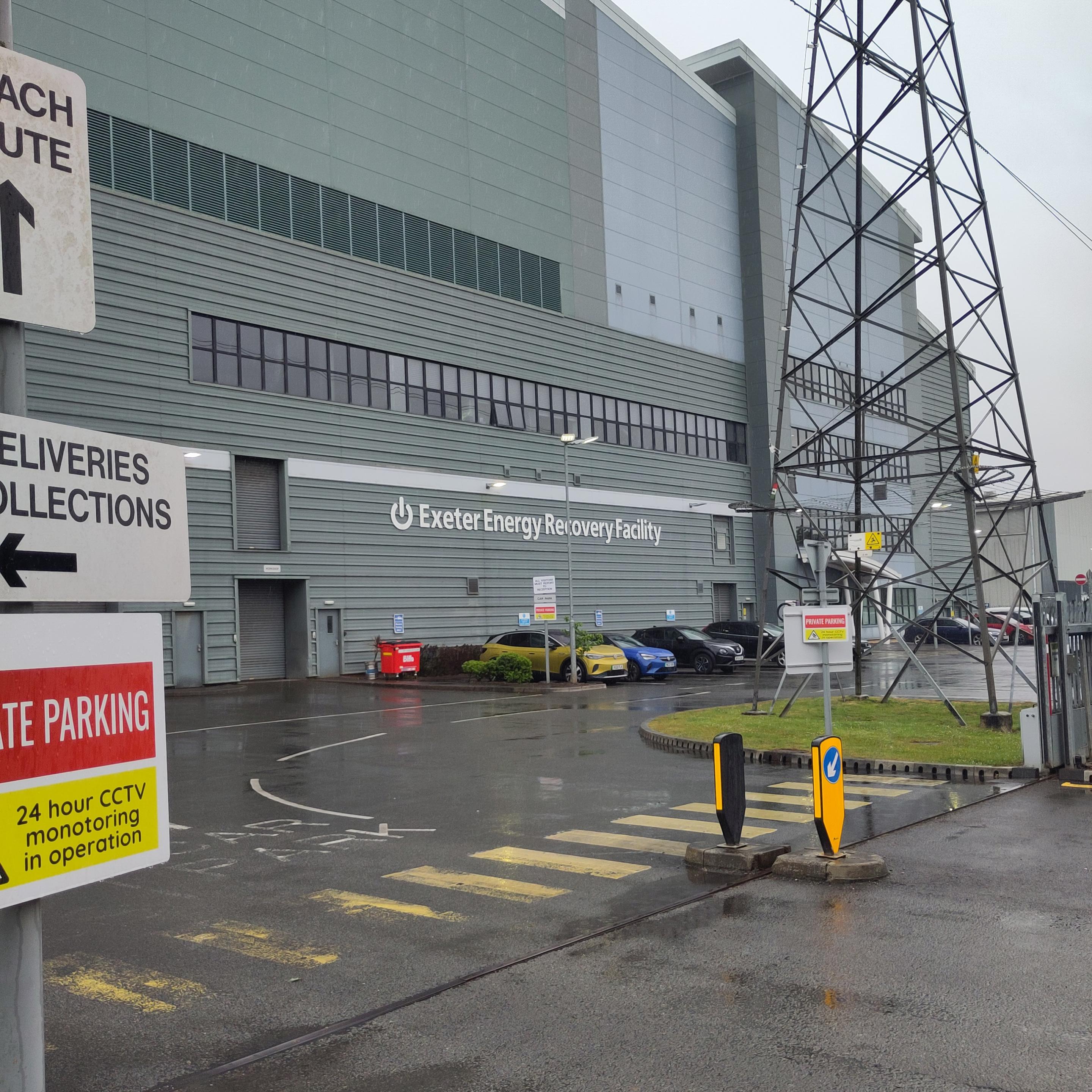
Good morning Mastodon! Remember when you were in primary school and went on school trips to places teachers though were important or free, and retained nothing from them except for who was sick on whom on the way there? Now you're older and nerdier did you ever think "Actually it might be really interesting to visit a major piece of civic infrastructure and learn how it works?" Just me? Well I was in luck today because the University sustainability team has organised a tour of #Exeter Energy Recovery Facility in #MarshBarton, where all our non-recyclable rubbish ends up.
https://www.viridor.co.uk/energy/energy-recovery-facilities/exeter-erf/
@afewbugs I loved this. following!
-
On the subject of Things Not To Put In Your Bin, it sounds obvious but things that will explode is a big one. Explosions can damage the specialist heat proof lining of the kiln, forcing it to be shut down for maintenance or even requiring it to be replaced, and explosions can also force gases through the filtration system faster than it can deal with them causing air pollution. People are apparently throwing away gas cylinders, which is crazy because domestic cooking and heating gas cannisters can be returned for a deposit. Empty camping gas cannisters can be returned to any outdoor shop selling gas cannisters.
@afewbugs
BTW, you only get a refund on calor gas cylinders if you have a purchase receipt, but dealers will still take in unwanted cylinders. -
But I don't want to end on a negative note because I've had an absolutely fascinating day, and I hope you've enjoyed following along too.
I can only apologise to anyone who encountered me on my way home smelling of warm damp garbage
@afewbugs
Thanks for sharing, and you did have a more interesting day than I did.Next week on #MastodonDayTrip ....
-
The rotary kiln for the Exeter plant was built in France, managed to cross the whole of France on an articulated lorry, was successfully shipped across the channel and driven across most of Southern England, then got stuck on a narrow road through the Haldon Hills and had to be extracted by crane.
@afewbugs @purplepadma our French guests particularly enjoyed that detail

-
Good morning Mastodon! Remember when you were in primary school and went on school trips to places teachers though were important or free, and retained nothing from them except for who was sick on whom on the way there? Now you're older and nerdier did you ever think "Actually it might be really interesting to visit a major piece of civic infrastructure and learn how it works?" Just me? Well I was in luck today because the University sustainability team has organised a tour of #Exeter Energy Recovery Facility in #MarshBarton, where all our non-recyclable rubbish ends up.
https://www.viridor.co.uk/energy/energy-recovery-facilities/exeter-erf/
@afewbugs Great thread, thanks for sharing. Our local sewage works and local water treatment plant used to do tours but sadly don't any more. It's so important for children (& adults) to learn about these things.
-
Good morning Mastodon! Remember when you were in primary school and went on school trips to places teachers though were important or free, and retained nothing from them except for who was sick on whom on the way there? Now you're older and nerdier did you ever think "Actually it might be really interesting to visit a major piece of civic infrastructure and learn how it works?" Just me? Well I was in luck today because the University sustainability team has organised a tour of #Exeter Energy Recovery Facility in #MarshBarton, where all our non-recyclable rubbish ends up.
https://www.viridor.co.uk/energy/energy-recovery-facilities/exeter-erf/
@afewbugs what a fantastic thread, thank you so much for bringing us along with you on your outing! I have learned so much!

-
But I don't want to end on a negative note because I've had an absolutely fascinating day, and I hope you've enjoyed following along too.
I can only apologise to anyone who encountered me on my way home smelling of warm damp garbage
@afewbugs please confirm that at some point on the tour (or, even better, repeatedly), some wag scathingly announced "what a load of rubbish"!
-
@afewbugs I think it's the treasury's rules about what counts as public deficit, so it's "better" to effectively lease "public" infrastructure than just pat for it using cheap government money.
I expect @ChrisMayLA6 can explain it better than I can
Yes, pretty much, its the same with PFI.... by sale & either lease back or buying a service, the expenditure is moved from the capital budget (taken all in one year) to the yearly service budget (reducing *annual* costs) and as you suggest until recently that offered the Govt. an advantage in fiscal rules terms. However, under Rachel Reeves recent revision, expenditure for long-term capital infrastructure projects is treated as different from 'normal' public expenditure.
-
Also as a little postscript, in a facility where 95% of the staff I saw were male presenting I was impressed by the fact that there were free menstrual products in the toilets
Excellent
-
Good morning Mastodon! Remember when you were in primary school and went on school trips to places teachers though were important or free, and retained nothing from them except for who was sick on whom on the way there? Now you're older and nerdier did you ever think "Actually it might be really interesting to visit a major piece of civic infrastructure and learn how it works?" Just me? Well I was in luck today because the University sustainability team has organised a tour of #Exeter Energy Recovery Facility in #MarshBarton, where all our non-recyclable rubbish ends up.
https://www.viridor.co.uk/energy/energy-recovery-facilities/exeter-erf/
@afewbugs
This is good, recently there were "Open Doors Visits" to a nearby waste center to show how waste disposal and recycling works (and quell the 'It all gets mixed together anyway' misconception, I suspect) -
Good morning Mastodon! Remember when you were in primary school and went on school trips to places teachers though were important or free, and retained nothing from them except for who was sick on whom on the way there? Now you're older and nerdier did you ever think "Actually it might be really interesting to visit a major piece of civic infrastructure and learn how it works?" Just me? Well I was in luck today because the University sustainability team has organised a tour of #Exeter Energy Recovery Facility in #MarshBarton, where all our non-recyclable rubbish ends up.
https://www.viridor.co.uk/energy/energy-recovery-facilities/exeter-erf/
@afewbugs
Yes, I have a memory of a friend asking why teachers think we'd want to visit old sewers (must've been part of a museum). Just the other day I was reading about the development of Tallinn's water system hundreds of years ago in a museum. History is much more interesting when youre in charge of what you learn. -
Anyway I had a brilliant day, and I love seeing people work together to do very clever things to solve problems, but we can't lose track of the fact that this isn't actually a good thing it's just the least bad option we have for disposing of waste because it's still sending greenhouse gases into the atmosphere, and what we really need to be working on as a species is generating less waste to start with. The presentation also shared the depressing statistic that only 2/3 of humanity has access to any waste collection and disposal infrastructure at all, and the rest just have to deal with it themselves by burning it or dumping it around their living spaces (something I encountered in a previous life doing ecology fieldwork in The Gambia https://geekinthegambia.blogspot.com/2009/06/setsetal.html)
@afewbugs I'm somewhat surprised to hear that waste management is available to ⅔ of people. (Even if it's nominally true, I suspect that a portion of those people still have to do some waste management themselves.)
At home, we're in the remaining ⅓, having no access to waste management beyond our own efforts. Composting the kitchen waste is the obvious part (though we haven't got it dialled in completely just yet). We try to keep and reuse all the plastic packaging we get. For example, whenever we cast any concrete (e.g., a slab for parking, concrete foundations or water tanks, etc.) we put down an overlapping layer of plastic packets/bags on the ground first, and it helps to retain water in the slab during casting (instead of being absorbed by the rather sandy soil underneath). We also take sackfuls of recyclable (in theory) waste with us whenever we drive down into the plains.
But we still have to burn the rest, along with the more woody farm waste (leaves and things go into a pit). I want to build a steel-drum incinerator to be able to burn our garbage at a higher temperature, but I haven't done anything about it yet.
There was at least one burninating energy recovery facility in Delhi, and I vaguely remember some huge scam in its operation (IIRC, they weren't generating anything, and were just burning stuff normally).
-
@afewbugs
Yes, I have a memory of a friend asking why teachers think we'd want to visit old sewers (must've been part of a museum). Just the other day I was reading about the development of Tallinn's water system hundreds of years ago in a museum. History is much more interesting when youre in charge of what you learn.@treehugger @afewbugs I still have a "Plughole tours" TShirt from the time I decided as an adult to visit the waterworks openday between Bath and Bristol. I remember it being an interesting day.
-
@afewbugs
Yes, I have a memory of a friend asking why teachers think we'd want to visit old sewers (must've been part of a museum). Just the other day I was reading about the development of Tallinn's water system hundreds of years ago in a museum. History is much more interesting when youre in charge of what you learn.@treehugger @afewbugs It is also more interesting when you are old enough for it to have some context.
-
Ferrous metals get pulled out by an electromagnet. Non ferrous metals melt into these weird modern art type sculptures that clog up the pipes and are the reason the plant has to be periodically shut down for maintenance to remove them. So I guess the moral is don't put metal in your non recyclable waste, but if you're going to only put ferrous metal?
@afewbugs
“Ferrous” does not mean “magnetic”. It only means “iron-containing”. Nickel and cobalt are not ferrous, yet they are magnetic. On the other side, many iron-based alloys are not meaningfully magnetic: 304 and 316 stainless steel, for instance, are ferrous steels, but in their usual austenitic form they are essentially non-magnetic.
I'm curious now: how they manage that?
--
Uriel Fanelli
Using Aktor: https://git.keinpfusch.net/loweel/Aktor-2
XMPP: uriel@keinpfusch.net
old blog: https://blog.keinpfusch.net
new blog: https://keinpfusch.net -
Everything that doesn't burn up in the kiln comes out of the bottom and gets turned into aggregate. I hope you like boxes of rocks Mastodon.
-
@afewbugs I'm somewhat surprised to hear that waste management is available to ⅔ of people. (Even if it's nominally true, I suspect that a portion of those people still have to do some waste management themselves.)
At home, we're in the remaining ⅓, having no access to waste management beyond our own efforts. Composting the kitchen waste is the obvious part (though we haven't got it dialled in completely just yet). We try to keep and reuse all the plastic packaging we get. For example, whenever we cast any concrete (e.g., a slab for parking, concrete foundations or water tanks, etc.) we put down an overlapping layer of plastic packets/bags on the ground first, and it helps to retain water in the slab during casting (instead of being absorbed by the rather sandy soil underneath). We also take sackfuls of recyclable (in theory) waste with us whenever we drive down into the plains.
But we still have to burn the rest, along with the more woody farm waste (leaves and things go into a pit). I want to build a steel-drum incinerator to be able to burn our garbage at a higher temperature, but I haven't done anything about it yet.
There was at least one burninating energy recovery facility in Delhi, and I vaguely remember some huge scam in its operation (IIRC, they weren't generating anything, and were just burning stuff normally).
@amenonsen I'm guessing there's a great deal of variation concealed in that 2/3 figure, covering the whole spectrum from "weekly household collections transported to an energy from waste plant that decontaminates its waste gases" to "a waste truck removes some rubbish from this neighbourhood once a month and dumps it in a big pile outside the city". My only experience of living in an under resourced nation was The Gambia, which had no waste infrastructure at all in rural areas but the latter system in the big city on the coast.