Skip to content
  • Hjem
  • Seneste
  • Etiketter
  • Populære
  • Verden
  • Bruger
  • Grupper
Temaer
  • Light
  • Brite
  • Cerulean
  • Cosmo
  • Flatly
  • Journal
  • Litera
  • Lumen
  • Lux
  • Materia
  • Minty
  • Morph
  • Pulse
  • Sandstone
  • Simplex
  • Sketchy
  • Spacelab
  • United
  • Yeti
  • Zephyr
  • Dark
  • Cyborg
  • Darkly
  • Quartz
  • Slate
  • Solar
  • Superhero
  • Vapor

  • Default (No Skin)
  • No Skin
Kollaps
FARVEL BIG TECH
  1. Forside
  2. Ikke-kategoriseret
  3. I have a really nice (horrifying) image stack that one of my research team members made, that powerfully demonstrates what a huge problem satellite streaks are for wide-field imaging.
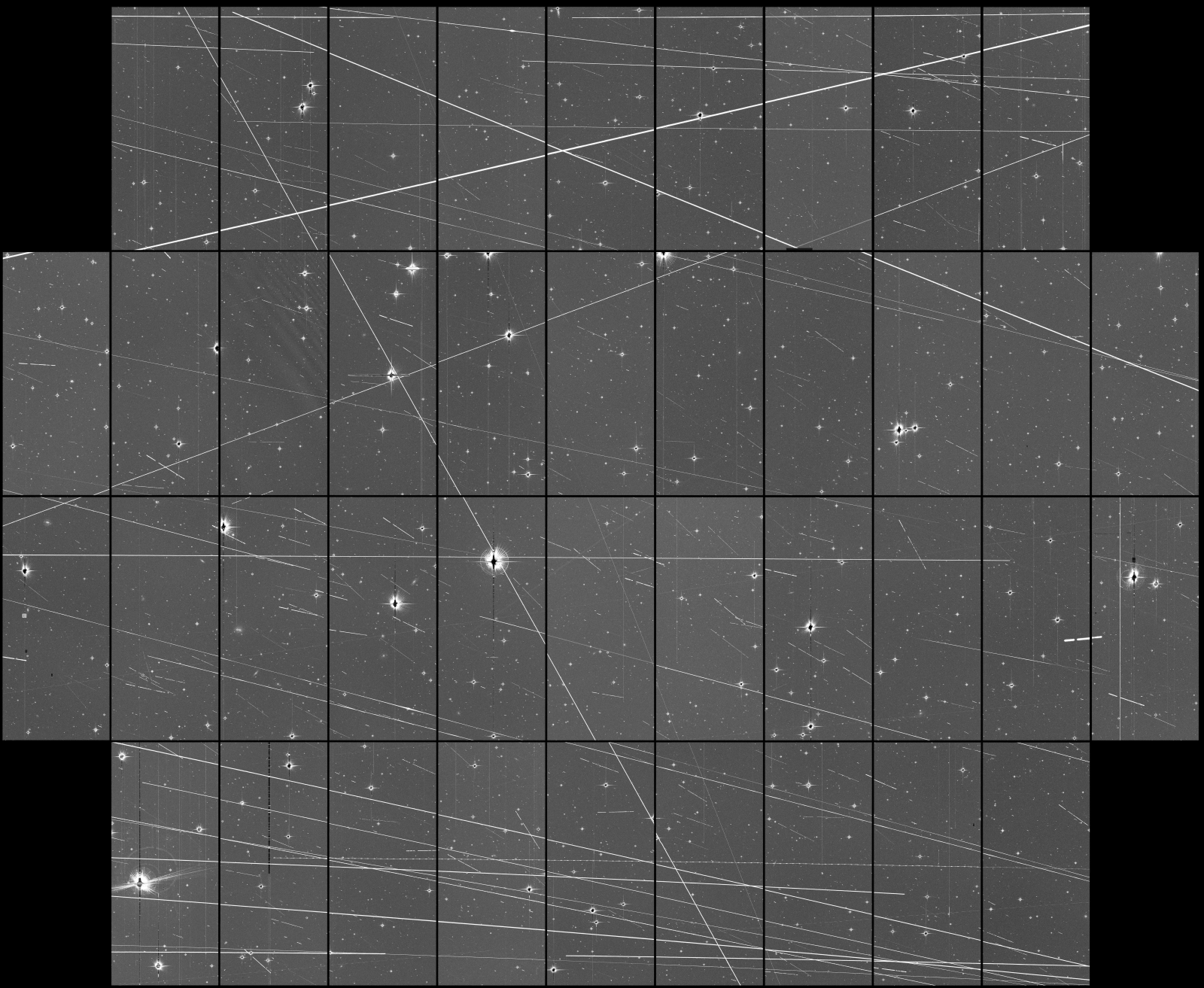
I have a really nice (horrifying) image stack that one of my research team members made, that powerfully demonstrates what a huge problem satellite streaks are for wide-field imaging.

Planlagt Fastgjort Låst Flyttet Ikke-kategoriseret
14 Indlæg 12 Posters 8 Visninger
  • Ældste til nyeste
  • Nyeste til ældste
  • Most Votes
Svar
  • Svar som emne
Login for at svare
Denne tråd er blevet slettet. Kun brugere med emne behandlings privilegier kan se den.
  • sundogplanets@mastodon.socialS This user is from outside of this forum
    sundogplanets@mastodon.socialS This user is from outside of this forum
    sundogplanets@mastodon.social
    wrote sidst redigeret af
    #1

    I have a really nice (horrifying) image stack that one of my research team members made, that powerfully demonstrates what a huge problem satellite streaks are for wide-field imaging. This is a 3 hour stack of star-subtracted 5 minute exposures using the Canada-France-Hawaii Telescope. The short diagonal lines are asteroids. The long diagonal lines are sunlit satellites that passed through the field of view during the exposure.

    sundogplanets@mastodon.socialS rk@mastodon.well.comR raymaccarthy@mastodon.ieR gustavinobevilacqua@mastodon.cisti.orgG pwei888@fediscience.orgP 8 Replies Last reply
    1
    0
    • sundogplanets@mastodon.socialS sundogplanets@mastodon.social

      I have a really nice (horrifying) image stack that one of my research team members made, that powerfully demonstrates what a huge problem satellite streaks are for wide-field imaging. This is a 3 hour stack of star-subtracted 5 minute exposures using the Canada-France-Hawaii Telescope. The short diagonal lines are asteroids. The long diagonal lines are sunlit satellites that passed through the field of view during the exposure.

      sundogplanets@mastodon.socialS This user is from outside of this forum
      sundogplanets@mastodon.socialS This user is from outside of this forum
      sundogplanets@mastodon.social
      wrote sidst redigeret af
      #2

      Now the really horrible part: this image was taken in August 2022. According to @planet4589.bsky.social's website https://planet4589.org/space/stats/out/stat001.txt, there are almost TEN THOUSAND MORE ACTIVE SATELLITES today than there were in August 2022.

      Fuck.

      moppi@chaos.socialM raymaccarthy@mastodon.ieR tallsimon@mstdn.caT pietkuip@mastodon.nlP 4 Replies Last reply
      0
      • sundogplanets@mastodon.socialS sundogplanets@mastodon.social

        I have a really nice (horrifying) image stack that one of my research team members made, that powerfully demonstrates what a huge problem satellite streaks are for wide-field imaging. This is a 3 hour stack of star-subtracted 5 minute exposures using the Canada-France-Hawaii Telescope. The short diagonal lines are asteroids. The long diagonal lines are sunlit satellites that passed through the field of view during the exposure.

        rk@mastodon.well.comR This user is from outside of this forum
        rk@mastodon.well.comR This user is from outside of this forum
        rk@mastodon.well.com
        wrote sidst redigeret af
        #3

        @sundogplanets

        Billionaires have graduated from regular super villainy to cartoonish super villainy.

        1 Reply Last reply
        0
        • sundogplanets@mastodon.socialS sundogplanets@mastodon.social

          I have a really nice (horrifying) image stack that one of my research team members made, that powerfully demonstrates what a huge problem satellite streaks are for wide-field imaging. This is a 3 hour stack of star-subtracted 5 minute exposures using the Canada-France-Hawaii Telescope. The short diagonal lines are asteroids. The long diagonal lines are sunlit satellites that passed through the field of view during the exposure.

          raymaccarthy@mastodon.ieR This user is from outside of this forum
          raymaccarthy@mastodon.ieR This user is from outside of this forum
          raymaccarthy@mastodon.ie
          wrote sidst redigeret af
          #4

          @sundogplanets
          A demon scribbling on it! 😞

          1 Reply Last reply
          0
          • sundogplanets@mastodon.socialS sundogplanets@mastodon.social

            I have a really nice (horrifying) image stack that one of my research team members made, that powerfully demonstrates what a huge problem satellite streaks are for wide-field imaging. This is a 3 hour stack of star-subtracted 5 minute exposures using the Canada-France-Hawaii Telescope. The short diagonal lines are asteroids. The long diagonal lines are sunlit satellites that passed through the field of view during the exposure.

            gustavinobevilacqua@mastodon.cisti.orgG This user is from outside of this forum
            gustavinobevilacqua@mastodon.cisti.orgG This user is from outside of this forum
            gustavinobevilacqua@mastodon.cisti.org
            wrote sidst redigeret af
            #5

            @sundogplanets

            Paradoxically, an asteroid can hit the Earth by traveling hidden by the satellite streaks.

            1 Reply Last reply
            0
            • sundogplanets@mastodon.socialS sundogplanets@mastodon.social

              Now the really horrible part: this image was taken in August 2022. According to @planet4589.bsky.social's website https://planet4589.org/space/stats/out/stat001.txt, there are almost TEN THOUSAND MORE ACTIVE SATELLITES today than there were in August 2022.

              Fuck.

              moppi@chaos.socialM This user is from outside of this forum
              moppi@chaos.socialM This user is from outside of this forum
              moppi@chaos.social
              wrote sidst redigeret af
              #6

              @sundogplanets @planet4589.bsky.social

              and we have not Talked about the Kessler-syndrom what us locked in on our planet for generations.

              But a Couple of Billonairs can do what ever they want 😕

              1 Reply Last reply
              0
              • sundogplanets@mastodon.socialS sundogplanets@mastodon.social

                Now the really horrible part: this image was taken in August 2022. According to @planet4589.bsky.social's website https://planet4589.org/space/stats/out/stat001.txt, there are almost TEN THOUSAND MORE ACTIVE SATELLITES today than there were in August 2022.

                Fuck.

                raymaccarthy@mastodon.ieR This user is from outside of this forum
                raymaccarthy@mastodon.ieR This user is from outside of this forum
                raymaccarthy@mastodon.ie
                wrote sidst redigeret af
                #7

                @sundogplanets @planet4589.bsky.social@bsky.brid.gy

                Arrrrgh!

                Well, if Elon's Empire crashes, how long before they all fall down?

                Sadly Bezo's Bazaar isn't as likely to fail.

                equalitysiren@mstdn.socialE 1 Reply Last reply
                0
                • jwcph@helvede.netJ jwcph@helvede.net shared this topic
                • sundogplanets@mastodon.socialS sundogplanets@mastodon.social

                  Now the really horrible part: this image was taken in August 2022. According to @planet4589.bsky.social's website https://planet4589.org/space/stats/out/stat001.txt, there are almost TEN THOUSAND MORE ACTIVE SATELLITES today than there were in August 2022.

                  Fuck.

                  tallsimon@mstdn.caT This user is from outside of this forum
                  tallsimon@mstdn.caT This user is from outside of this forum
                  tallsimon@mstdn.ca
                  wrote sidst redigeret af
                  #8

                  @sundogplanets Eliminating our ability to observe is not the way I thought we would avoid the "Don't Look Up" scenario. 🤔

                  1 Reply Last reply
                  0
                  • sundogplanets@mastodon.socialS sundogplanets@mastodon.social

                    Now the really horrible part: this image was taken in August 2022. According to @planet4589.bsky.social's website https://planet4589.org/space/stats/out/stat001.txt, there are almost TEN THOUSAND MORE ACTIVE SATELLITES today than there were in August 2022.

                    Fuck.

                    pietkuip@mastodon.nlP This user is from outside of this forum
                    pietkuip@mastodon.nlP This user is from outside of this forum
                    pietkuip@mastodon.nl
                    wrote sidst redigeret af
                    #9

                    @sundogplanets @planet4589.bsky.social And I was just thinking at the photo: “That is not so bad for a three-hour exposure.”

                    1 Reply Last reply
                    0
                    • sundogplanets@mastodon.socialS sundogplanets@mastodon.social

                      I have a really nice (horrifying) image stack that one of my research team members made, that powerfully demonstrates what a huge problem satellite streaks are for wide-field imaging. This is a 3 hour stack of star-subtracted 5 minute exposures using the Canada-France-Hawaii Telescope. The short diagonal lines are asteroids. The long diagonal lines are sunlit satellites that passed through the field of view during the exposure.


                      pwei888@fediscience.orgP This user is from outside of this forum
                      pwei888@fediscience.orgP This user is from outside of this forum
                      pwei888@fediscience.org
                      wrote sidst redigeret af
                      #10

                      @sundogplanets Just curious: What does "star-subtracted" mean here?🤔 (I still see a large number of pretty compact objects.)

                      1 Reply Last reply
                      0
                      • sundogplanets@mastodon.socialS sundogplanets@mastodon.social

                        I have a really nice (horrifying) image stack that one of my research team members made, that powerfully demonstrates what a huge problem satellite streaks are for wide-field imaging. This is a 3 hour stack of star-subtracted 5 minute exposures using the Canada-France-Hawaii Telescope. The short diagonal lines are asteroids. The long diagonal lines are sunlit satellites that passed through the field of view during the exposure.

                        snowblind2005@social.vivaldi.netS This user is from outside of this forum
                        snowblind2005@social.vivaldi.netS This user is from outside of this forum
                        snowblind2005@social.vivaldi.net
                        wrote sidst redigeret af
                        #11

                        @sundogplanets

                        UFO's Sam. U.F.OHS!

                        Clearly this is an invasion. What's captured here are the naked manships without their towel cloaks exposing themselves.
                        A scientist posted images from their secret CFH alien containment facility of a baby Pierson's Puppeteer this past week as well.
                        Perhaps we should start planting corn in these wide-fields to block them from spying on us and we can hear them rustling around.

                        May The Farce Be With You

                        1 Reply Last reply
                        0
                        • sundogplanets@mastodon.socialS sundogplanets@mastodon.social

                          I have a really nice (horrifying) image stack that one of my research team members made, that powerfully demonstrates what a huge problem satellite streaks are for wide-field imaging. This is a 3 hour stack of star-subtracted 5 minute exposures using the Canada-France-Hawaii Telescope. The short diagonal lines are asteroids. The long diagonal lines are sunlit satellites that passed through the field of view during the exposure.

                          dckim@mastodon.socialD This user is from outside of this forum
                          dckim@mastodon.socialD This user is from outside of this forum
                          dckim@mastodon.social
                          wrote sidst redigeret af
                          #12

                          @sundogplanets as a follow up, I would ask what percentage of the night-sky is obscured by this? Is the addition light pollution a concern for accuracy?

                          1 Reply Last reply
                          0
                          • raymaccarthy@mastodon.ieR raymaccarthy@mastodon.ie

                            @sundogplanets @planet4589.bsky.social@bsky.brid.gy

                            Arrrrgh!

                            Well, if Elon's Empire crashes, how long before they all fall down?

                            Sadly Bezo's Bazaar isn't as likely to fail.

                            equalitysiren@mstdn.socialE This user is from outside of this forum
                            equalitysiren@mstdn.socialE This user is from outside of this forum
                            equalitysiren@mstdn.social
                            wrote sidst redigeret af
                            #13

                            @raymaccarthy @sundogplanets
                            And to think it was so ridiculous to have a satellite fall on your boyfriend in Northern Exposure.

                            1 Reply Last reply
                            0
                            • sundogplanets@mastodon.socialS sundogplanets@mastodon.social

                              I have a really nice (horrifying) image stack that one of my research team members made, that powerfully demonstrates what a huge problem satellite streaks are for wide-field imaging. This is a 3 hour stack of star-subtracted 5 minute exposures using the Canada-France-Hawaii Telescope. The short diagonal lines are asteroids. The long diagonal lines are sunlit satellites that passed through the field of view during the exposure.

                              scaletheory@mastodon.socialS This user is from outside of this forum
                              scaletheory@mastodon.socialS This user is from outside of this forum
                              scaletheory@mastodon.social
                              wrote sidst redigeret af
                              #14

                              @sundogplanets

                              Polluting everything, humans suck.

                              Prove me wrong

                              1 Reply Last reply
                              0
                              Svar
                              • Svar som emne
                              Login for at svare
                              • Ældste til nyeste
                              • Nyeste til ældste
                              • Most Votes


                              • Log ind

                              • Har du ikke en konto? Tilmeld

                              • Login or register to search.
                              Powered by NodeBB Contributors
                              Graciously hosted by data.coop
                              • First post
                                Last post
                              0
                              • Hjem
                              • Seneste
                              • Etiketter
                              • Populære
                              • Verden
                              • Bruger
                              • Grupper