Machine translations are often brought up as a gotcha whenever I criticize LLMs.
-
Machine translations are often brought up as a gotcha whenever I criticize LLMs. It's worth pointing out two things: Machine translations existed decades before LLMs, and yes, machine translations are useful. However: I would never in my life read a machine translated book. Understanding what a social media post is talking about in rough terms? Sure. Literature? Absolutely not. Hell, have you ever seen machine translated subtitles? It's absolute garbage.
@Gargron all your base are belong to us, man...
-
I have the impression that primarily anglophone people don't read as much translated literature, because so much good literature already exists in their language, so this issue may not be as familiar within that demographic. As someone who did not grow up anglophone, I can tell you there is a world of difference between a good and a bad translation even when done by humans. Machine translations are not even on the scale.
@Gargron @aj I literally just bought a new translation of the Odyssey. My third, I think? But yeah, as an American English speaker I mostly have encountered this in other nerdy pursuits. Specifically, anime and manga. Years of online debate over translations, how and when to do cultural translation, the merits of transliteration, etc.
-
Stanislaw Lem
@n_dimension Cannot confirm @Gargron
-
Machine translations are often brought up as a gotcha whenever I criticize LLMs. It's worth pointing out two things: Machine translations existed decades before LLMs, and yes, machine translations are useful. However: I would never in my life read a machine translated book. Understanding what a social media post is talking about in rough terms? Sure. Literature? Absolutely not. Hell, have you ever seen machine translated subtitles? It's absolute garbage.
@Gargron Can confirm. Bad subtitles are almost worse than no subtitles to me, at least if I understand anything of the original language, because now I need to unpack the bad-english into something vaguely coherent. And if the meaning is too far off from the audio, it's like the mental version of running face first into the signpost marking two diverging forks as the reading and listening side try to reconcile a common meaning... Though sometimes they can get so terrible it ends up being "workable", but that's usually reserved for very specific instances. A trashy VN with an equally-trash translation? Makes perfect sense. A VN that tries to be even remotely serious about anything? Nope.
"Bad translations" generally still have their place, but more as a quick-n-dirty "get the gist of it" stuff that's okay with the end result being equivalent to "the reading comprehension of a 5 year old with an unusually large vocabulary".
-
@Gargron It is a technology that humanity has been seeking for a long time. At least since the 1950s, with Turing and his colleagues.
-
@gdinwiddie I quoted this a number of times over the past few decades
 (I remembered it as "the spirit is strong", BTW) @virgilpierce @Gargron
@Szescstopni The sentence I referenced is a bible verse.
-
I have the impression that primarily anglophone people don't read as much translated literature, because so much good literature already exists in their language, so this issue may not be as familiar within that demographic. As someone who did not grow up anglophone, I can tell you there is a world of difference between a good and a bad translation even when done by humans. Machine translations are not even on the scale.
@Gargron In English, the angel and demon of Russian literature is Constance Garnett, who translated much of Tolstoy, Pushkin, and Dostoevsky.
Angel, cuz she was one of the earliest sources of English translation.
Demon, cuz she manages to make Tolstoy, Pushkin, and Dostoevsky sound like the same writer.
Nabokov's Pushkin translation is an exercise in erudition. Half of every page is his translated quatrain. The other half, sometimes even more, is his footnotes about his choices & alternates.
-
@Szescstopni The sentence I referenced is a bible verse.
@gdinwiddie Yes, and there a few different translations into Polish
"duch wprawdzie pełen chęci, ale ciało — słabe."
"duch wprawdzie ochoczy, ale ciało - słabe."
I wrote ho I remembered it for the record. And the vodka was strong, not good. Translations are a fascinating rabbit hole.
-
From what I've observed, people who claim that LLMs can replace artists don't understand art, people who claim that they can replace musicians don't understand music, people who claim that they can replace writers don't understand literature, and people who claim they can replace translators don't rely on translations. If I had a button that would erase LLMs from the world but it would take machine translations away (which is a false dichotomy anyway), I would absolutely still press it.
@Gargron When they say LLMs can replace artists what they mean is, "We have enough art now. The sum total of art we have is sufficient. Remixing and blending the corpus of art will be good enough forever. If not we can just tap some humans afflicted with the artist disease to generate some more, and it will be cheaper! They'll do it for free! Fools."
-
@Gargron LLMs are not exclusively a product of large corporations or just marketing. Much of the research and development also takes place in open source and academic communities. The codes for these LLMs are public and can be audited or run locally. Furthermore, I argue that serious ethical reflection is necessary, but prohibition is not the way forward.
@df @Gargron Academics may study LLMs out in the open, but I don't think academia has been able to produce LLMs whose outputs are sufficiently marketable compared to the current commercially available ones. Because the first "L" ("large") is - in our current, limited understanding - crucial for the verisimilitude of the synthetic text, and only corporations (and governments, but they mostly haven't gotten to this yet) have the scale to get large enough for that so far.
-
Machine translations are often brought up as a gotcha whenever I criticize LLMs. It's worth pointing out two things: Machine translations existed decades before LLMs, and yes, machine translations are useful. However: I would never in my life read a machine translated book. Understanding what a social media post is talking about in rough terms? Sure. Literature? Absolutely not. Hell, have you ever seen machine translated subtitles? It's absolute garbage.
@Gargron
Hello
How are you? -
@Gargron if asbestos was invented last year it would be inevitable, I'm afraid.
When almost all legislative power has been captured by corporatism there's not much hope we could outlaw such poisons.
"“We live in capitalism. Its power seems inescapable. So did the divine right of kings. Any human power can be resisted and changed by human beings. "
- Ursula K. LeGuin
-
Machine translations are often brought up as a gotcha whenever I criticize LLMs. It's worth pointing out two things: Machine translations existed decades before LLMs, and yes, machine translations are useful. However: I would never in my life read a machine translated book. Understanding what a social media post is talking about in rough terms? Sure. Literature? Absolutely not. Hell, have you ever seen machine translated subtitles? It's absolute garbage.
-
@AVincentInSpace it literally is haha. Fellowship was just as bad.
I was still dialup back in those days so I’d order my bootleg DVDs from a dude in Hong Kong and I just about died laughing when I turned on subtitles randomly
@Sonikku do you by any chance still have those discs? i would love to rip them and extract that subtitle track for purposes of amusing my friends
-
Stanislaw Lem
Lem would confuse the heck out of an LLM. Heck, I think his work confused most of his translators too!
-
@Gargron and then there's the question on how it's used
see firefox that generated new translations and threw awai human written ones -
I have the impression that primarily anglophone people don't read as much translated literature, because so much good literature already exists in their language, so this issue may not be as familiar within that demographic. As someone who did not grow up anglophone, I can tell you there is a world of difference between a good and a bad translation even when done by humans. Machine translations are not even on the scale.
@Gargron
I would love to see an LLM try to translate the Cyberiad by Stanislaw Lem -
@gdinwiddie Yes, and there a few different translations into Polish
"duch wprawdzie pełen chęci, ale ciało — słabe."
"duch wprawdzie ochoczy, ale ciało - słabe."
I wrote ho I remembered it for the record. And the vodka was strong, not good. Translations are a fascinating rabbit hole.
@Szescstopni Maybe it was “the vodka was strong” in English, also. I was a child when I heard my father tell that joke.
-
I have the impression that primarily anglophone people don't read as much translated literature, because so much good literature already exists in their language, so this issue may not be as familiar within that demographic. As someone who did not grow up anglophone, I can tell you there is a world of difference between a good and a bad translation even when done by humans. Machine translations are not even on the scale.
@Gargron This is why I learn languages, so I can read the source materials myself. Bad translations sometimes mean they manipulated the meanings, and hidden censorships you won't be aware of if you don't have access to the source.
-
Lem would confuse the heck out of an LLM. Heck, I think his work confused most of his translators too!
@nitinkhanna @Gargron @Szescstopni
This is why I mentioned Lem
There was a masterful translator, In one of the "Constructor Trurl and Klapautius" stories, one of them makes a machine that makes items that start with a letter "n", the list and the consequences (spoilers) are a masterful translation.







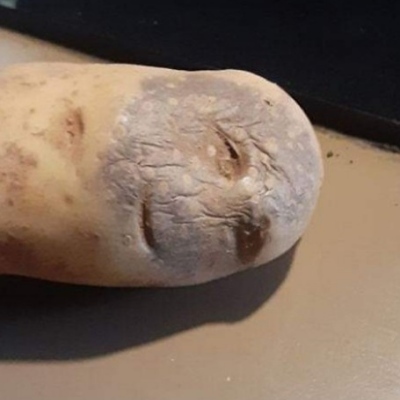





 ️
️