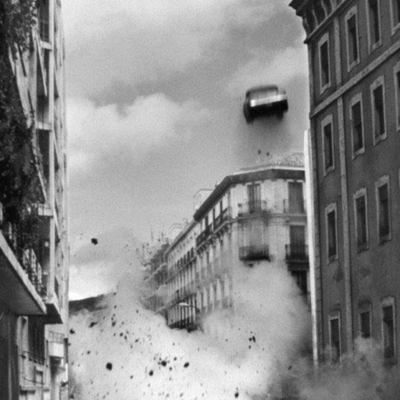
From the website of the company that’s destroying books to feed them into the ravenous AI maw.
-
From the website of the company that’s destroying books to feed them into the ravenous AI maw.
“A physical book is a delivery mechanism for information. Once that information has been extracted and encoded into an AI model, the delivery mechanism has served its purpose. What remains is paper, ink, and binding material. The book is not destroyed. Its value has migrated. The paper returns to the material cycle; the knowledge enters the intellectual one.” https://www.news.com.au/technology/online/internet/ai-labs-buy-scan-shred-millions-of-rare-books/news-story/0c3b45a67093ab462a587a0348538ce9
Corporate speak for "we've found a way to monetize access to literature that you used to have access to for free or very low cost", aren't we the clever ones?
-
@overholt It's also short-sighted. We cannot conceive of a massive interruption to our access to technology? It could happen in so many ways.
@kimlockhartga They don't give a fuck about a massive interruption of OUR access to data. In fact, I'm quite sure they are banking on it. It will hike the price of access.
We are much more manipulatable and gullible without all that 'culture' stuff. Remember how much easier it was to manage illiterate peasants?
What they can't conceive of is a massive erasure of data. Because they cannot conceive it might ever happen to them. Which is emblematic of their psychopathy.
-
From the website of the company that’s destroying books to feed them into the ravenous AI maw.
“A physical book is a delivery mechanism for information. Once that information has been extracted and encoded into an AI model, the delivery mechanism has served its purpose. What remains is paper, ink, and binding material. The book is not destroyed. Its value has migrated. The paper returns to the material cycle; the knowledge enters the intellectual one.” https://www.news.com.au/technology/online/internet/ai-labs-buy-scan-shred-millions-of-rare-books/news-story/0c3b45a67093ab462a587a0348538ce9
@overholt They are destroying the commons by both generating absolute slop, and shredding our history
-
@overholt horrifying
Why does "books" feel like "people's brains" ??? I see tech bros planning on selling immortality by claiming our bodies are just "delivery mechanisms for information" & some Isaac Asimov end to humanity
@librarymonster @overholt seems implicit given everything we’ve seen with AI and layoffs and everything else.
“A physical being is a delivery mechanism for skilled labor. Once those skills have been extracted and encoded into an AI model, the delivery mechanism has served its purpose. What remains is blood, bone, and binding material. The being is not destroyed. Its value has migrated. The being returns to the material cycle; the skills enter the production one.”
-
@overholt I have a lot of ebooks around, but I've occasionally made a point of buying physical books, in part because digital data is so vulnerable. Even the DRM-free epub files are vulnerable to the decay of storage media with short lifespans.
The mass destruction of physical books seems like an intentional threat.
People talk about this being the result of a grotesque judicial interpretation of copyright law, but I don't think "AI" companies care about law that much. They seem to violate laws pretty frequently. This looks to me like a deliberate act of violence. They actually intend to destroy physical books.
AI companies will step over laws gladly when those get in their way. That does not apply here: it's ridiculously easy to destroy a paper book to keep up the pretense of only moving the work to a different medium (questionable BTW), and the books' second-hand value is negligible.
-
"A human is a delivery mechanism for productivity. Once that productivity has been extracted and converted into profits, the delivery mechanism has served it's purpose. What remains is organs, bones and viscera. The human is not destroyed. Its value has migrated. The body returns to the earth; the profits enter the CEO's financial portfolio."
@angiebaby @overholt please, PLEASE, don't give them any ideas.
-
@overholt never, ever, ever destroy your starting material after duplicaten. Rule nr 1
@bregt_lameris @overholt this comment reminds me of my first ever research trip, to the old British Library, as a PhD student in 1993. The catalogue was then on a mix of handwritten and typed paper slips pasted into a series of calf-bound folios arranged by author and title, but not subject. The next time I visited, in 1996, the folios were gone and the catalogue had been digitized. 1/2
-
@bregt_lameris @overholt this comment reminds me of my first ever research trip, to the old British Library, as a PhD student in 1993. The catalogue was then on a mix of handwritten and typed paper slips pasted into a series of calf-bound folios arranged by author and title, but not subject. The next time I visited, in 1996, the folios were gone and the catalogue had been digitized. 1/2
@bregt_lameris @overholt Some materials had been inadvertently omitted from the new catalogue. On asking for the old catalogue (“the Third Catalogue”) to try to locate a scrapbook volume, I was told that the Third Catalogue had been pulped. As, presumably, had the First and Second Catalogues. Some books are lost forever. 2/2
-
From the website of the company that’s destroying books to feed them into the ravenous AI maw.
“A physical book is a delivery mechanism for information. Once that information has been extracted and encoded into an AI model, the delivery mechanism has served its purpose. What remains is paper, ink, and binding material. The book is not destroyed. Its value has migrated. The paper returns to the material cycle; the knowledge enters the intellectual one.” https://www.news.com.au/technology/online/internet/ai-labs-buy-scan-shred-millions-of-rare-books/news-story/0c3b45a67093ab462a587a0348538ce9
@overholt That prose has a feeling very reminiscent of something in a dystopian sci-fi novel. I have the impression that I've read an equivalent passage somewhere, imagining an administrative type, talking about the state's system for processing humans.
-
Anyone who thinks a book is simply information doesn't really understand books.
@McCrankyface @janeishly @overholt a tech bro that doesn't understand basic humanities? Shocking.
-
As someone who has devoted his career to celebrating and preserving the artifactual, tangible value of books, this feels like a knife in the gut.
@overholt Yeah pull out the plug in the library, the lights go out. Pull the plug on AI and everything is lost - migration is a myth.
-
Apparently the quote was shocking enough they've rewritten the post, but IA has the receipts. https://web.archive.org/web/20260720152647/https://isbndb.com/blog/print-books-sourcing-ai-training/
@overholt Is also a ghoulish pull quote. "these greedy SOBs already got paid. We put their information into a black box and you have to pay us a recurring fee to access it."
-
Apparently the quote was shocking enough they've rewritten the post, but IA has the receipts. https://web.archive.org/web/20260720152647/https://isbndb.com/blog/print-books-sourcing-ai-training/
@overholt "A physical book is a delivery mechanism for information. Once that information has been extracted and encoded into an AI model, the delivery mechanism has served its purpose."
The same could be said of CEOs and their DNA. Maybe we could freeze a cheek swab from each of them and dispose of the physical remains (aka "the delivery mechanism")? According to their logic, nothing of value would have been lost.
-
As someone who has devoted his career to celebrating and preserving the artifactual, tangible value of books, this feels like a knife in the gut.
@overholt The differences I see between older fiction paperbacks and their ebooks is enough to make me question any digital version of an older print book. It even happens with movies. I don't trust the information to not be manipulated anymore.
-
From the website of the company that’s destroying books to feed them into the ravenous AI maw.
“A physical book is a delivery mechanism for information. Once that information has been extracted and encoded into an AI model, the delivery mechanism has served its purpose. What remains is paper, ink, and binding material. The book is not destroyed. Its value has migrated. The paper returns to the material cycle; the knowledge enters the intellectual one.” https://www.news.com.au/technology/online/internet/ai-labs-buy-scan-shred-millions-of-rare-books/news-story/0c3b45a67093ab462a587a0348538ce9
@overholt
I'm at a loss for words … already -,- -
From the website of the company that’s destroying books to feed them into the ravenous AI maw.
“A physical book is a delivery mechanism for information. Once that information has been extracted and encoded into an AI model, the delivery mechanism has served its purpose. What remains is paper, ink, and binding material. The book is not destroyed. Its value has migrated. The paper returns to the material cycle; the knowledge enters the intellectual one.” https://www.news.com.au/technology/online/internet/ai-labs-buy-scan-shred-millions-of-rare-books/news-story/0c3b45a67093ab462a587a0348538ce9
@overholt They have modernized and rendered the position of Winston Smith as obsolete. But of course we would find more efficient methods of reaching our dystopian end.
-
"A human is a delivery mechanism for productivity. Once that productivity has been extracted and converted into profits, the delivery mechanism has served it's purpose. What remains is organs, bones and viscera. The human is not destroyed. Its value has migrated. The body returns to the earth; the profits enter the CEO's financial portfolio."
Perhaps, in a way, the capitalist project of exploitation and domination destroys value, which human creativity reproduces society with, so to remake society & human experience more integrated and therefore more captured, isolated, and impoverished.
This from Graeber's exploration & summation of the anthropologist search for value, combined with Ian Alan Paul’s situationist book "The Reticular Society".
"[...] Value is the way our actions take on meaning or importance by becoming incorporated into something larger than ourselves. But almost always, this can only happen through some kind of material medium, a token of value like money. Fetishism occurs when we assume that the value comes from the token, rather than ourselves.
In most known human societies there was no such market in labour; but still, one can say something similar happens. Different sorts of labour (perhaps better put: different forms of human creative activity) cluster together. They tend to get reflected back in the form of concrete, material media that are seen as valuable in themselves, and thus end up becoming the actual ends for which action takes place. Tokens of honour inspire honourable behaviour, tokens of piety inspire religious devotion, tokens of wisdom inspire learning and so on. Their value is just that of the actions they represent, but the actors see them as valuable in themselves. Usually, these tokens are unlike money, which is an abstract medium in which all tokens are effectively the same: any dollar bill is to all practical intents and purposes identical to any other. Instead, these tokens are unique, particular things: heirlooms, unique gestures, titles and so on. But this makes sense, too. After all, the same thing happens, to a lesser degree, in our own society. Recall my earlier remark about economic ‘value’ applying within the market, and a more particular sort of ‘values’ applying outside it. Abstract labour, the sort you get in the capitalist workplaces, ends up being materialised in abstract symbols; more concrete forms of labour end up being materialised in more concrete symbols. So housework and childcare, for which one is not paid, becomes a matter of ‘family values’ and is reflected in tokens of love and respect; work for the church becomes a matter of religious values, political activism is inspired by social values and so on. But even here, there is usually some sort of material token through which it all becomes real.
[...]"
https://theanarchistlibrary.org/library/david-graeber-value#toc5
https://illwill.com/repertoire -
From the website of the company that’s destroying books to feed them into the ravenous AI maw.
“A physical book is a delivery mechanism for information. Once that information has been extracted and encoded into an AI model, the delivery mechanism has served its purpose. What remains is paper, ink, and binding material. The book is not destroyed. Its value has migrated. The paper returns to the material cycle; the knowledge enters the intellectual one.” https://www.news.com.au/technology/online/internet/ai-labs-buy-scan-shred-millions-of-rare-books/news-story/0c3b45a67093ab462a587a0348538ce9
@overholt if they truly believe that 'the value has migrated', why don't they give the scanned physical books away for free? What do they gain by destroying them? (Probably scarcity, but they won't admit that because that would reveal their true, unlikeable nature.)
-
As someone who has devoted his career to celebrating and preserving the artifactual, tangible value of books, this feels like a knife in the gut.
@overholt The idea that the contents of a book being ingested by a probabilistic language model (i.e. more or less an autocorrect with a shit ton of parameters) somehow represents the knowledge entering the "intellectual space" is so infuriatingly ludicrous. Knowledge from books enters an intellectual space when a human with genuine intelligence reads it and thinks about it. The people who run these "AI" companies are just the dumbest, most obtuse jags on the planet.
-
From the website of the company that’s destroying books to feed them into the ravenous AI maw.
“A physical book is a delivery mechanism for information. Once that information has been extracted and encoded into an AI model, the delivery mechanism has served its purpose. What remains is paper, ink, and binding material. The book is not destroyed. Its value has migrated. The paper returns to the material cycle; the knowledge enters the intellectual one.” https://www.news.com.au/technology/online/internet/ai-labs-buy-scan-shred-millions-of-rare-books/news-story/0c3b45a67093ab462a587a0348538ce9