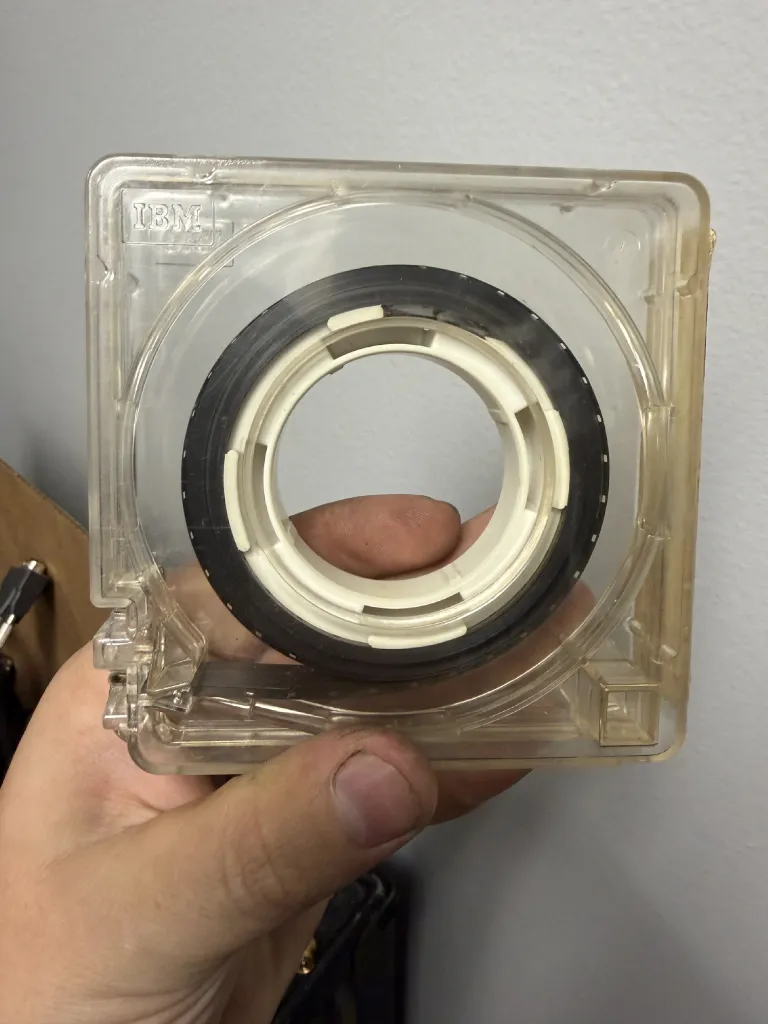
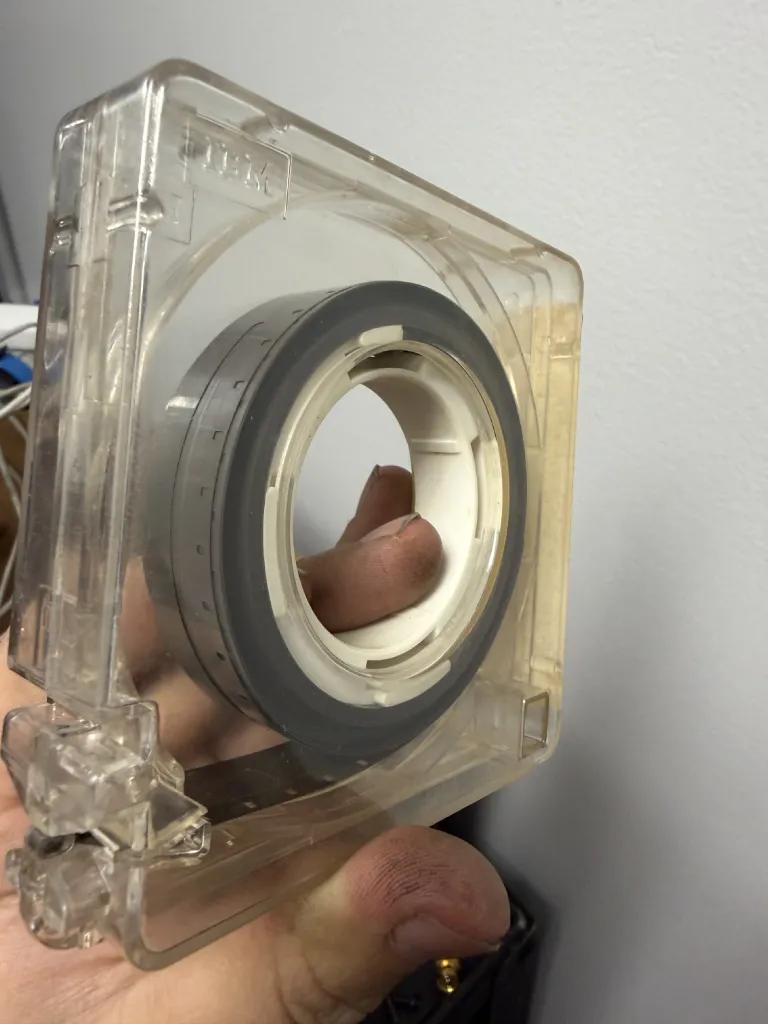
a friend of mine sent me these photos of an IBM MT/ST tape (magnetic tape / selectric typewriter).
-
have you looked at the digidata mt/st tape reader documentation on bitsavers?
@bitsavers no, i should probably do that.

-
oh i'm definitely on the right track (pun intended). it seems we have the phrase "The patient<CR><LF>r" encoded onto the tape! it's backwards, but that's ok. i'm also a bit surprised to see <CR><LF> but i guess that means the typewriter wasn't running Unix. IYKYK.
@tubetime this is so cool! Great work!
-
@bitsavers no, i should probably do that.
it is the system 30. I thought I had some blueprints, but i may not have put them on line
https://www.computerhistory.org/collections/catalog/102662523
I picked up the Model 30 on eBay in the 00s for CHM thinking they might be interested in reading those type of tapes in the future (hah!) then the docs showed up in a big batch of paper I bought many, many years later. Since it is now an accessioned "artifact" (because the "tool" acquisition category didn't exist), it will never be used for data recovery.
It is also the reason why I have a room full of my own card reader, disk, mag and paper tape drives at the museum that are not owned by CHM that I use for media recovery in their software preservation lab. -
have you looked at the digidata mt/st tape reader documentation on bitsavers?
@bitsavers their logo is clever and looks just like the magnaview image.
-
@tubetime - do you have any idea of the age of the tape?
@philcowans probably 1970s.
-
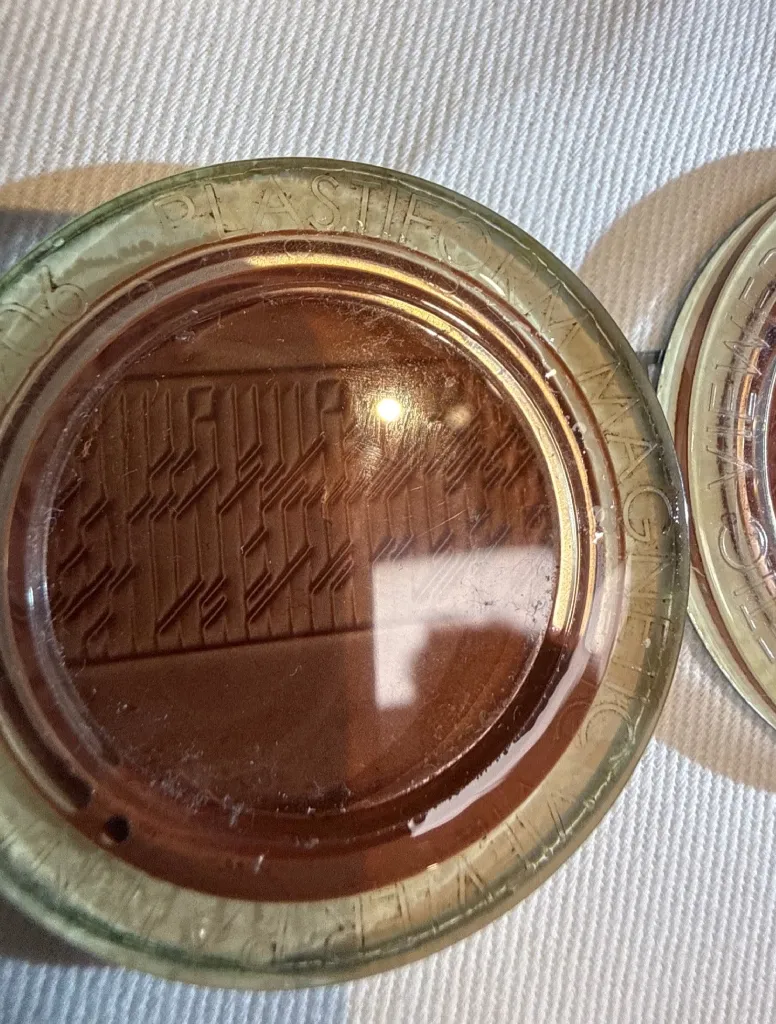
a friend of mine sent me these photos of an IBM MT/ST tape (magnetic tape / selectric typewriter). the third photo particularly fascinated me: it shows the flux transitions with a Magnaviewer! is it possible to decode? 🧵
@tubetime I will have to try and get a magnetic viewer someday, but they're not cheap
-
oh i'm definitely on the right track (pun intended). it seems we have the phrase "The patient<CR><LF>r" encoded onto the tape! it's backwards, but that's ok. i'm also a bit surprised to see <CR><LF> but i guess that means the typewriter wasn't running Unix. IYKYK.
@tubetime you need to both bring the carriage back *and* move the paper one line
-
@tubetime CR LF makes sense on a typewriter though - that's what the lever on a manual typewriter ends up doing, and it's not that uncommon to manually feed forward so do a LF without a CR.
@penguin42 @tubetime seems like the blank in the middle also makes sense if it's transcribed from (or merely some design bits are borrowed from) paper tape with a center tracking sprocket.
-
@tubetime Maybe the middle is the 8th bit? Rarely used?
-
-
a friend of mine sent me these photos of an IBM MT/ST tape (magnetic tape / selectric typewriter). the third photo particularly fascinated me: it shows the flux transitions with a Magnaviewer! is it possible to decode? 🧵
@tubetime @ShaulaEvans what?!?!
-
@bitsavers no, i should probably do that.
All the *kewl kids are doin' it

-
-
All the *kewl kids are doin' it
and thanks to @tubetime someone will have figured it out for them, assuming "doin' it" means reading old magtape selectric cartridges
-
and thanks to @tubetime someone will have figured it out for them, assuming "doin' it" means reading old magtape selectric cartridges
 that is what doin' it means in this context
  ️
️ -
-
i've found what appears to be a code table! it's not really EBCDIC; other documentation refers to the reader having to translate the code.
@tubetime Interesting bit numbers. 1, 2, 2a(?), 5, 10, 20; maybe it was originally for a decimal system?
The * on the 2's Ck/Sft suggests it supports both uppercase and lowercase (lining/text?) digits which is interesting since there's no separate 1, so no way to encode "lowercase" 1.
-
a friend of mine sent me these photos of an IBM MT/ST tape (magnetic tape / selectric typewriter). the third photo particularly fascinated me: it shows the flux transitions with a Magnaviewer! is it possible to decode? 🧵
@tubetime So is the MT/ST before or after the "Magcard Composer" which was basically a Selectric that could key in text and store it on what looked like a punch card but was covered with magnetic media. Then you'd put in the expensive mineral-coat paper and play it back to get a nice error-free galley that you could paste up into book form. Low end typesetting in the late 1970's ...
-
-
a friend of mine sent me these photos of an IBM MT/ST tape (magnetic tape / selectric typewriter). the third photo particularly fascinated me: it shows the flux transitions with a Magnaviewer! is it possible to decode? 🧵
@tubetime holy shit this is so cool