Shifting baseline syndrome ( #SBS ) is what happens when we forget how vibrant the natural world used to be.
-
@Jeroen89
It also explains why older people like me often are very sad. -
-
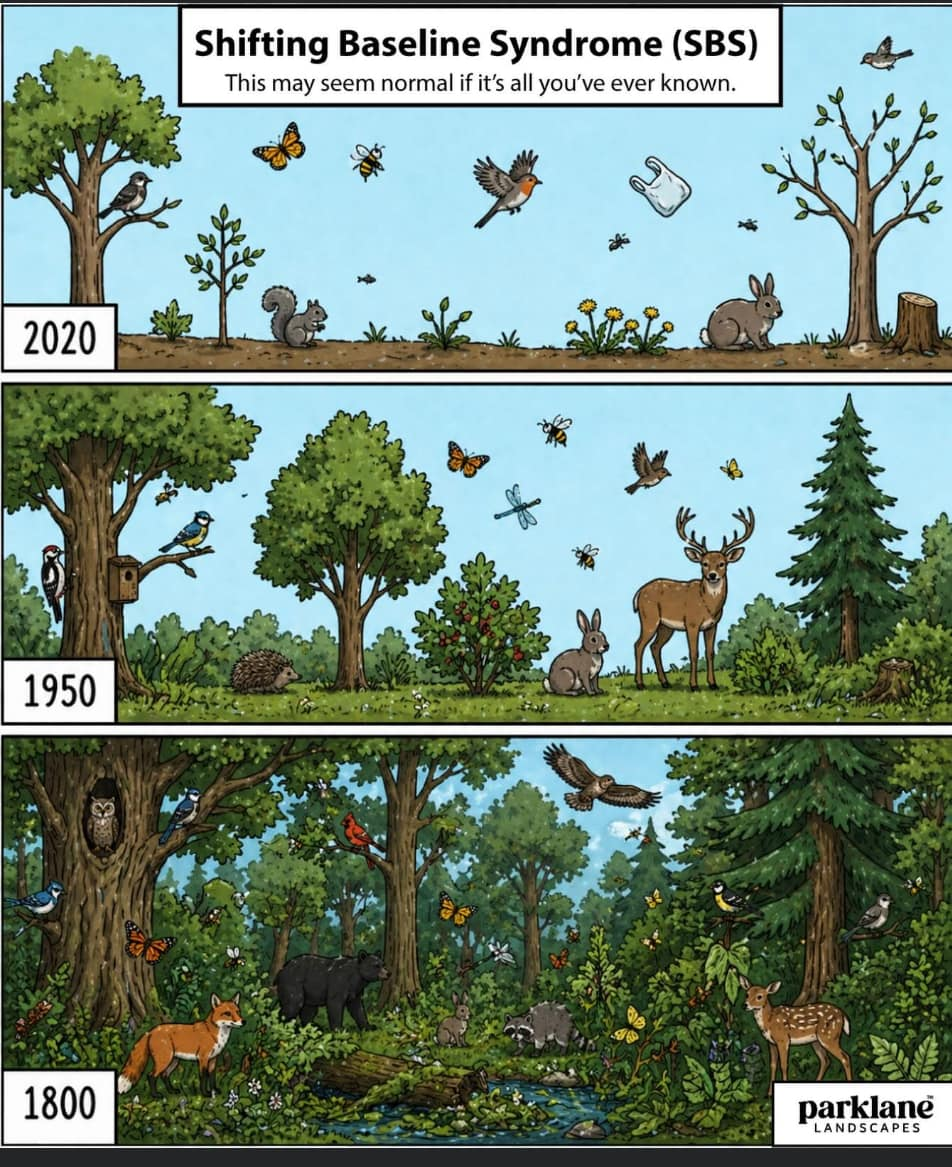
Shifting baseline syndrome ( #SBS ) is what happens when we forget how vibrant the natural world used to be. Each generation grows up with a more depleted environment and calls it “normal,” simply because it’s all they’ve ever known.
Researchers warn that this shift lowers our expectations, increases our tolerance for decline, and reduces our urgency to protect what’s left.
@Jeroen89 Is that a flying fish in 2020?

-
Shifting baseline syndrome ( #SBS ) is what happens when we forget how vibrant the natural world used to be. Each generation grows up with a more depleted environment and calls it “normal,” simply because it’s all they’ve ever known.
Researchers warn that this shift lowers our expectations, increases our tolerance for decline, and reduces our urgency to protect what’s left.
Good point. But:
How can one forget things never known? -
Thank you.
-
Shifting baseline syndrome ( #SBS ) is what happens when we forget how vibrant the natural world used to be. Each generation grows up with a more depleted environment and calls it “normal,” simply because it’s all they’ve ever known.
Researchers warn that this shift lowers our expectations, increases our tolerance for decline, and reduces our urgency to protect what’s left.
When you can still imagine something that’s lost that’s something you might be able to get back.
When folks can no longer imagine something that loss is much more profound.
For a few days after 9/11 there was so much less particulate in the atmosphere younger folks could see things in the distance they had never seen before and there were still old folks who could remember and describe it.
-
@Jeroen89
It also explains why older people like me often are very sad. -
Shifting baseline syndrome ( #SBS ) is what happens when we forget how vibrant the natural world used to be. Each generation grows up with a more depleted environment and calls it “normal,” simply because it’s all they’ve ever known.
Researchers warn that this shift lowers our expectations, increases our tolerance for decline, and reduces our urgency to protect what’s left.
@Jeroen89 it's heart breaking
-
@atlovato Only problem being that taking their money will not save the jungle.
-
@atlovato Only problem being that taking their money will not save the jungle.
No but it can be Diverted to the wants and needs of "We The People", the folks who still may know what nature looks like and acts like. It ain't data centers.
-
@Uair I don't know. Although it might not look fertile, it's not uninhabitable.
And the world has had multiple natural climate changes in the last 4000 years.
To me that might be more of a natural change and less of a man made change.At the rate we are using fertilizers & other chemicals on our lands they will be good for nothing. As the water rises in places like Florida a great % of those chemicals will wash into the Gulf. Those changes you speak of happened over thousands of years, not hundreds. In addition we have the same amount of CO2 as we had in the Pliocene 420ppm or so. At the time where I live was a Jungle, I'm in Alaska. So you don't have a clue not even a tiny one. I can see the glaciers melt.
-
Shifting baseline syndrome ( #SBS ) is what happens when we forget how vibrant the natural world used to be. Each generation grows up with a more depleted environment and calls it “normal,” simply because it’s all they’ve ever known.
Researchers warn that this shift lowers our expectations, increases our tolerance for decline, and reduces our urgency to protect what’s left.
-
@Jeroen89
It also explains why older people like me often are very sad.I remember there used to be way more insects at night, even just 20 years ago, let alone 40.
-
Shifting baseline syndrome ( #SBS ) is what happens when we forget how vibrant the natural world used to be. Each generation grows up with a more depleted environment and calls it “normal,” simply because it’s all they’ve ever known.
Researchers warn that this shift lowers our expectations, increases our tolerance for decline, and reduces our urgency to protect what’s left.
I didn't know this had a name but it resonates with me.... I remember how amazing the Milky Way used to look at night and how even in 'dark sky zones' it just isn't as vibrant
-
@Jeroen89 ok, but it's pretty ironic that you're illustrating this with AI style graphics
@sarae What are some of the AI styles?
-
Shifting baseline syndrome ( #SBS ) is what happens when we forget how vibrant the natural world used to be. Each generation grows up with a more depleted environment and calls it “normal,” simply because it’s all they’ve ever known.
Researchers warn that this shift lowers our expectations, increases our tolerance for decline, and reduces our urgency to protect what’s left.
@Jeroen89 Maybe there should be an indigenous person in the 1800 frame.
-
Shifting baseline syndrome ( #SBS ) is what happens when we forget how vibrant the natural world used to be. Each generation grows up with a more depleted environment and calls it “normal,” simply because it’s all they’ve ever known.
Researchers warn that this shift lowers our expectations, increases our tolerance for decline, and reduces our urgency to protect what’s left.
@Jeroen89 is it ai generated picture? It contains a strange mixture of european and north american species, which may be typical nowadays, but not in 1800.
-
Shifting baseline syndrome ( #SBS ) is what happens when we forget how vibrant the natural world used to be. Each generation grows up with a more depleted environment and calls it “normal,” simply because it’s all they’ve ever known.
Researchers warn that this shift lowers our expectations, increases our tolerance for decline, and reduces our urgency to protect what’s left.
-
Shifting baseline syndrome ( #SBS ) is what happens when we forget how vibrant the natural world used to be. Each generation grows up with a more depleted environment and calls it “normal,” simply because it’s all they’ve ever known.
Researchers warn that this shift lowers our expectations, increases our tolerance for decline, and reduces our urgency to protect what’s left.
@Jeroen89
Before 40 years scientists warn us for a "silent" spring, because there will be less birds and insects. Since ca. 10 years it goes more and more silent in our gardens.... Sad. -
Shifting baseline syndrome ( #SBS ) is what happens when we forget how vibrant the natural world used to be. Each generation grows up with a more depleted environment and calls it “normal,” simply because it’s all they’ve ever known.
Researchers warn that this shift lowers our expectations, increases our tolerance for decline, and reduces our urgency to protect what’s left.
RE: https://mastodon-belgium.be/@Jeroen89/116493556060663013
@Jeroen89 can't remember the last time I heard bugs on a windshield