a friend of mine sent me these photos of an IBM MT/ST tape (magnetic tape / selectric typewriter).
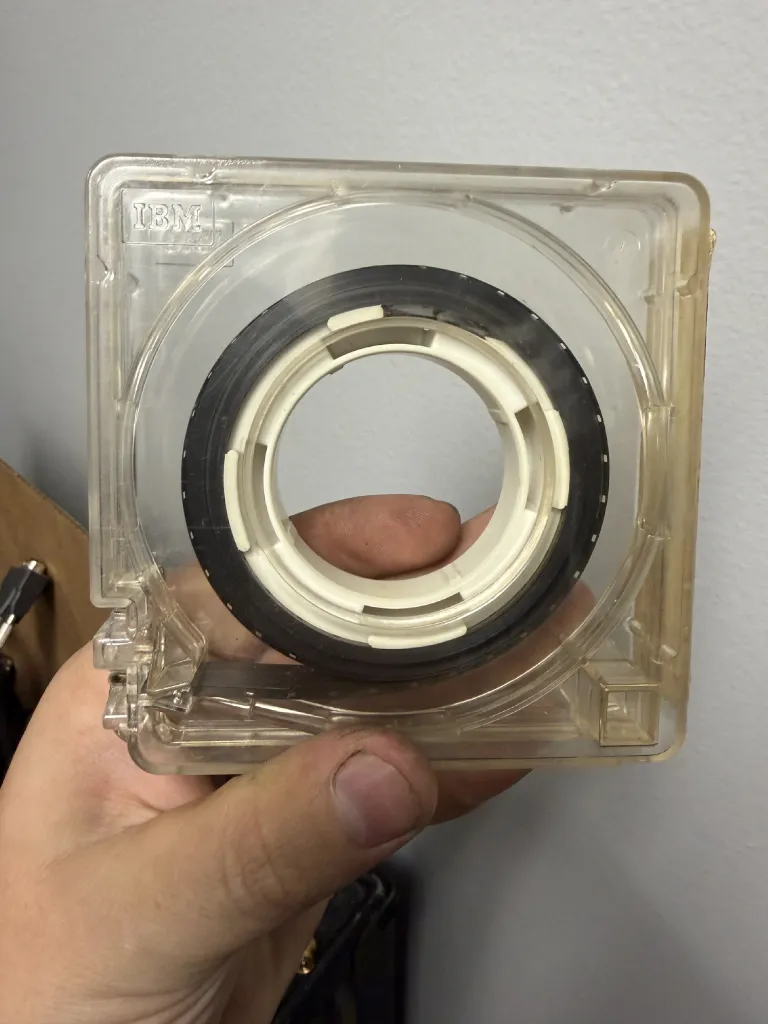
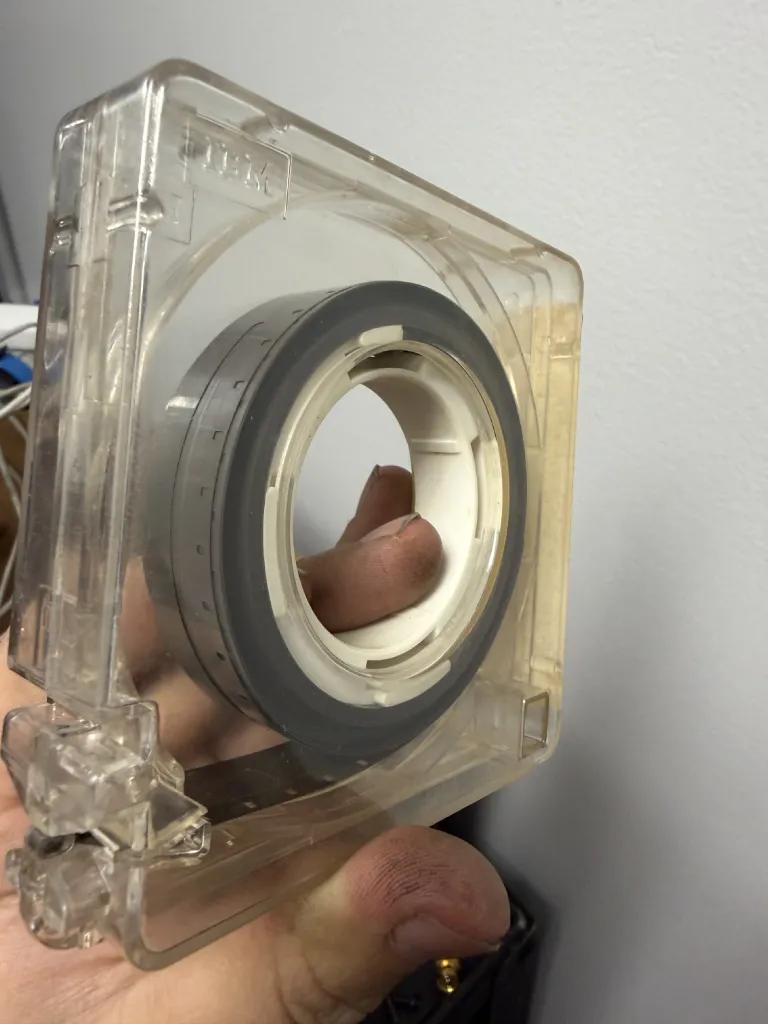
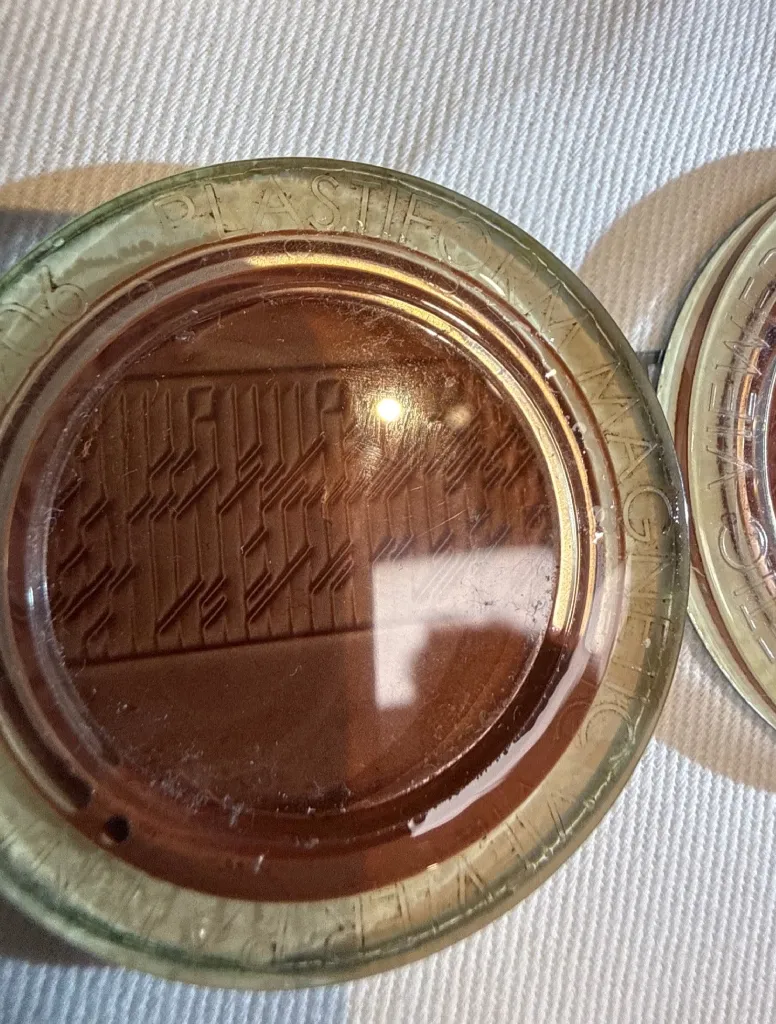
-
entered it all into a spreadsheet. from a population count, it seems to have odd parity.
i've found what appears to be a code table! it's not really EBCDIC; other documentation refers to the reader having to translate the code.
-
@tubetime - do you have any idea of the age of the tape?
@tubetime - in any case, it looks like odd parity to me, but doesn't look like text in either ASCII or EBCDIC in a simple 'mark = 1, no mark = 0' encoding - my understanding is both have a bit which is on for all alphabetical characters, so I'd expect one of the rows to be more frequently populated if that were the case.
-
a friend of mine sent me these photos of an IBM MT/ST tape (magnetic tape / selectric typewriter). the third photo particularly fascinated me: it shows the flux transitions with a Magnaviewer! is it possible to decode? 🧵
have you looked at the digidata mt/st tape reader documentation on bitsavers?
-
i've found what appears to be a code table! it's not really EBCDIC; other documentation refers to the reader having to translate the code.
going to guess that the center empty track is for the search function. and the topmost bit is rarely used, so that is probably the shift bit (uppercase). if we go in linear order from top to bottom (skipping the middle track), it looks like we're starting to get letters!
-
a friend of mine sent me these photos of an IBM MT/ST tape (magnetic tape / selectric typewriter). the third photo particularly fascinated me: it shows the flux transitions with a Magnaviewer! is it possible to decode? 🧵
@tubetime fascinating abt this model of the selectric, thanks
I think this is true:
buried very deep in the guts of ATT Unix is a command to print at 23 cps
cause that is how fast you can run a selectric before it melts
-
going to guess that the center empty track is for the search function. and the topmost bit is rarely used, so that is probably the shift bit (uppercase). if we go in linear order from top to bottom (skipping the middle track), it looks like we're starting to get letters!
oh i'm definitely on the right track (pun intended). it seems we have the phrase "The patient<CR><LF>r" encoded onto the tape! it's backwards, but that's ok. i'm also a bit surprised to see <CR><LF> but i guess that means the typewriter wasn't running Unix. IYKYK.
-
i've found what appears to be a code table! it's not really EBCDIC; other documentation refers to the reader having to translate the code.
@tubetime
Programming some sort of machine tool via paper tape?
MTT = Machine Tool Tape?I've never seen that. I don't think it's much like EBCDIC?
-
i've found what appears to be a code table! it's not really EBCDIC; other documentation refers to the reader having to translate the code.
@tubetime bits corresponding to the Selectric's whiffletree linkages?
-
oh i'm definitely on the right track (pun intended). it seems we have the phrase "The patient<CR><LF>r" encoded onto the tape! it's backwards, but that's ok. i'm also a bit surprised to see <CR><LF> but i guess that means the typewriter wasn't running Unix. IYKYK.
@tubetime CR LF makes sense on a typewriter though - that's what the lever on a manual typewriter ends up doing, and it's not that uncommon to manually feed forward so do a LF without a CR.
-
@tubetime bits corresponding to the Selectric's whiffletree linkages?
@scruss could be!
-
have you looked at the digidata mt/st tape reader documentation on bitsavers?
@bitsavers no, i should probably do that.

-
oh i'm definitely on the right track (pun intended). it seems we have the phrase "The patient<CR><LF>r" encoded onto the tape! it's backwards, but that's ok. i'm also a bit surprised to see <CR><LF> but i guess that means the typewriter wasn't running Unix. IYKYK.
@tubetime this is so cool! Great work!
-
@bitsavers no, i should probably do that.
it is the system 30. I thought I had some blueprints, but i may not have put them on line
https://www.computerhistory.org/collections/catalog/102662523
I picked up the Model 30 on eBay in the 00s for CHM thinking they might be interested in reading those type of tapes in the future (hah!) then the docs showed up in a big batch of paper I bought many, many years later. Since it is now an accessioned "artifact" (because the "tool" acquisition category didn't exist), it will never be used for data recovery.
It is also the reason why I have a room full of my own card reader, disk, mag and paper tape drives at the museum that are not owned by CHM that I use for media recovery in their software preservation lab. -
have you looked at the digidata mt/st tape reader documentation on bitsavers?
@bitsavers their logo is clever and looks just like the magnaview image.
-
@tubetime - do you have any idea of the age of the tape?
@philcowans probably 1970s.
-
a friend of mine sent me these photos of an IBM MT/ST tape (magnetic tape / selectric typewriter). the third photo particularly fascinated me: it shows the flux transitions with a Magnaviewer! is it possible to decode? 🧵
@tubetime I will have to try and get a magnetic viewer someday, but they're not cheap
-
oh i'm definitely on the right track (pun intended). it seems we have the phrase "The patient<CR><LF>r" encoded onto the tape! it's backwards, but that's ok. i'm also a bit surprised to see <CR><LF> but i guess that means the typewriter wasn't running Unix. IYKYK.
@tubetime you need to both bring the carriage back *and* move the paper one line
-
@tubetime CR LF makes sense on a typewriter though - that's what the lever on a manual typewriter ends up doing, and it's not that uncommon to manually feed forward so do a LF without a CR.
@penguin42 @tubetime seems like the blank in the middle also makes sense if it's transcribed from (or merely some design bits are borrowed from) paper tape with a center tracking sprocket.
-
@tubetime Maybe the middle is the 8th bit? Rarely used?
-