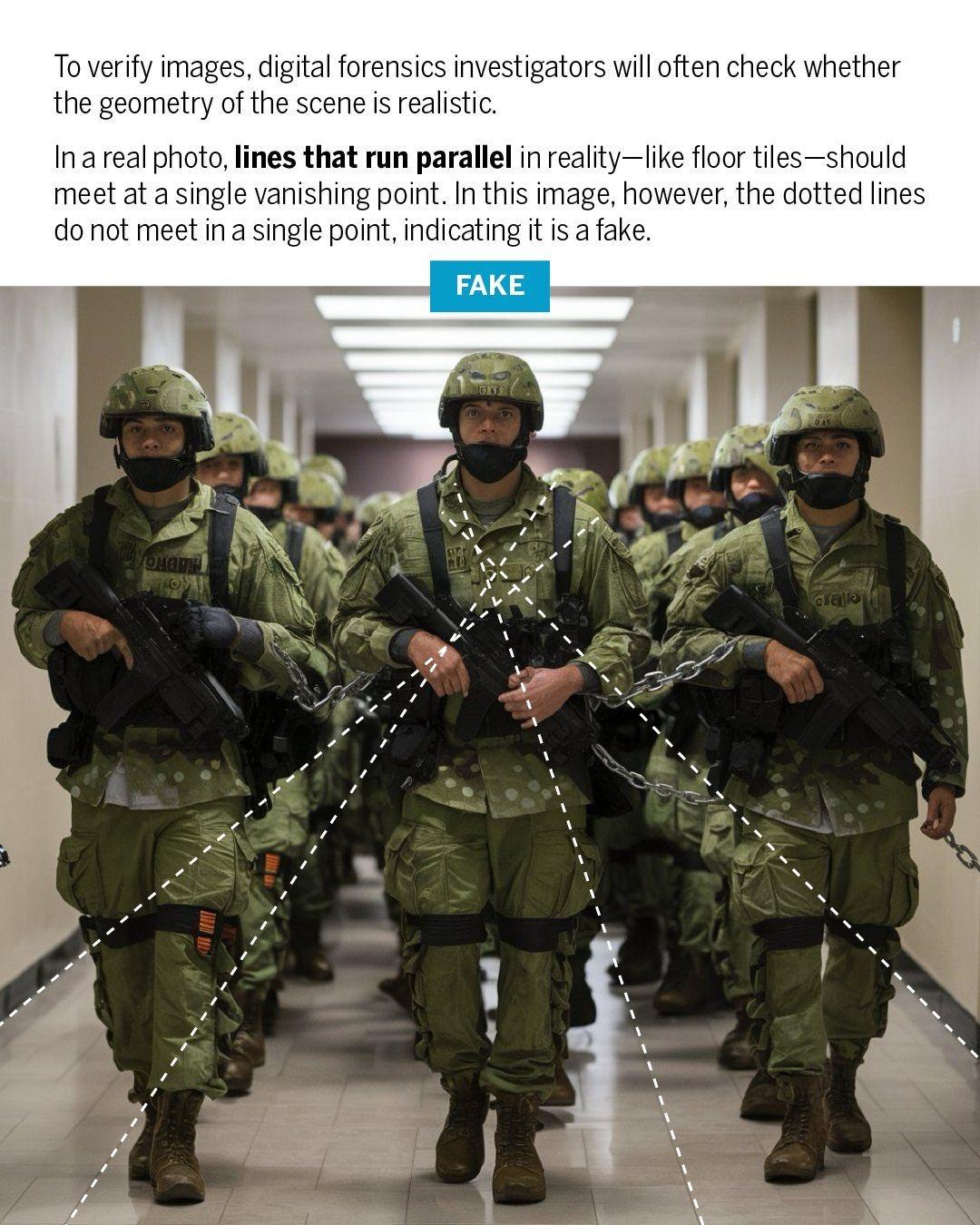
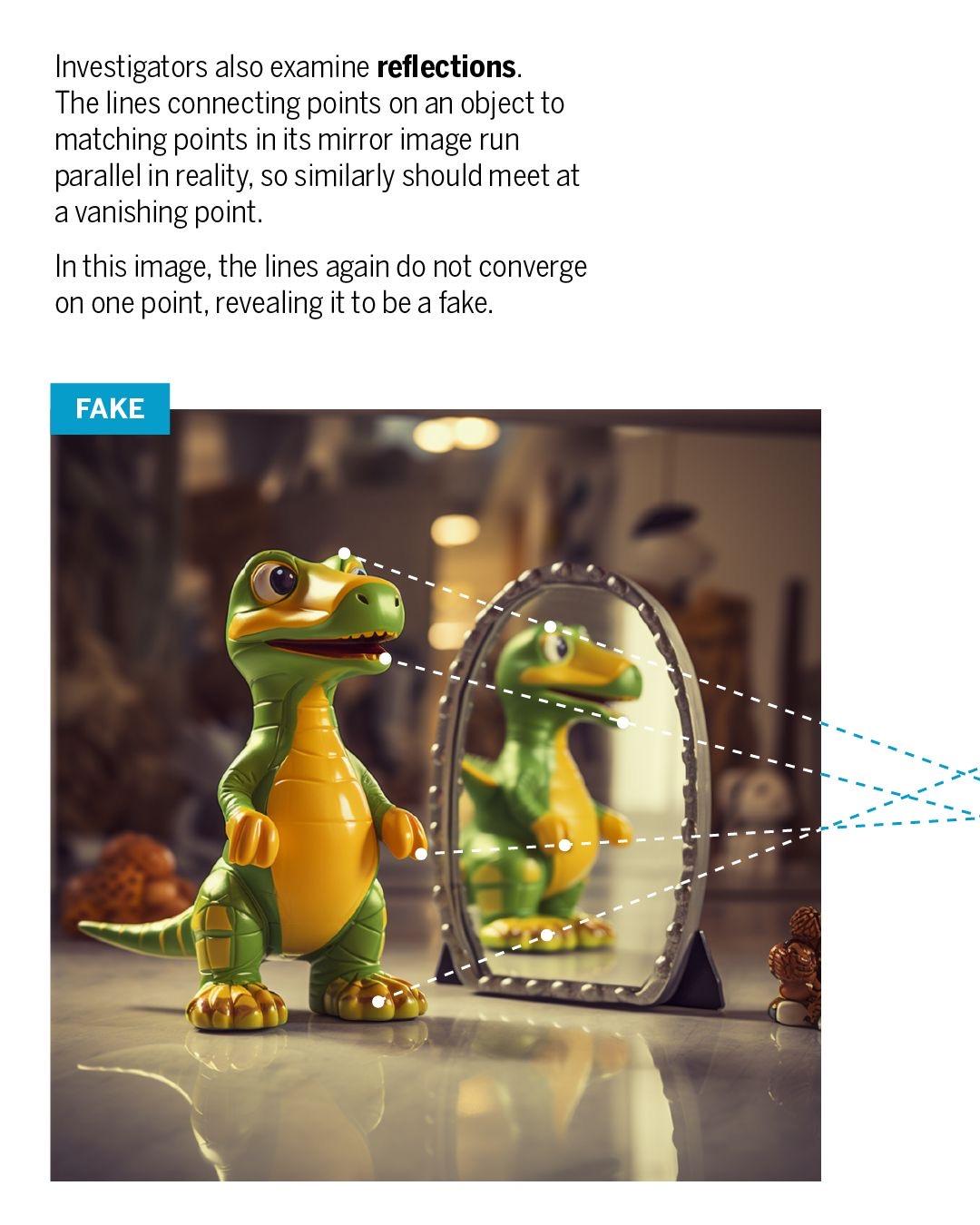
#Deepfakes are everywhere, but #DigitalForensics investigators are fighting back:
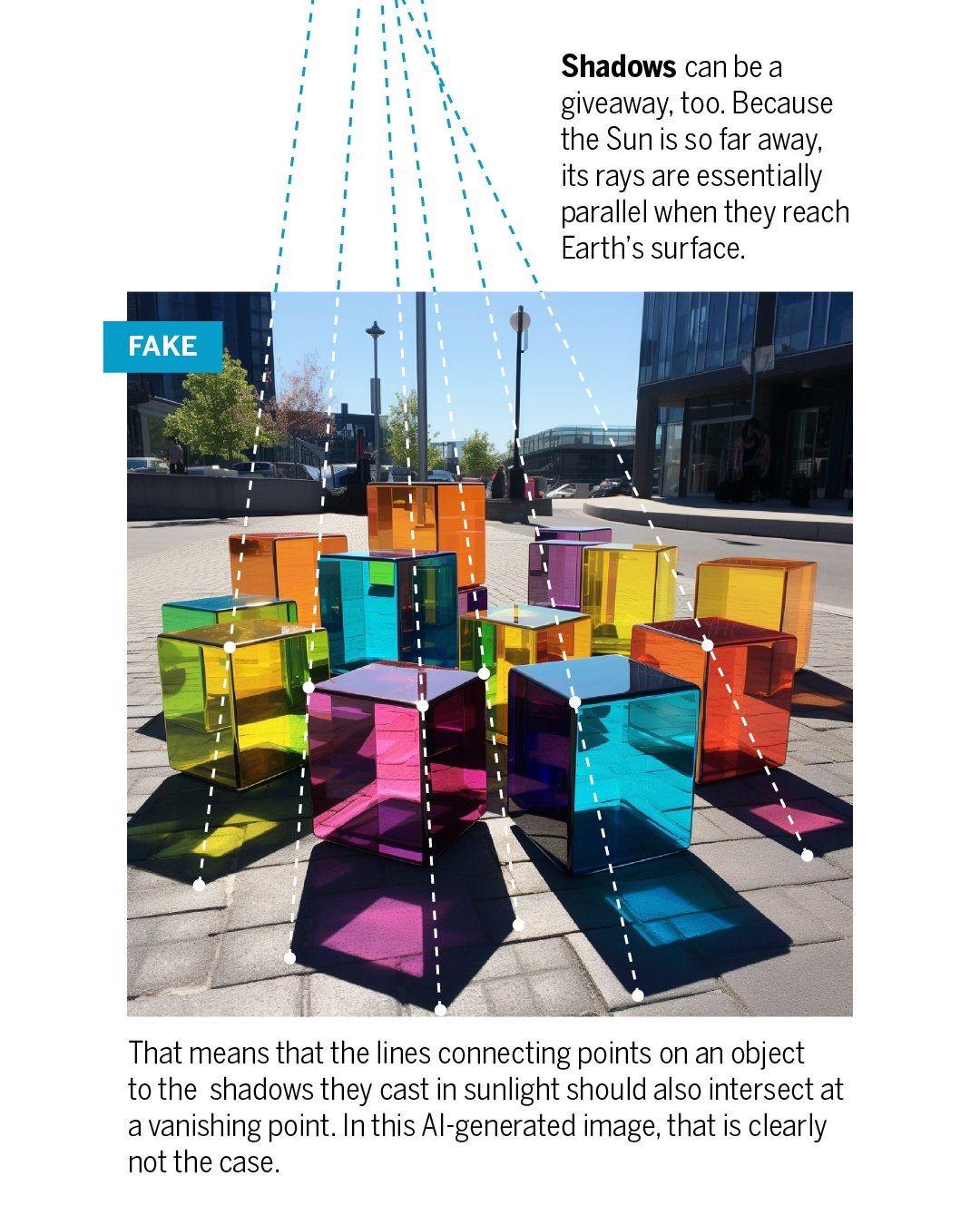
-
@FabMusacchio beautiful analysis even though I'm still suspicious of lens distortions.
@f4grx @FabMusacchio sun rays are parallel, yet they meet at a point...?
-
@Deixis9 what's the origin of the image?
Thanks
I see that it's commercialised e.g. <https://lovingsquad.com/product/ai-slop-is-not-art-chatbots-are-not-your-friends-shirt/>, <https://pagtee.com/product/t-shirt/1926944-ai-slop-is-not-art-chatbots-are-not-your-friends-cyborg-painting-flames>, <https://zerevia.com/product/t-shirt/1926944-ai-slop-is-not-art-chatbots-are-not-your-friends-cyborg-painting-flames>, <https://www.spellingmistakescostlives.com/product-page/copy-of-ai-slop-is-not-art-chatbots-are-not-your-friends-sticker>, however there's no real acknowledgement of an original artist; no credit, as far as I can tell.
-
@f4grx @FabMusacchio sun rays are parallel, yet they meet at a point...?
@leah @f4grx @FabMusacchio they meet at such a far away point that they appear to be parallel
-
@FabMusacchio So if I want to commit a murder, I have years to prepare it and I know the place will be surveilled with cameras, I should pave it with slightly non-parallell tiles, to get a plausible deniability.
@microblogc @FabMusacchio Forced perspective is your friend: "The Potemkin Stairs in Odesa extend for 142 metres, but give the illusion of greater depth since the stairs are wider at the bottom than at the top."
-
@leah @f4grx @FabMusacchio they meet at such a far away point that they appear to be parallel
@nCrazed @f4grx @FabMusacchio But this is irrelevant for the technique described? It would work with a non-parallel spot lamp just as well?
-
@nCrazed @f4grx @FabMusacchio But this is irrelevant for the technique described? It would work with a non-parallel spot lamp just as well?
@leah @f4grx @FabMusacchio yeah, I think that's a fair criticism

-
@leah @f4grx @FabMusacchio yeah, I think that's a fair criticism
@nCrazed @leah @f4grx @FabMusacchio Lines from a shadow through the object casting it meet at the light source. Sunlight being virtually parallel is irrelevant. If the light source isn't point-like, you get blurry shadows.
-
@Deixis9 what's the origin of the image?
Thanks
I see that it's commercialised e.g. <https://lovingsquad.com/product/ai-slop-is-not-art-chatbots-are-not-your-friends-shirt/>, <https://pagtee.com/product/t-shirt/1926944-ai-slop-is-not-art-chatbots-are-not-your-friends-cyborg-painting-flames>, <https://zerevia.com/product/t-shirt/1926944-ai-slop-is-not-art-chatbots-are-not-your-friends-cyborg-painting-flames>, <https://www.spellingmistakescostlives.com/product-page/copy-of-ai-slop-is-not-art-chatbots-are-not-your-friends-sticker>, however there's no real acknowledgement of an original artist; no credit, as far as I can tell.
-
@nCrazed @leah @f4grx @FabMusacchio Lines from a shadow through the object casting it meet at the light source. Sunlight being virtually parallel is irrelevant. If the light source isn't point-like, you get blurry shadows.
@nCrazed @leah @f4grx @FabMusacchio If the light source is behind the image plane, these lines will of course converge at an opposite point. The important part is that they all converge. If they intersect every which way, something funny is going on.
-
#Deepfakes are everywhere, but #DigitalForensics investigators are fighting back:
@FabMusacchio Great to have a sure way to prove things, but honestly, just zoom in on details see if they're coherent? In most if not any genai image? Not even talking about the dinausore/crocodile one because if you're under 50 you could tell in one blink
-
#Deepfakes are everywhere, but #DigitalForensics investigators are fighting back:
@FabMusacchio Also the soldiers’ heads in the first picture are nearly identical and their tags are gibberish.
-
@nCrazed @leah @f4grx @FabMusacchio If the light source is behind the image plane, these lines will of course converge at an opposite point. The important part is that they all converge. If they intersect every which way, something funny is going on.
@mansr @nCrazed @leah @FabMusacchio yep I agree with that remark, modulo lens distortions. I would love to see the actual convergence on a known good image, for comparison sake.
-
@mansr @nCrazed @leah @FabMusacchio yep I agree with that remark, modulo lens distortions. I would love to see the actual convergence on a known good image, for comparison sake.
@f4grx @mansr @nCrazed @FabMusacchio I tried it on two random hallway images from Kagi Search and it worked great. I think most lens distortions are nonlinear, so the problem is rather that the lines are not straight than that they won't meet.
-
@f4grx @mansr @nCrazed @FabMusacchio I tried it on two random hallway images from Kagi Search and it worked great. I think most lens distortions are nonlinear, so the problem is rather that the lines are not straight than that they won't meet.
@leah @mansr @nCrazed @FabMusacchio How do you model the curvatures of these non straight lines so you can be sure that they all meet at the same point?
-
@leah @mansr @nCrazed @FabMusacchio How do you model the curvatures of these non straight lines so you can be sure that they all meet at the same point?
@f4grx @mansr @nCrazed @FabMusacchio I didn't need to, since the lines were straight I assumed lens correction was already done or not necessary.
-
#Deepfakes are everywhere, but #DigitalForensics investigators are fighting back:
@FabMusacchio @Jenetrix I feel like I'm in a Realism 101 illustration class

-
@leah @f4grx @FabMusacchio yeah, I think that's a fair criticism
@nCrazed @leah @f4grx @FabMusacchio Sunrays are quasi-parallel in the 3rd dimension, however they all diverge from the sun when projected on a surface such as a camera sensor or our retina. What difference does it make if the trick works with lamps too ? The sun is just a big, faraway lamp, and the rules of convergence in 2d spaces apply just the same for all 1d-ish lightsources.
The trick works if you don't mind for lens distortion, which are really minor on most smartphone cameras nowadays (do not mess lens distortion with surface distortion caused by planar projection on sensors, the latter doesn't affect convergence even though it can exxagerate surfaces on the sides of the pic).
-
@f4grx @mansr @nCrazed @FabMusacchio I didn't need to, since the lines were straight I assumed lens correction was already done or not necessary.
@leah agreed, I just wished the technique they described came with that as a warning, because the (obviously generated, "read" the uniform patches) hallway picture shown would be a *prime* candidate for taking with a fisheye lens or a similarly distorting lens; and the piece of flooring used to extrapolate the straight lines is already honestly too short in the example to be sure. I cannot, over the length of maybe 50px, draw a 1000px line with < 1° error.
-
@leah agreed, I just wished the technique they described came with that as a warning, because the (obviously generated, "read" the uniform patches) hallway picture shown would be a *prime* candidate for taking with a fisheye lens or a similarly distorting lens; and the piece of flooring used to extrapolate the straight lines is already honestly too short in the example to be sure. I cannot, over the length of maybe 50px, draw a 1000px line with < 1° error.
@leah (and of course, a photojournalist in a government building is more likely to have a "low distortion as possible" lens equipped than a fishlens, but if you're preparing for e.g. reporting from a small, crowded room and want to get as many interacting politicians into the picture as possible, you'd not go in there with a superzoom lens alone. And if a picture is claimed to be from a publicity shot, the photographer certainly will pick from a wide range)
-
@nCrazed @leah @f4grx @FabMusacchio Sunrays are quasi-parallel in the 3rd dimension, however they all diverge from the sun when projected on a surface such as a camera sensor or our retina. What difference does it make if the trick works with lamps too ? The sun is just a big, faraway lamp, and the rules of convergence in 2d spaces apply just the same for all 1d-ish lightsources.
The trick works if you don't mind for lens distortion, which are really minor on most smartphone cameras nowadays (do not mess lens distortion with surface distortion caused by planar projection on sensors, the latter doesn't affect convergence even though it can exxagerate surfaces on the sides of the pic).
@songxisto @nCrazed @f4grx @FabMusacchio Assume a solid cube on a plane, and only parallel, ambient light hits it from an angle. if you connect the cube corners with the three visible shadow-corners, the lines are parallel as well and won't intersect. am i wrong?