Even when you try to use chatGPT like a dry research tool it will preferentially generate text that contains statements to affirm your feelings.
-
@futurebird It definitely is luxury; I pay to have ad free services. I can afford it, but many cannot.
@starlily @futurebird Eventually the internet will be nothing but ads served to people who can't afford to avoid them (and therefore to buy anything).
-
@futurebird @starlily @ahimsa_pdx
In the rare times that I encounter the web without an adblocker I am appalled. I just cannot believe anyone uses the damn thing without one. (But I am also one of those logophobic Gen Xers who removes or covers the branding on things I own, whenever possible without destroying them.)
@Voline @futurebird @starlily @ahimsa_pdx sigh, same
... or not buy.
There's this particular bicycle stem cap that I really liked - elegant shape, awesome typeface, with "ride more, worry less" motto that I really wanted on my bicycle.
But I didn't get it because it has the manufacturer logo on it too; not ugly, similar style, just... not the fucking point of why I want this stem cap in the first place.
Like, I don't want to brainwipe the company name (with which I have no ire or anything) from that motto whenever I read it. Just fucking no.
(if anyone from Acros happens to read this: you're doing it wrong)
-
Living in a world without ads is a big part of what I think of as luxury if that makes any sense?
Listen, we are never going to get a big feature in The Atlantic or The New Yorker about how healthy, mentally freeing, and spiritually grounding it can be to purge all advertisements from your life, or about how so often this is impossible. (Dear reader can you infer why this will never happen?)
But, maybe we can start a stealth campaign of our own. What is freedom? No ads.
@futurebird @starlily Absolutely. I don't claim to be immune, but I'm less worried about the power of subtly targeted ads than about the endless firehose we must endure.
That said, many people simultaneously complain about paywalls AND ads. What's a reasonable model where creators (e.g. journalists) can be paid for their work?
-
@futurebird @starlily Absolutely. I don't claim to be immune, but I'm less worried about the power of subtly targeted ads than about the endless firehose we must endure.
That said, many people simultaneously complain about paywalls AND ads. What's a reasonable model where creators (e.g. journalists) can be paid for their work?
I think supporting creators means creating an ecosystem of social media, media sharing sites and payment methods where generated content is unwelcome. Where ads are unwelcome and user support is expected so that people with less disposable income also have access to this kind of content.
In the long run this should have more formal institutional support through libraries and schools. In the short run we need to pay for more than just ourselves.
-
I think supporting creators means creating an ecosystem of social media, media sharing sites and payment methods where generated content is unwelcome. Where ads are unwelcome and user support is expected so that people with less disposable income also have access to this kind of content.
In the long run this should have more formal institutional support through libraries and schools. In the short run we need to pay for more than just ourselves.
Where my patience runs thin is when I encounter people who have enough money to pay for cable TV, for Amazon Prime, Hulu, etc. but they balk at the idea of sending a creator $5 twice a year.
Most people spend $100s of dollars on media a year. If all of it is going to these big companies I think that's a huge mistake.
-
I think supporting creators means creating an ecosystem of social media, media sharing sites and payment methods where generated content is unwelcome. Where ads are unwelcome and user support is expected so that people with less disposable income also have access to this kind of content.
In the long run this should have more formal institutional support through libraries and schools. In the short run we need to pay for more than just ourselves.
@futurebird @starlily Imagine a world where, AFTER you read something, there's an easy "tip" button. Maybe you hit it a couple of times if the thing was really good (or you are willing and able to pay more).
As we've seen, if you have to pay up front, there is a LOT of motivation to trick people with clickbait, slop, etc.
(continued)
-
@futurebird @starlily Imagine a world where, AFTER you read something, there's an easy "tip" button. Maybe you hit it a couple of times if the thing was really good (or you are willing and able to pay more).
As we've seen, if you have to pay up front, there is a LOT of motivation to trick people with clickbait, slop, etc.
(continued)
@futurebird @starlily If users have to create an account and enter their payment info to give someone $1, they won't bother. Some might subscribe to bundles or services, but that way lies extractive middlemen.
Even if we solve these problems, will creators be able to make a living wage? How hard will they (have to?) beg for tips? How much will the model favor presenters who are appealing to the people with money?
Dennis Moore was right: This redistribution of wealth is tricky!
-
I'll say one more thing, if the text generator has eased you into talking with it like it's a person. If it's felt easy to use and helpful, or if it has cheered you up with a compliment don't beat yourself up about that too much, but please do notice that it's happening.
It's like commercial with a beautiful person who makes you wish you could be like them. Or a salesman who compliments you. That's all this is.
What is it doing in the coding, research, work tool?
Great question.
@futurebird mostly yelling at it like it was a really annoying person, actually. (I know, it's not great either.)
-
I don't pay for it. I want test it one more time in about two months. I has "improved" over the the year. It lists far more source links and makes fewer mistakes.
It still can't really save me much time, and not enough to pay for it at all since everything it spits out needs to be checked.
Were I more excited about it I'd feel the urgency to just block it right now.
@futurebird There’s no need to test the stochastic white supremacy parrot. Now, if we’re talking about testing the security measures at one of their data centers then get at me privately.
-
@dryak @firebreathingduck @futurebird
Ads are always detectable by an ad blocker, because like spam email they have essential characteristics: without trying to sell you something or redirect you to another page to do so (via a tracking link to record the redirect and charge the ad customer for it) they wouldn't be doing what the ad customer or ad company wants. Detectable and blockable.@petealexharris @dryak @futurebird
There are countless billions of dollars at stake, so advertisers have become more sophisticated.
Look at all of the movies that feature people smoking cigarettes, because some tobacco company bribed the directors.
Search engines are putting sponsored results above accurate results without indicating that they’re doing so. The top item on the page might be “sponsored”, but the next few might be sponsored too. How would you know?
And of course if you shop at a physical store, the packaging of whatever you might buy is going to show strong or beautiful people in gorgeous settings with big smiles.
The radio station and music services play the sponsored songs more often when you select “random”.
etc… etc…
-
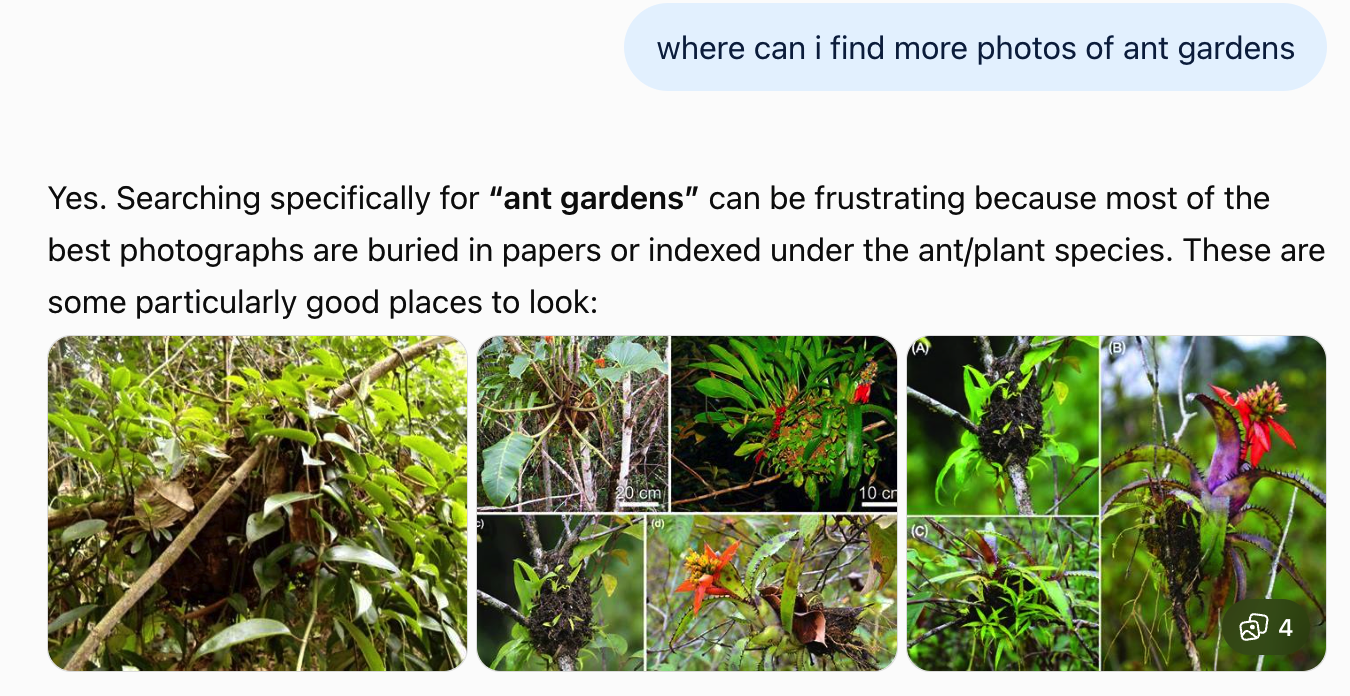
Do, you notice it?
"can be frustrating"
I didn't say I was "frustrated" I just asked for more photos because most of the papers in the first response didn't have any.
HOWEVER, the guess that I was frustrated was correct. It even felt nice to read that some one else was having the same ... except wait.
There isn't anyone else!
I thought I'd share this to highlight just how deeply embedded these techniques are. Do you dislike being manipulated?
Please notice this.
@futurebird What an odd response. You asked a simple, straightforward question and instead of just giving you the answer it added a bunch of unnecessary emotional nonsense.
Power users say, “You can train it not to do that,” but we shouldn’t have to. It’s a freaking computer. If anything *shouldn’t* be reading things into simple questions it’s a computer!
The fact that ChatGPT’s programmers engineered it to act like a clingy ex doesn’t paint them in a good light. -
@futurebird @starlily I think we should associate ads with harassment. Especially personalized ones.
@Epic_Null @futurebird @starlily The way they cram themselves into every second of your day whether you want them there or not? It's *absolutely* harassment.
And that's before you consider all the tracking, which would be considered obsessive stalking if someone did even one percent of it in person rather than electronically.
-
@Epic_Null @futurebird @starlily The way they cram themselves into every second of your day whether you want them there or not? It's *absolutely* harassment.
And that's before you consider all the tracking, which would be considered obsessive stalking if someone did even one percent of it in person rather than electronically.
@Linebyline @futurebird @starlily It would be stalking digitally if it was done by regular people
-
@thalassophobic Animism is no religion. It's an anthropological construct to describe different ways of nature perception, probably the most ancient human one. It's also connected to native perceptions.
Personhood of nature parts is a legal term: https://en.wikipedia.org/wiki/Environmental_personhood in ecology and for conservation laws.For more infos, I recommend David Abram's books https://en.wikipedia.org/wiki/David_Abram for the native connection with science Robin Wall Kimmerer: Braiding Sweetgrass. Free of religion.
-
@thalassophobic Animism is no religion. It's an anthropological construct to describe different ways of nature perception, probably the most ancient human one. It's also connected to native perceptions.
Personhood of nature parts is a legal term: https://en.wikipedia.org/wiki/Environmental_personhood in ecology and for conservation laws.For more infos, I recommend David Abram's books https://en.wikipedia.org/wiki/David_Abram for the native connection with science Robin Wall Kimmerer: Braiding Sweetgrass. Free of religion.
@thalassophobic A note: it can be hard work to read the rather philosophic, dry texts by Abrams.
If you want to learn to see nature differently from the white Western view, I warmly recommend Kimmerer (you find also lectures with her on youtube). She is an indigenous scientists, her style is so vivid that you can't stop listening / reading. And you don't have to be a specialist to understand her. -
I've only found one way to deal with advertising in my life: I block them all.
Other people will claim they are immune to propaganda but I don't believe them.
@futurebird Agreed. It's well established in experimental psychology that critical evaluation of questionable claims of ANY kind is such a resource-intensive mental activity as to be impractical except on a very small scale. It can be done in individual cases. But if you expose yourself continually to a high-volume torrent of bullshit, you WILL end up accepting much of it uncritically — no matter who you are. The ONLY approach that works is to STOP LISTENING to any "information" source that is known to be compromised.
-
@futurebird on the occasions I have to interact with chatbots, this is what I find uncanny-valley creepy. When they express empathy or try to make friends, it feels like a trap. And yet, many people obviously like that kind of interaction.
@y6nH @futurebird To me it just feels cheesy and maniulative. I"m the same way about humans doin' that, too.
-
@jwcph I mean look at Americans. They all drive massive trucks to feel like they are above everyone else and better than them, but in reality, they are powerless serfs who have a pedophile in office.
@bridgeenjoyer @jwcph hey, I used to own a massive truck because I had tractors to carry and my grip strength was not good.
-
Everyone already makes fun of LLM sycophancy. "Excellent observation, would you like me to draw up a list of ..."
And when I mention LLM sycophancy someone always mutters "but they have reduced it now"
No they have not. They've made it less obvious. This strange emotional pretend person tugging is a core part of this "product" and its only remarkable feature. Is it enough to justify the gross distortion of the markets? Probably not. But it is ... IDK an innovation in advertising.
Yes.
And we've become so used to advertising that we don't realize how manipulative it all is.
Powered by research, much of it funded out of public money.
Same with our tolerance of money in politics, as if it doesn't matter, we’re such rational beings it won't influence us.