Skip to content
  • Hjem
  • Seneste
  • Etiketter
  • Populære
  • Verden
  • Bruger
  • Grupper
Temaer
  • Light
  • Cerulean
  • Cosmo
  • Flatly
  • Journal
  • Litera
  • Lumen
  • Lux
  • Materia
  • Minty
  • Morph
  • Pulse
  • Sandstone
  • Simplex
  • Sketchy
  • Spacelab
  • United
  • Yeti
  • Zephyr
  • Dark
  • Cyborg
  • Darkly
  • Quartz
  • Slate
  • Solar
  • Superhero
  • Vapor

  • Default (No Skin)
  • No Skin
Kollaps
FARVEL BIG TECH
  1. Forside
  2. Ikke-kategoriseret
  3. I was about to Have Opinions about the threats the US is making to Greenland, Denmark and Europe, then realised I have nothing useful to add, so I pressed Delete.
I was about to Have Opinions about the threats the US is making to Greenland, Denmark and Europe, then realised I have nothing useful to add, so I pressed Delete.

Planlagt Fastgjort Låst Flyttet Ikke-kategoriseret
150 Indlæg 49 Posters 486 Visninger
  • Ældste til nyeste
  • Nyeste til ældste
  • Most Votes
Svar
  • Svar som emne
Login for at svare
Denne tråd er blevet slettet. Kun brugere med emne behandlings privilegier kan se den.
  • ciarani@mastodon.greenC ciarani@mastodon.green

    It upsets me that there are no umlauts in the word umlaut

    baoigheallain@mastodon.ieB This user is from outside of this forum
    baoigheallain@mastodon.ieB This user is from outside of this forum
    baoigheallain@mastodon.ie
    wrote sidst redigeret af
    #70

    @CiaraNi Nor in the French ë/ï/ü – the trema (l’accent tréma)

    ciarani@mastodon.greenC 1 Reply Last reply
    0
    • mlazz@aus.socialM mlazz@aus.social

      @tml @CiaraNi @hanscees

      And let's not forget that sometimes what looks like an umlaut is actually a diaeresis.
      https://en.wikipedia.org/wiki/Diaeresis_(diacritic)

      hanscees@ieji.deH This user is from outside of this forum
      hanscees@ieji.deH This user is from outside of this forum
      hanscees@ieji.de
      wrote sidst redigeret af
      #71

      @mlazz @tml @CiaraNi why the name that reminds me of very thin stuff coming out of a colon. But we call this trema in Dutch
      geëvenaard

      1 Reply Last reply
      0
      • ciarani@mastodon.greenC ciarani@mastodon.green

        It upsets me that there are no umlauts in the word umlaut

        airwhale@beige.partyA This user is from outside of this forum
        airwhale@beige.partyA This user is from outside of this forum
        airwhale@beige.party
        wrote sidst redigeret af
        #72

        @CiaraNi

        It would be impossible to type on a US keyboard, not to talk about the crime known as 7-bit ASCII.

        ciarani@mastodon.greenC 1 Reply Last reply
        0
        • rvedotrc@tech.lgbtR rvedotrc@tech.lgbt

          @CiaraNi

          acuté
          gràve
          circûmflex
          çedilla

          I see what you mean, ümlaut would work so much better

          jenskutilek@typo.socialJ This user is from outside of this forum
          jenskutilek@typo.socialJ This user is from outside of this forum
          jenskutilek@typo.social
          wrote sidst redigeret af
          #73

          @rvedotrc @CiaraNi There’s an actual haček in the word haček! (But that’s the Czech name for the diacritic, I think it’s called caron in English)

          ciarani@mastodon.greenC drj@typo.socialD 2 Replies Last reply
          0
          • ciarani@mastodon.greenC ciarani@mastodon.green

            @shivers @psneeze I always liked the fact that fada just means 'long', the plain practicality of it. I didn't know 'umlaut' has a similar trait. 'About sound'. That was a pleasing new-to-me thing to learn. GRMA

            fennek@cyberplace.socialF This user is from outside of this forum
            fennek@cyberplace.socialF This user is from outside of this forum
            fennek@cyberplace.social
            wrote sidst redigeret af
            #74

            @CiaraNi @shivers @psneeze Greetings from Germany!
            It is not "about sound", rather "around sound" as in "something is around the sound" (not as in "surround sound", sadly).

            ciarani@mastodon.greenC 1 Reply Last reply
            0
            • id1om@mastodonapp.ukI id1om@mastodonapp.uk

              @CiaraNi
              cedilla would like a word.

              ciarani@mastodon.greenC This user is from outside of this forum
              ciarani@mastodon.greenC This user is from outside of this forum
              ciarani@mastodon.green
              wrote sidst redigeret af
              #75

              @id1om I would like to have a word with these diacriticless diacritics

              id1om@mastodonapp.ukI 1 Reply Last reply
              0
              • christinemalec@mstdn.caC christinemalec@mstdn.ca

                @CiaraNi I'm studying an 18th century German musician named Friedrich Dulon. I'm monolingual, and the U in his name has one, and I have no idea what it means for pronunciation.

                ciarani@mastodon.greenC This user is from outside of this forum
                ciarani@mastodon.greenC This user is from outside of this forum
                ciarani@mastodon.green
                wrote sidst redigeret af
                #76

                @ChristineMalec My school German hangs on in snippets, but the pronunciation difference with or without an umlaut is long gone from my brain, so I don't know either. Maybe somebody else can help us here.

                courtcan@mastodon.socialC saederup@helvede.netS 2 Replies Last reply
                0
                • mlazz@aus.socialM mlazz@aus.social

                  @tml @CiaraNi @hanscees

                  And let's not forget that sometimes what looks like an umlaut is actually a diaeresis.
                  https://en.wikipedia.org/wiki/Diaeresis_(diacritic)

                  ciarani@mastodon.greenC This user is from outside of this forum
                  ciarani@mastodon.greenC This user is from outside of this forum
                  ciarani@mastodon.green
                  wrote sidst redigeret af
                  #77

                  @mlazz @tml @hanscees Yes, diaeresis - the darling of the New Yorker

                  tml@mementomori.socialT 1 Reply Last reply
                  0
                  • ciarani@mastodon.greenC ciarani@mastodon.green

                    It upsets me that there are no umlauts in the word umlaut

                    courtcan@mastodon.socialC This user is from outside of this forum
                    courtcan@mastodon.socialC This user is from outside of this forum
                    courtcan@mastodon.social
                    wrote sidst redigeret af
                    #78

                    @CiaraNi It really does seem like a severely missed opportunity.

                    ciarani@mastodon.greenC 1 Reply Last reply
                    0
                    • mlazz@aus.socialM mlazz@aus.social

                      @CiaraNi
                      One of my many cheeky pleasures is to deliberately pronounce the umlauts in the band name "Mötley Crüe".

                      ciarani@mastodon.greenC This user is from outside of this forum
                      ciarani@mastodon.greenC This user is from outside of this forum
                      ciarani@mastodon.green
                      wrote sidst redigeret af
                      #79

                      @mlazz The kind of nice little pleasure that makes our personal worlds go around.

                      1 Reply Last reply
                      0
                      • christinemalec@mstdn.caC christinemalec@mstdn.ca

                        @CiaraNi I'm studying an 18th century German musician named Friedrich Dulon. I'm monolingual, and the U in his name has one, and I have no idea what it means for pronunciation.

                        stevegis_ssg@mas.toS This user is from outside of this forum
                        stevegis_ssg@mas.toS This user is from outside of this forum
                        stevegis_ssg@mas.to
                        wrote sidst redigeret af
                        #80

                        @ChristineMalec @CiaraNi

                        ü is a sound we don't have in English. To make it, say a long E sound (the sound in "leek" or "wheel") but with your lips rounded as if you were saying a u sound. It's hard; you'll have to overcome programs your brain learned when you were a toddler to make the inside of your mouth try to make the 'e' sound while your lips are trying to make the 'u' sound. That combination makes the ü.

                        datenhalde@nrw.socialD ciarani@mastodon.greenC 2 Replies Last reply
                        0
                        • jeridansky@sfba.socialJ jeridansky@sfba.social

                          @CiaraNi Me, too, regarding "nothing useful to add" — no matter how horrified I am.

                          Very cool umlauts!

                          ciarani@mastodon.greenC This user is from outside of this forum
                          ciarani@mastodon.greenC This user is from outside of this forum
                          ciarani@mastodon.green
                          wrote sidst redigeret af
                          #81

                          @jeridansky It's all awful and exhausting. Thank Odin for nice umlauts and colourful dahlias and lovely lichen

                          1 Reply Last reply
                          0
                          • ciarani@mastodon.greenC ciarani@mastodon.green

                            @ChristineMalec My school German hangs on in snippets, but the pronunciation difference with or without an umlaut is long gone from my brain, so I don't know either. Maybe somebody else can help us here.

                            courtcan@mastodon.socialC This user is from outside of this forum
                            courtcan@mastodon.socialC This user is from outside of this forum
                            courtcan@mastodon.social
                            wrote sidst redigeret af
                            #82

                            @CiaraNi @ChristineMalec If you vocalize the English letter "e" and don't change anything about the position of your teeth and tongue BUT narrow your lips as though vocalizing an "ooo" sound at the same time, you'll come extremely close to the German pronunciation of the "ü." ☺️🖖

                            ciarani@mastodon.greenC 1 Reply Last reply
                            0
                            • ciarani@mastodon.greenC ciarani@mastodon.green

                              @ChristineMalec My school German hangs on in snippets, but the pronunciation difference with or without an umlaut is long gone from my brain, so I don't know either. Maybe somebody else can help us here.

                              saederup@helvede.netS This user is from outside of this forum
                              saederup@helvede.netS This user is from outside of this forum
                              saederup@helvede.net
                              wrote sidst redigeret af
                              #83

                              @CiaraNi @ChristineMalec The ü is pronounced like y in Danish. In my experience as a teacher of Danish to foreigners native English speakers find it hard to pronounce at first but basically just start saying eeee and then round your lips and the sound then changes to y. Don't change anything else in or around your mouth, just the lips.

                              ciarani@mastodon.greenC 1 Reply Last reply
                              0
                              • christinemalec@mstdn.caC christinemalec@mstdn.ca

                                @CiaraNi I'm studying an 18th century German musician named Friedrich Dulon. I'm monolingual, and the U in his name has one, and I have no idea what it means for pronunciation.

                                henkvandereijk@mastodon.greenH This user is from outside of this forum
                                henkvandereijk@mastodon.greenH This user is from outside of this forum
                                henkvandereijk@mastodon.green
                                wrote sidst redigeret af
                                #84

                                @ChristineMalec May I ask, does this ‘single umlaut’ appear in handwriting? As in Dúlon (or at least looking similar to that)?
                                @CiaraNi

                                katzentratschen@mastodon.socialK 1 Reply Last reply
                                0
                                • ciarani@mastodon.greenC ciarani@mastodon.green

                                  It upsets me that there are no umlauts in the word umlaut

                                  otte_homan@theblower.auO This user is from outside of this forum
                                  otte_homan@theblower.auO This user is from outside of this forum
                                  otte_homan@theblower.au
                                  wrote sidst redigeret af
                                  #85

                                  @CiaraNi there is an umlaut in the plural, Umläute ...

                                  ciarani@mastodon.greenC 1 Reply Last reply
                                  0
                                  • jwcph@helvede.netJ jwcph@helvede.net shared this topic
                                  • christinemalec@mstdn.caC christinemalec@mstdn.ca

                                    @CiaraNi I'm studying an 18th century German musician named Friedrich Dulon. I'm monolingual, and the U in his name has one, and I have no idea what it means for pronunciation.

                                    datenhalde@nrw.socialD This user is from outside of this forum
                                    datenhalde@nrw.socialD This user is from outside of this forum
                                    datenhalde@nrw.social
                                    wrote sidst redigeret af
                                    #86

                                    @ChristineMalec
                                    I wouldn't be surprised if the surname Dulon was originally brought to Berlin by the Huguenots (around 1700), and, of course, the u and -on would then be pronounced french, i.e. u becomes ü and -on becomes the nasal o sound.

                                    When the name was germanized, it became Dülon, so the ü was adapted but the nasal was dropped. That would be common. I would even expect a stress shift from the second to the first syllable (Du'lon => 'Dülon)

                                    @CiaraNi

                                    1 Reply Last reply
                                    0
                                    • stevegis_ssg@mas.toS stevegis_ssg@mas.to

                                      @ChristineMalec @CiaraNi

                                      ü is a sound we don't have in English. To make it, say a long E sound (the sound in "leek" or "wheel") but with your lips rounded as if you were saying a u sound. It's hard; you'll have to overcome programs your brain learned when you were a toddler to make the inside of your mouth try to make the 'e' sound while your lips are trying to make the 'u' sound. That combination makes the ü.

                                      datenhalde@nrw.socialD This user is from outside of this forum
                                      datenhalde@nrw.socialD This user is from outside of this forum
                                      datenhalde@nrw.social
                                      wrote sidst redigeret af
                                      #87

                                      @stevegis_ssg
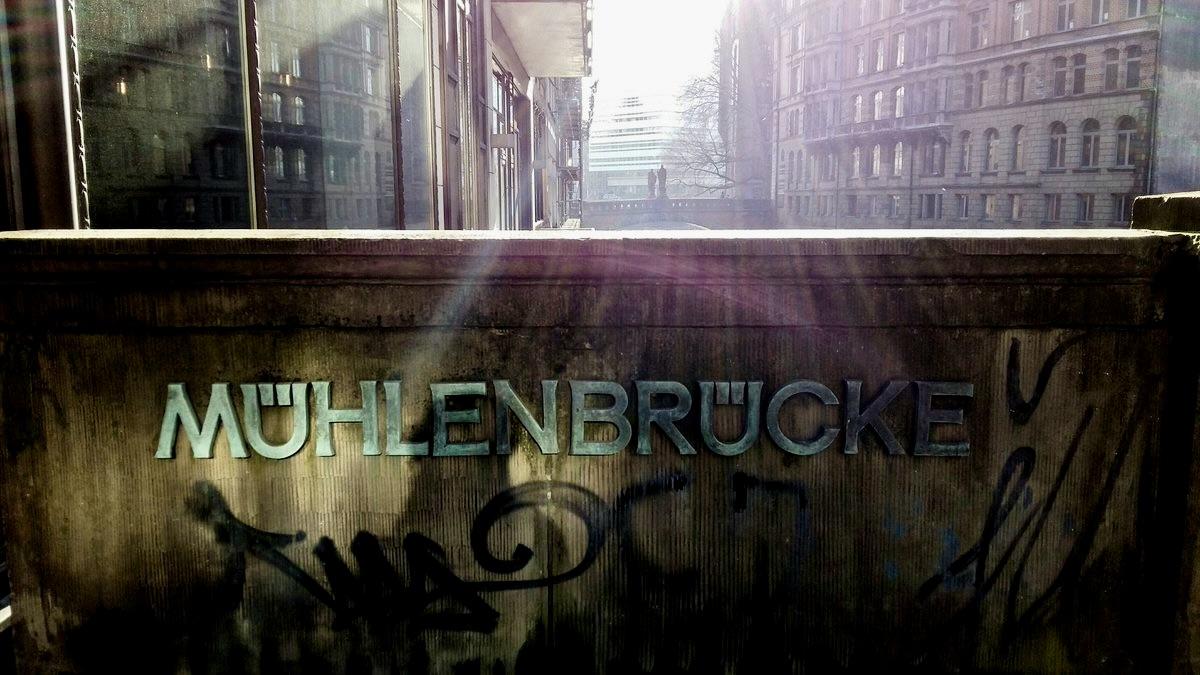
                                      Mind that, regarding the original post of the Mühlenbrücke, your ü description only explains the pronunciation of the first ü in that word. The ü in Brücke is different. Its much shorter (apparantly, WP calls it Near-close near-front rounded vowel, whereas the ü in Mühle is a Close front rounded vowel). Dülon employs the closed form.
                                      @ChristineMalec @CiaraNi

                                      ciarani@mastodon.greenC 1 Reply Last reply
                                      0
                                      • henkvandereijk@mastodon.greenH henkvandereijk@mastodon.green

                                        @ChristineMalec May I ask, does this ‘single umlaut’ appear in handwriting? As in Dúlon (or at least looking similar to that)?
                                        @CiaraNi

                                        katzentratschen@mastodon.socialK This user is from outside of this forum
                                        katzentratschen@mastodon.socialK This user is from outside of this forum
                                        katzentratschen@mastodon.social
                                        wrote sidst redigeret af
                                        #88

                                        @HenkvanderEijk @ChristineMalec His name is written "Dülon", but also – and more common – "Dulon" in several dictionaries, e.g.:

                                        https://www.deutsche-biographie.de/gnd116235594.html#ndbcontent

                                        His father was Louis Dulon. So without digging deeper in his genealogy, it's probably an orthographic assimilation of a French name to German spelling, and therefore I guess it's pronounced [dylɔ̃]. For [y] think of "tu" (you) in French, "über" (over) in German or "yksi" (one) in Finnish. Three characters, one sound.

                                        @CiaraNi

                                        katzentratschen@mastodon.socialK 1 Reply Last reply
                                        0
                                        • ciarani@mastodon.greenC ciarani@mastodon.green

                                          It upsets me that there are no umlauts in the word umlaut

                                          riese@soc.iotaomegapsi.ioR This user is from outside of this forum
                                          riese@soc.iotaomegapsi.ioR This user is from outside of this forum
                                          riese@soc.iotaomegapsi.io
                                          wrote sidst redigeret af
                                          #89

                                          @CiaraNi yeah, but there's no umlaut in "Umlaut". So you may say, describing umlauts is possible entirely with lauts. So you can describe umlauts without the need to use them, which makes learning them a lot easier.
                                          At least one thing, we Germans got right, eh?

                                          ciarani@mastodon.greenC 1 Reply Last reply
                                          0
                                          Svar
                                          • Svar som emne
                                          Login for at svare
                                          • Ældste til nyeste
                                          • Nyeste til ældste
                                          • Most Votes


                                          • Log ind

                                          • Har du ikke en konto? Tilmeld

                                          • Login or register to search.
                                          Powered by NodeBB Contributors
                                          Graciously hosted by data.coop
                                          • First post
                                            Last post
                                          0
                                          • Hjem
                                          • Seneste
                                          • Etiketter
                                          • Populære
                                          • Verden
                                          • Bruger
                                          • Grupper